

Thousands of our native plants have no public photographs available. Here's why that matters
- Written by: Thomas Mesaglio, PhD candidate, UNSW Sydney
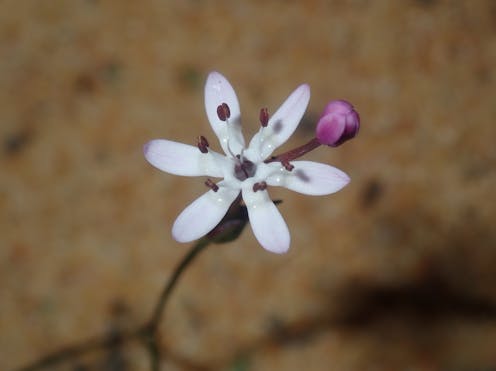
For hundreds of years, botanists have collected plants to describe species and keep in herbaria across the world. But while physical plant specimens are irreplaceable, photographs of plants are also an invaluable resource for botanical research, conservation and education.
Photographs of plants capture information that can be lost from dead, dried plants, such as flower colour. They also provide ecological context and form the cornerstone of many field guides and education resources.
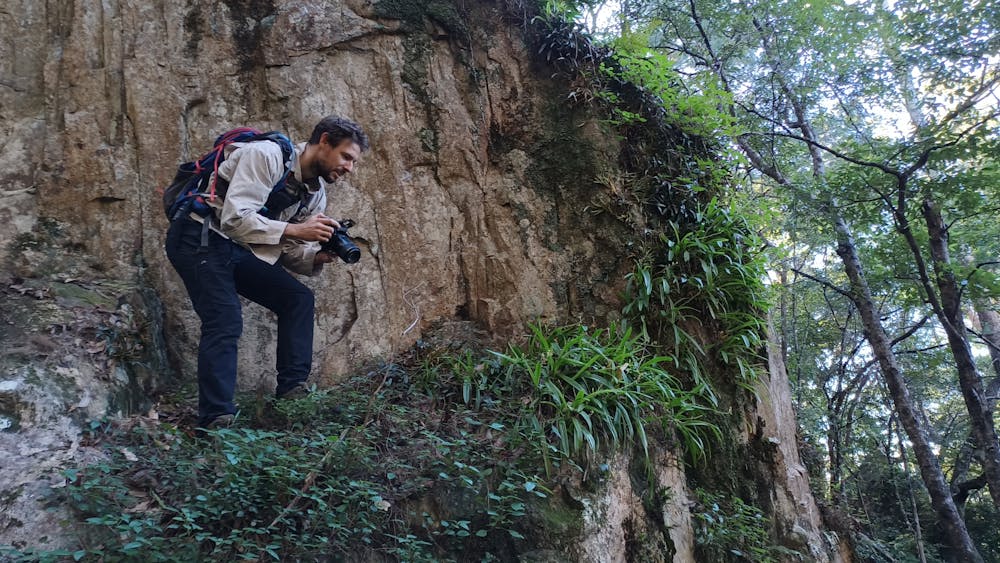
All plant species known to science have samples preserved in at least one herbarium. Under the scientific rules for naming species, a species is not recognised unless there is at least one specimen officially stored in a collection somewhere in the world.
Unfortunately, and perhaps surprisingly, many plants have never been photographed in the field. Just 53% of the 125,000 known plant species in the Americas have field photographs in major online databases.
Given almost 40% of the world’s plant species are threatened with extinction, there’s a strong impetus to photograph as many of these as possible before they disappear forever. Without photographs of these species in the field, many could go extinct without us even realising.
We were interested in how the Australian flora stacks up, so in our research, published today, we surveyed 33 major online databases. Most of these were resources created and maintained by professional botanists, such as New South Wales’ state herbarium portal PlantNET, but we also included some citizen science platforms such as iNaturalist.
Out of roughly 21,000 native Australian vascular plant species, a surprisingly large 3,715 (or 18%) did not have a single field photograph we could track down across our surveyed databases.
While most species across the southeastern states are well-photographed, Western Australia is the great frontier for unphotographed plants: 52% of all unphotographed species can be found in WA. The most incomplete plant family was Poaceae, the grasses, with 343 unphotographed species.
We identified three major “hotspots” for unphotographed Australian plants:
northern Australia, from the Kimberley to Arnhem Land
Queensland’s Wet Tropics World Heritage Area
the Stirling Range and Fitzgerald River National Park in southwestern WA.
All three regions are characterised by remote environments that are often difficult to access.
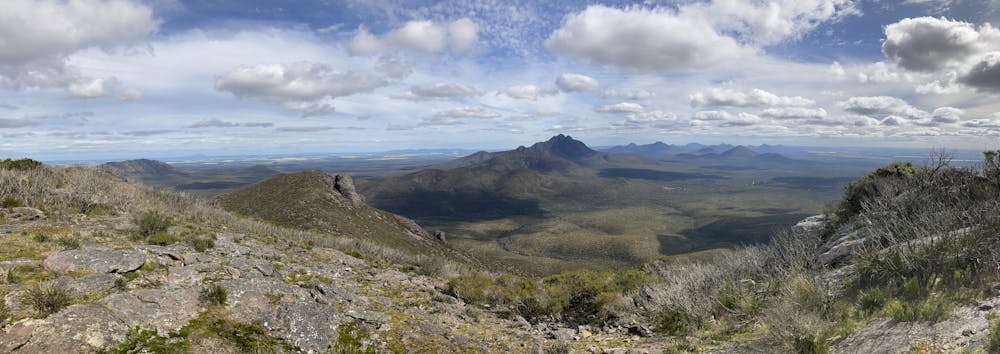 Western Australia’s Stirling Range, one of the major hotspots in Australia for unphotographed plant species.
Thomas Mesaglio
Western Australia’s Stirling Range, one of the major hotspots in Australia for unphotographed plant species.
Thomas Mesaglio
Just as some animals receive less research and conservation attention than others because they aren’t as charismatic, there is also a similar charisma deficit for some types of plants. Many groups of Australian shrubs or trees with spectacular floral displays have comprehensive, or even complete, photographic records. For example, all 176 of Australia’s Banksia species have been photographed.
 The charismatic and well-photographed Banksia robur from NSW and Queensland.
Greg Tasney
The charismatic and well-photographed Banksia robur from NSW and Queensland.
Greg Tasney
Conversely, small herbs, plants with tiny or dull flowers, or groups such as grasses or sedges tend to miss out on being photographed – some of them for a very long time indeed. Schoenus lanatus, for example, is a small sedge that grows across a vast stretch of coastal WA, from Perth all the way to the South Australian border. It was described in 1805 yet, more than two centuries later, it is still unphotographed in the field!
Read more: Conservation shouldn't be a popularity contest
Although botanists and taxonomists take many photographs of plants, citizen scientists also have a crucial role to play in the documentation of our native flora, with organisations such as Desert Discovery at the forefront. During last year’s expedition to Yeo Lake Nature Reserve at the remote western edge of the Great Victoria Desert, the Desert Discovery team photographed hundreds of native plants, including five species on our unphotographed list.
One example is the daisy bush Olearia eremaea, which is only found in WA’s arid interior. First described in 1990 and illustrated with black-and-white line drawings, it was not until more than 30 years later that this species was first photographed, at Yeo Lake, a remote nature reserve roughly 200km northeast of Laverton.
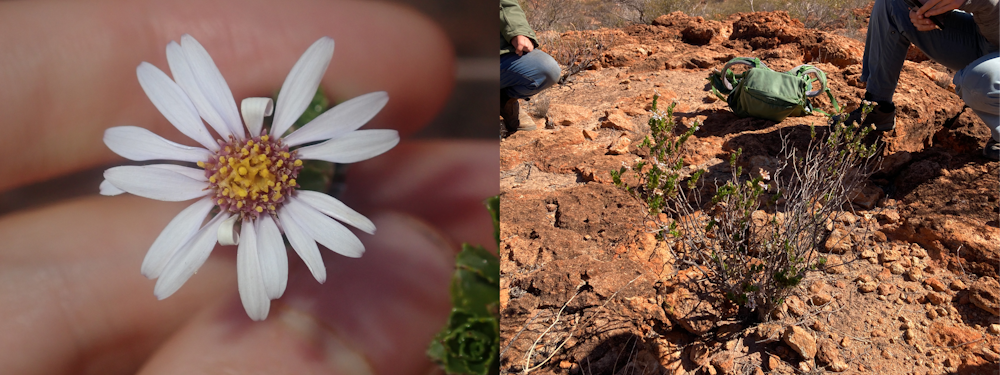 The first identified field photographs of Olearia eremaea, taken during the Desert Discovery expedition to Yeo Lake, Western Australia in 2022.
Thomas Mesaglio
The first identified field photographs of Olearia eremaea, taken during the Desert Discovery expedition to Yeo Lake, Western Australia in 2022.
Thomas Mesaglio
Of course, some of the species on our unphotographed list have in fact been photographed, but the images are not available in any of the 33 major databases we surveyed. These photographs may be slides in someone’s desk drawer or hard drive somewhere, appear in possibly out-of-print field guides and books, be behind paywalls in the scientific literature, or are not currently identified due to a lack of other comparison photos. This lack of discoverability is a problem, because these photos are very unlikely to be found by someone in the field trying to identify the species.
We have produced a searchable list of Australian native plants lacking photographs. We hope this work stimulates both professional and citizen scientists to track down these species and add photographs to public, discoverable repositories such as iNaturalist.
But be warned: these aren’t easy treasure hunts. These species are a mix of very remote and often overlooked species – they are typically not famous or eyecatching. Finding them will take determination, botanical know-how, and a sturdy off-road vehicle.
But the pay-off would be well worth it – successful pictures would make their way into identification guides, allowing both citizen and professional scientists to identify, monitor and conserve these species into the future.
Read more: The 50 beautiful Australian plants at greatest risk of extinction — and how to save them
Authors: Thomas Mesaglio, PhD candidate, UNSW Sydney


















