

Low vaccination and immunity rates mean NZ faces a harsh whooping cough winter – what needs to happen
- Written by: Helen Petousis-Harris, Associate Professor Primary Health, University of Auckland
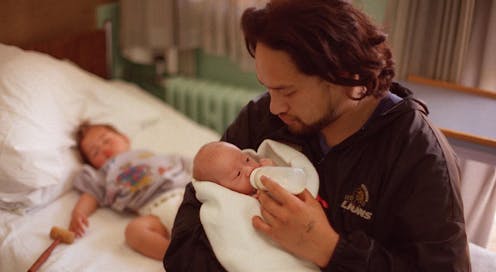
Following the deaths of two infants, doctors and scientists worry New Zealand’s whooping cough epidemic could be the worst in years.
Known as pertussis or the 100-day cough, whooping cough is a bacterial respiratory infection caused by Bordetella pertussis. It is extremely infectious and endemic in New Zealand.
Usually, pertussis epidemics occur in three-to-five-year cycles. Community (herd) immunity is thought to account for such cycles, with the end of an epidemic indicating herd immunity has been reached.
Then, over the subsequent three to five years, the pool of susceptible individuals grows until a threshold of susceptibility triggers another epidemic.
But the COVID pandemic, years of declining immunisation coverage and some nasty microbes have conspired to create a perfect storm of infectious diseases – including whooping cough, measles, respiratory syncytial virus (RSV) and influenza – for the coming winter.
Infants and young children, particularly Māori, will face the brunt.
Symptoms of whooping cough
Whooping cough symptoms vary depending on many factors, including age, vaccination history and pre-existing conditions.
Initially, symptoms are non-specific, reading from the common cold’s playbook – runny nose, sneezing, occasional cough and maybe a mild temperature. This is the most infectious stage and also when antibiotics are most effective.
Features such as violent coughing, sometimes ending in vomiting or turning blue, and the “whoop” sound on breathing occur one to two weeks after these initial symptoms. At this stage, antibiotics are not expected to help symptoms, and for severe cases, care is only supportive, rendering clinicians and loved ones feeling helpless.
Social distancing slowed spread of pertussis
The youngest infants are most vulnerable to pertussis. Complications usually arise from violent coughing, and range from facial swelling, broken ribs and lack of oxygen to brain bleeds and swelling. There is also evidence B. pertussis has immune-suppressing qualities, increasing the risk for co-infections or secondary infections.
Over the past 21 years, at least ten deaths in babies have been caused by pertussis in New Zealand. There have likely been more, with some potentially incorrectly attributed to sudden unexpected death in infancy.
Under normal circumstances, whooping cough epidemics happen in cycles, but the arrival of COVID sparked rigorous and unprecedented social distancing and other infection control measures. This was essentially a global war against infectious diseases.
Read more: Future infectious diseases: Recent history shows we can never again be complacent about pathogens
As its only host, B. pertussis relies on humans in order to spread. It is possible its spread was disrupted by the measures we took to protect ourselves from COVID, particularly in regions with more severe and prolonged social distancing measures such as Auckland.
The effect of social distancing on transmission patterns and epidemics has not yet been investigated specifically for pertussis. But work on other endemic airborne respiratory diseases, including influenza and RSV, warns large future outbreaks could happen following periods of extended social distancing. These findings are plausible for pertussis.
A third of infants lack protection
Social distancing measures may have reduced circulation of B. pertussis and a corresponding reduction in immunity may have increased susceptibility to pertussis infection. A disruption to the cyclic pattern of an epidemic disease may alter the timing and severity of the following epidemic. It may delay onset but increase severity.
While our pandemic actions may have an influence, we can be certain the alarmingly low immunisation coverage rates will result in some very severe cases among our most vulnerable infants. Around a third of our youngest infants are not appropriately immunised against pertussis. For Māori infants, more than half are at risk.
Prior to the COVID pandemic, New Zealand immunisation coverage had been diving, following a short but glorious period of high and relatively equitable vaccine coverage. This downward trend continued over the past three years, made worse through the diversion of resources that were already strained. The greatest declines in coverage have been among Māori.
This all means that since the last pertussis epidemic, New Zealand has been accruing susceptible individuals, accentuated by the pandemic and the declining immunisation coverage. It is like an all-you-can-eat smorgasbord of hosts for the pertussis bacterium to infect and travel through.
How to curb the immediate risk
The first most important action to prevent infant deaths is by vaccinating pregnant women. This provides transient protection to the newborn until old enough to receive their own vaccinations.
Less than half of pregnant women in New Zealand receive a pertussis booster, and for Māori women this is halved again. We need urgent action to raise awareness and improve access to services because this pregnancy boost is around 90% effective in preventing pertussis in infants.
The second most important task is to ensure infants receive their vaccines on time, every time. Getting these services to where they are most needed is vital and it requires urgent action to improve awareness and support for services to be delivered. This vaccine is about 85-94% effective in preventing pertussis in infants and young children in New Zealand.
While COVID remains an ongoing challenge, the pandemic has left us more vulnerable than we were to many other respiratory infections. There are many other factors that contribute to infectious diseases like pertussis, including poverty. Interventions that reduce risk through social and environmental policies, such as improving housing conditions, are central to infectious disease control.
However, with a burned-out and under-resourced workforce, and a revised health system that has yet to demonstrate its worth, some of the best tools in our kit for this winter are our underutilised vaccines.
Authors: Helen Petousis-Harris, Associate Professor Primary Health, University of Auckland


















