

what is it, where did it come from, and what can it achieve?
- Written by: Gabrielle Appleby, Professor, UNSW Law School, UNSW Sydney
This is the first article in our three-part series explaining Voice, Treaty and Truth.
This week, the government will introduce a constitutional amendment into parliament to establish the Aboriginal and Torres Strait Islander Voice. If successful, it will go to a referendum likely in October or November.
We now know the wording of the amendment and referendum question the government is proposing. But what exactly is the Voice? Where did it come from? And what it can achieve?
What is the Voice?
The Voice provides permanent representation and recognition for Aboriginal and Torres Strait Islander peoples in the Constitution.
The Voice will be a new body that represents Aboriginal and Torres Strait Islander people from across Australia to provide their input into the decisions, policies and laws that are made by the government and parliament.
This is consistent with the UN Declaration on the Rights of Indigenous Peoples, which says Indigenous peoples have a right to participate in government decision-making in matters that affect their rights, through their own political institutions.

Across the world, similar types of institutions and relationships have been established, including in Sweden, Norway and Finland with the Sami people, and with the Māori in Aotearoa. There are also many similar relationships that Indigenous peoples have with the state in North and South America.
However, it’s also important to remember the Voice has been developed as a response to our local circumstances, and in particular, the lack of formal agreement – such as a treaty – or formal recognition of the rightful place of First Nations in Australia.
In Australia, the Voice will be constitutionally enshrined. This means successive governments can’t overturn it. It will be established as a new constitutional body in a new chapter (Chapter 9) at the end of the Constitution.
The key function of the Voice – to make representations to the government and parliament on matters relating to Aboriginal and Torres Strait Islander people – will also be constitutionally protected. But the government and parliament cannot be compelled (for example, through litigation) to follow these representations. As such, this body would not have “veto” power and is not a “third chamber”.
Rather, the Constitution is setting up a mechanism designed to improve decisions, policies and laws through First Nations input on matters that affect them. These matters might directly affect Aboriginal and Torres Strait Islander people, such as changes to the native title law, but it could also include broader laws and policies that have a particular impact on them, such as environmental protection laws or electoral laws. These decisions would be improved through their input.
Other details about the Voice will be decided by parliament through the normal legislative process. This ensures the Voice’s design can be flexible and evolve as required. These details include:
- how many representatives will comprise the Voice
- how they will be selected
- what its internal processes will be
- what powers it will need to perform its functions, such as accessing government information, and
- how the Voice will interact with parliament and the executive.
As many constitutional experts have explained, establishing the key principles and leaving the detail to be determined through the legislative process is a normal – and desirable – way to design constitutional institutions.
That is not to say we don’t know what the Voice will look like – there has been significant work done on this. Most recently, the government has released a set of principles that will guide the initial legislative design of the Voice, should a referendum be successful.
The Voice also performs another important constitutional role: it recognises Aboriginal and Torres Strait Islander people as the First Peoples of Australia in the Constitution. At the moment, the Constitution is entirely silent with respect to Aboriginal and Torres Strait Islander people.
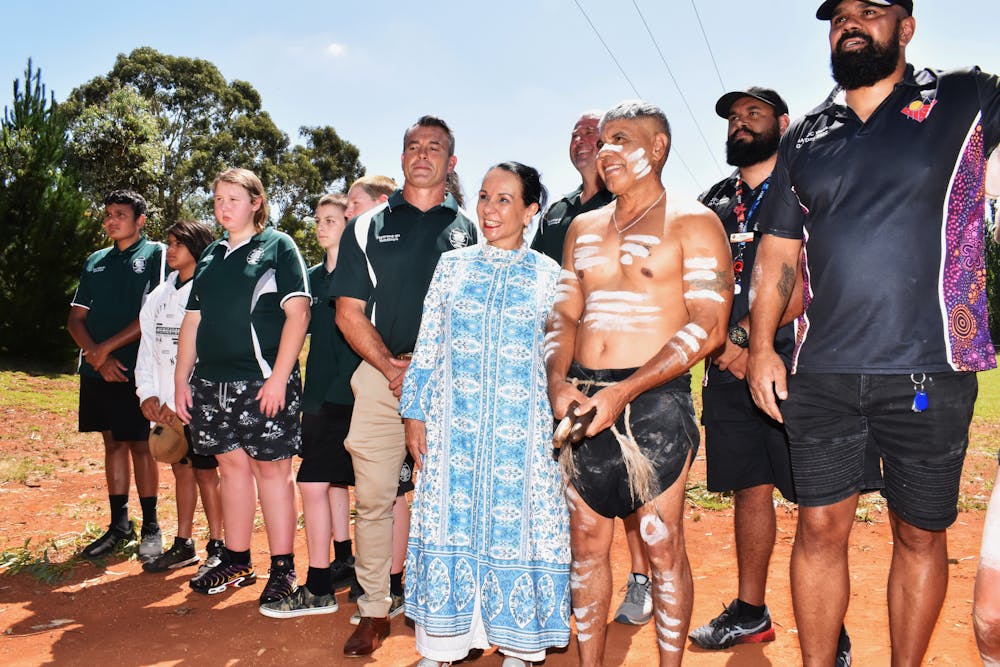 The Constitution is entirely silent with respect to Aboriginal and Torres Strait Islander people.
AAP/Murray McCloskey
The Constitution is entirely silent with respect to Aboriginal and Torres Strait Islander people.
AAP/Murray McCloskey
Read more: Why a First Nations Voice should come before Treaty
Where did it come from?
The Voice has been proposed by Aboriginal and Torres Strait Islander people as the best solution to respond to their overwhelming feeling of disempowerment and structural disadvantage.
The concept of the Voice, when understood as recognition and representation, has a long history. The advocacy for greater political representation for Aboriginal people stretches back to a 1938 petition organised by Yorta Yorta man William Cooper.
The modern advocacy for constitutional recognition stretches back to Prime Minister Paul Keating’s response to the 1992 High Court native title decision known as “Mabo”. This included a social justice reform package that recommended constitutional recognition, to be determined through a series of conventions and negotiations with Aboriginal and Torres Strait Islander people.
This never happened, however. It wasn’t until 2010 that constitutional recognition was raised again as part of Julia Gillard’s minority government negotiations with independent MP Rob Oakeshott. This resulted in the establishment of the Expert Panel on Constitutional Recognition of Indigenous Australians, which reported in 2012.
The panel recommended recognition should be achieved through a series of changes, and most controversially a clause in the Constitution about racial non-discrimination. The Labor government never responded to the proposal and the Coalition dismissed it as a “one-clause bill of rights”.
Following this, in 2015, Aboriginal and Torres Strait Islander leaders developed the Kirribilli Statement, which requested a new set of consultations to break the stalemate on recognition.
This led to the bipartisan establishment of the Referendum Council and a A$10 million commitment to undertake nationwide consultations with Aboriginal and Torres Strait Islander people – as had been proposed back in the 1990s but never happened – as well as non-Indigenous consultations.
At the same time, groups like the Cape York Institute under Noel Pearson began significant work on a proposal for an Indigenous representative constitutional body, which would lay the conceptual foundations of the Voice. This included the development of some initial drafting by constitutional expert and professor Anne Twomey.
The Indigenous members of the Referendum Council, under the leadership of Aunty Pat Anderson, Megan Davis and Pearson, designed a series of locally led dialogues to understand the reform priorities of First Nations people across the country.
Each dialogue selected representatives to attend a First Nations Constitution Convention. After days of negotiations over such pressing questions as sovereignty and how best to achieve aspirations like a treaty, the convention endorsed the Uluru Statement from the Heart.
This called for two stages of reforms. First, a constitutionally enshrined Voice. Second, Makarrata, which is a Yolngu word for “coming together after a struggle”, to include agreement-making (a treaty) and truth-telling. Voice. Treaty. Truth.
Read more: Your questions answered on the Voice to Parliament
What can it achieve?
The Voice is both a practical and symbolic reform.
Practically, the Voice is informed by decades of research and the experience of people on the ground, that decisions, policies, laws and most importantly outcomes are improved when Indigenous peoples are empowered and involved in the process.
Symbolically, the Voice offers Australia a chance to design a more inclusive narrative of nationhood, informed and strengthened by the participation of First Nations people.
In Australia, we have tried to address these issues before, including through bodies like the National Aboriginal Consultative Committee and the National Aboriginal Conference in the 1970s, the Aboriginal and Torres Strait Islander Commission (ATSIC) from 1990-2005, and smaller ministerial advisory bodies.
These bodies did good work and made a real difference, despite having limited power and resources. They often faced hostile political environments where a change in government would undermine the progress made.
But none of these bodies were enshrined in the Constitution, and each was dismantled, often at times of heightened political tension with the government. So, Aboriginal and Torres Strait Islander people were not able to have independence, stability, continuity or the necessary capacity to engage with government in a meaningful, ongoing way.
The Voice offers a highly practical reform, which for the first time will offer independence and stability through constitutional enshrinement.
The Voice is also an important stepping stone towards other key reforms in the relationship between Aboriginal and Torres Strait Islander people and the state – in particular, treaty and truth as described in the Uluru Statement.
The sequencing of Voice, Treaty, Truth has been given significant thought.
Voice precedes Treaty because fair, modern treaty negotiations require first the establishment of a representative Indigenous body to negotiate the rules of the game with the state. It can’t be left to the state alone, and the state must have a group of people with whom to negotiate.
In Victoria, this was achieved through a specific representative institution – the First Peoples Assembly.
Truth follows Voice and Treaty, because, as Torres Strait Islander political scientist Sana Nakata explains, Voice ensures Truth will matter more than just “continued performance of our rage and grief for a third century and longer”. Voice establishes the power for Treaty, and Treaty establishes the safekeeping of Truth.
As historian Kate Fullagar explains, truths about Indigenous history in Australia are well-known – there have already been royal commissions into colonial violence, the stolen generation, and Black deaths in custody. But they have been too easily forgotten, and they have not led to change.
The Voice presents an opportunity for improving the relationship between First Nations and the State through stable political empowerment that will give all Australians an opportunity for a better, shared future.
Read more: What do we know about the Voice to Parliament design, and what do we still need to know?
Authors: Gabrielle Appleby, Professor, UNSW Law School, UNSW Sydney


















