

What can't bees do? Unique study of urban beehives reveals the secrets of several cities around the world
- Written by: Scarlett Howard, Lecturer, Monash University
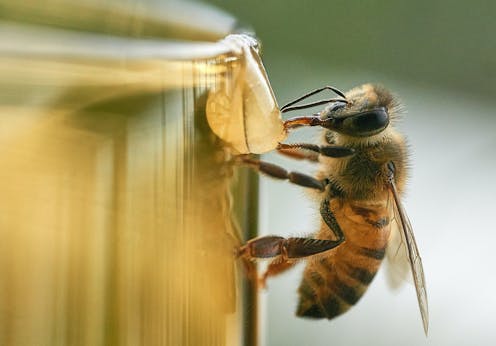
Bees provide myriad benefits to humanity, including pollination services, honey production, food security and crop pollination, artistic inspiration and even career opportunities.
But what if bees could also provide insights into human and city health? A new study published today in Environmental Microbiome shows how honeybee hives reveal information about human health, pathogens, plant life and the environment of different cities.
Our living cities
The United Nations predicts nearly 70% of the human population will reside in cities by 2050.
While cities are planned and built with humans in mind, they also act as complex, adaptive ecosystems hosting a diversity of other living organisms. Human health and wellbeing in urban areas can be affected by our interactions with the many invisible things we share our cities with.
It is therefore important to understand what biotic (living organisms such as plants, animals, and bacteria) and abiotic (non-living components such as soil, water and the atmosphere) parts make up our cities. However, to collect such samples from across the city, we need lots of volunteers, time and intensive labour.
Honeybee hives maintained by urban beekeepers could provide a new, more efficient way to sample the urban microbiome – a collection of the local microbes, such as bacteria, fungi, viruses, and their genes.
Read more: Urban bee keepers can help save wild bees
Honeybees as collaborators
Honeybees often live in hives of 60,000–80,000 individuals. When a bee reaches a certain age in the hive (roughly 21 days), they become a forager. Foragers leave the hive in search of nectar, pollen and other resources.
Researchers enlisted the help of honeybees as data collectors in five cities: New York in the United States, Tokyo in Japan, Venice in Italy, and Melbourne and Sydney. In urban areas, honeybee foragers typically travel approximately 1.5km from the hive to visit flowers.
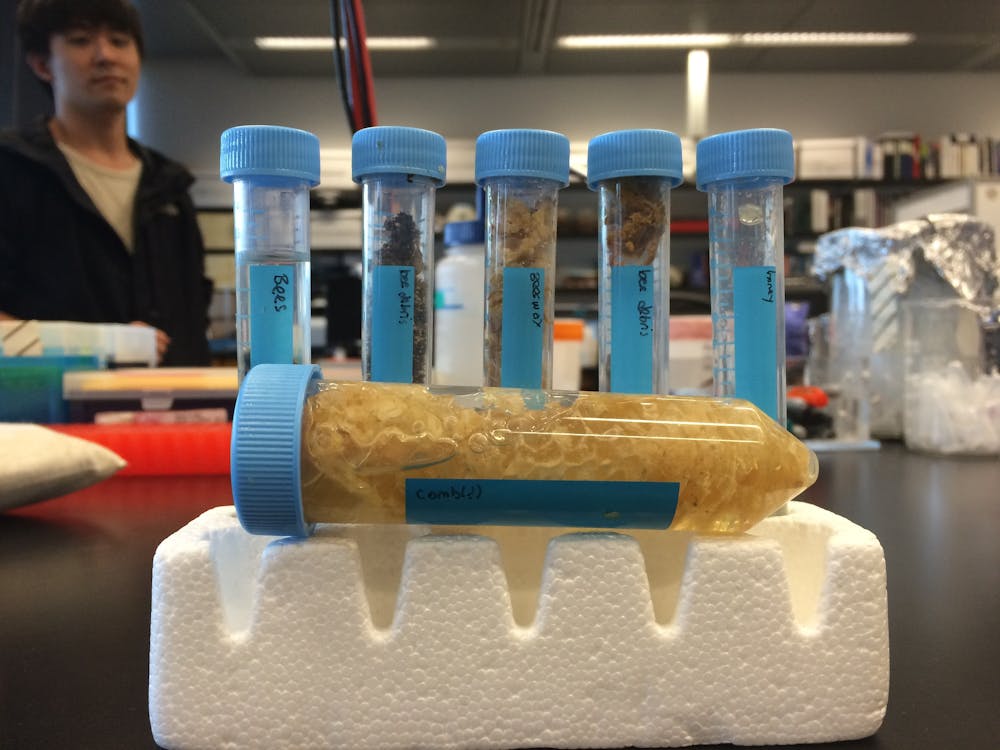
During these flights they can interact with many biotic and abiotic components of the environment, carrying traces of these interactions back to the hive. In each city, the team took samples of one or more of the following: hive materials including honey, bee bodies, hive debris (accumulation of material under or at the bottom of the hive) and swabs of the hive itself.
The ‘genetic signature’ of a city
The researchers found some unexpected materials in the hives, alongside less surprising results. Hive materials showed plant DNA that varied between cities. In Melbourne, the sample was dominated by eucalyptus, while samples from Tokyo contained plant DNA from lotus and wild soybean, as well as the soy sauce fermenting yeast Zygosaccharomyces rouxii.
Samples from Venice were dominated by fungi related to wood rot and date palm DNA. The samples also contained bee-related microorganisms, indicating both healthy hives and hives with pathogens or parasites, such as Varroa destructor.
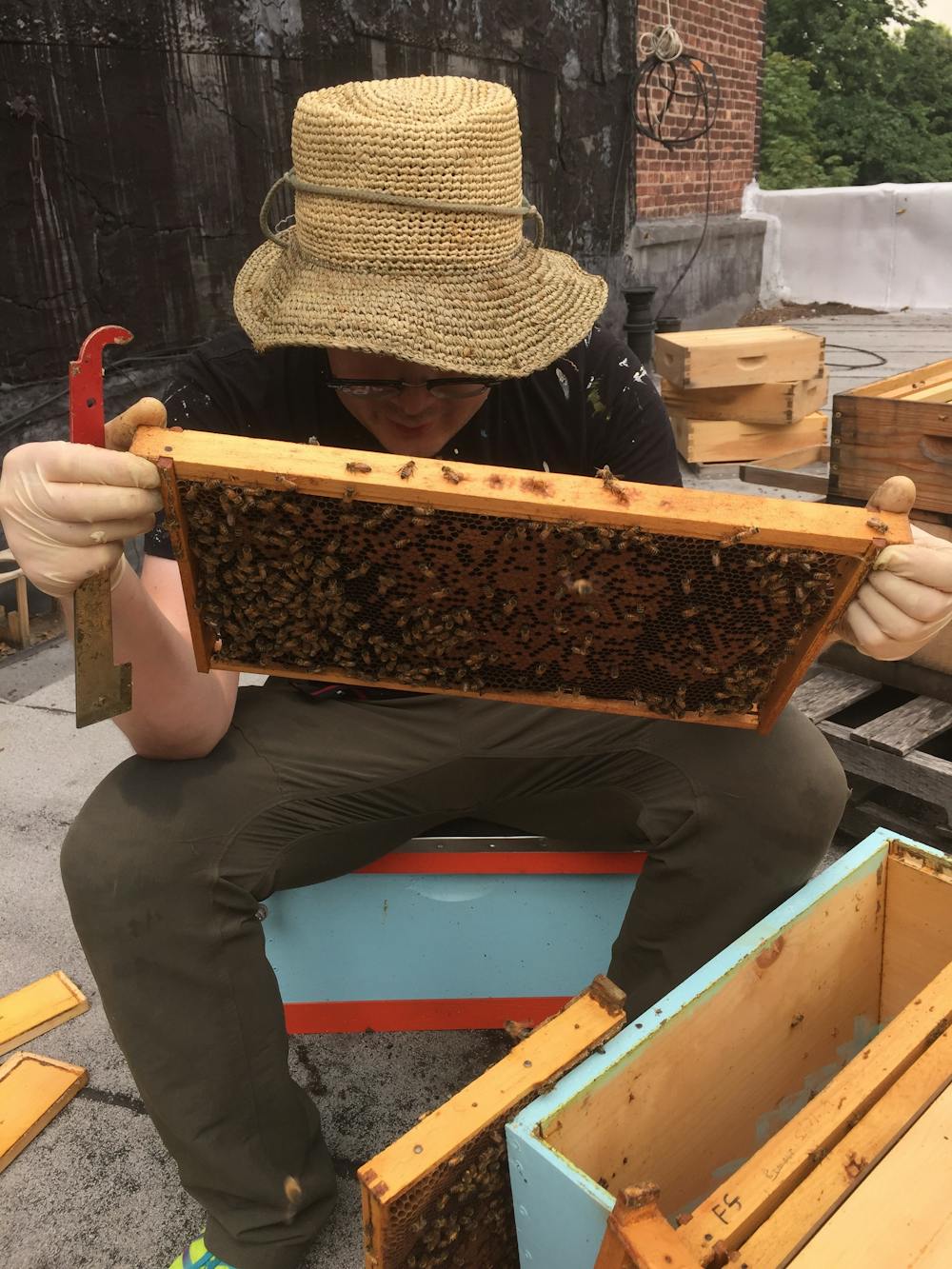 Beekeeper Tim O’Neal inspecting a frame from a beehive in Fort Greene, Brooklyn, New York.
Kevin Slavin, Supplied
Beekeeper Tim O’Neal inspecting a frame from a beehive in Fort Greene, Brooklyn, New York.
Kevin Slavin, Supplied
The more surprising discoveries included genetic data in the Sydney sample from a bacterial species that degrades rubber, Gordonia polyisoprenivorans. DNA from a pathogen spread to humans via cat fleas called Rickettsia felis was also found in samples, and showed up in Tokyo hives over time.
How do we interpret these results?
The study offers a new and interesting use of honeybee hives in cities – the potential to monitor human health and urban pollution. However, there were some limitations to the work. The differences in microbiomes across cities were based on small sample sizes – one hive in Venice, three in New York, two in Melbourne, two in Sydney and 12 in Tokyo.
Due to these constraints, differences between cities could potentially be attributed to variation in hives and their genetics. Future work using longer-term studies with more hives would help to uncover whether the unique genetic signatures were due to differences amongst cities or between hives or even time periods.
The authors have suggested that honeybee hive debris could provide a snapshot of the microbial landscape of cities. In the future, they argue such methods could even help to monitor antibiotic resistance and the spread viral diseases, but much more sampling and validation will be needed to achieve these goals.
Authors: Scarlett Howard, Lecturer, Monash University


















