

Whether you're a snorkeller or CEO, you can help save our vital kelp forests
- Written by: Aaron Eger, Postdoctoral research fellow, UNSW Sydney
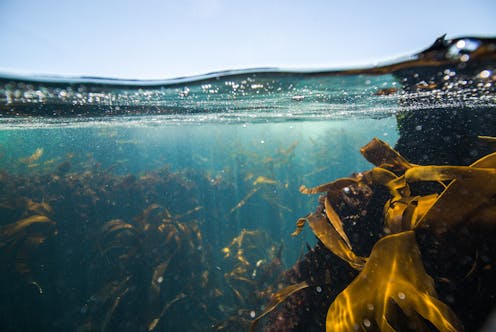
What if we told you the world has forests harbouring creatures with three hearts and where the canopy can grow by a foot a day? What if we told you it was silently disappearing? What if we told you we now have the chance to bring it back?
These wonder-filled and remarkably productive ecosystems are kelp forests. They wrap around almost a third of the world’s coastlines. If you live in New York, Los Angeles, Sydney or Tokyo, you can snorkel over a kelp forest on a day trip, and potentially spot a seahorse or three-hearted octopus.
Kelp forests have even influenced human migration patterns. The so-called “kelp highway” suggests the first Americans settled on the continent by following the kelp-dominated coastline of the Pacific Rim, feeding on plentiful fish and molluscs.
But these vast forests of the sea are little known compared to coral reefs. That’s a tragedy, given they support some of our most lucrative fisheries such as lobster and abalone, house thousands of species, and can capture great amounts of carbon.
Kelp forests are dying at a rate similar to coral reefs or rainforests. In some areas, we have seen near total loss of kelp forests in living memory, and sometimes in just a few years. This includes losing 95% of bull kelp in northern California and 95% of giant kelp in Tasmania.
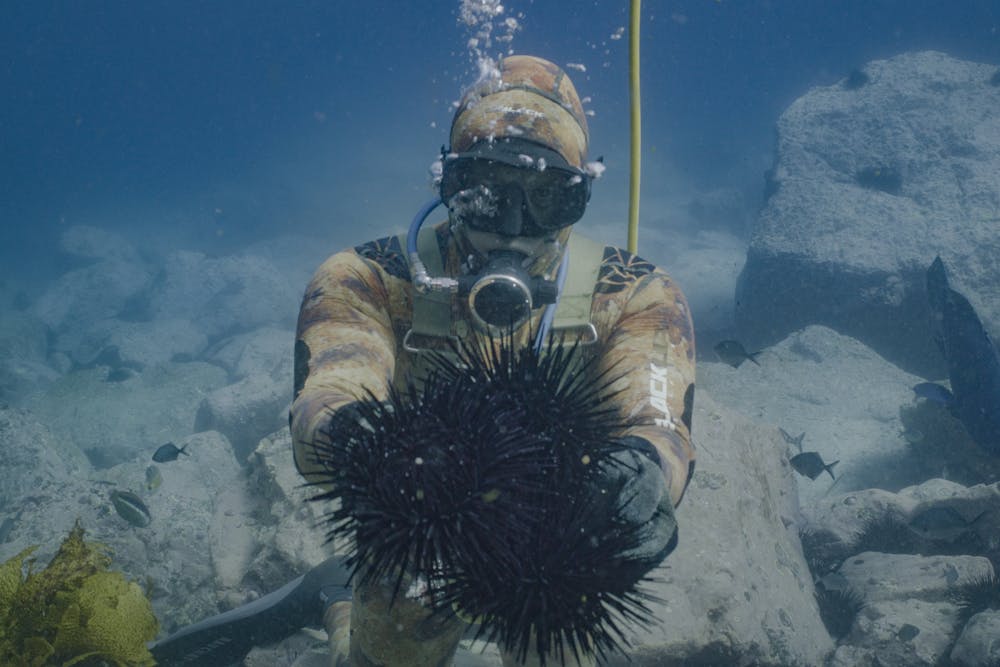
But this is not a bad news story. This is about you and your ability to help. You might think – what can I do? I’m not a scientist. But all around the world, communities and individuals are working to restore these ecosystems. It might be planting out baby kelp with mask and snorkel, removing destructive sea urchin swarms or even creating art to draw attention to these forgotten forests.
From citizen science to community-led recovery
This year, we issued the Kelp Forest Challenge to communities around the world: let’s aim to protect 3 million hectares of surviving kelp and restore one million more hectares by 2040.
A task this size can’t be achieved just by scientists and researchers. We need communities to play an active part. Just as people turn out in droves for Clean Up Australia Day to replant native plants along creeks or fish out introduced carp, we believe community backing is the only way we will be able to regenerate the oceans.
We’re not alone in this. Many other groups are looking to community help to expand restoration efforts. Think of South Australia’s Seeds for Snapper program, which relies on beachcombers collecting seagrass fruit to aid replanting of the seagrass meadows which act as fish nurseries.
The stakes are high. Last year, nations signed the Kunming-Montreal biodiversity pact, which included pledging to protect 30% of the world’s oceans by 2030.
We have to ensure our remaining kelp forests are covered. At present, very few kelp forests have any measure of protection. They’re often forgotten or excluded from marine management plans.
But they are vital. Australia’s Great Southern Reef, for instance, is the kelp counterpart to the far better known Great Barrier Reef. Where the coral peters out in northern New South Wales, the kelp starts, spanning thousands of kilometres across Australia and stopping only in Kalbarri, Western Australia.
Read more: The Great Southern Reef is in more trouble than the Great Barrier Reef
Some countries are tackling this at a national level. South Korea has pledged to restore an additional 30,000 hectares of kelp forest by 2030. We now need other countries to follow suit.
Yet, there are many ways to help kelp. In Tasmania, for instance, the government subsidised a sea urchin fishery. Why? Because as climate change brings warmer waters, kelp-munching, long-spined sea urchins have migrated from the mainland and now number in the millions. Recreational divers have also been asked to help by removing urchins they spot.
Is it possible?
Stopping environmental collapse can seem like an impossible task. But take heart. Remember – we’ve already overcome other seemingly unachievable conservation challenges.
We once used whale oil to fuel our lamps, soap up in the bath and even make sandwiches. But our demand for this oily product soon outstripped supply. Whalers with harpoons drove them almost to extinction. Once considered inexhaustible, humpbacks were hunted down to just 5% of their previous population size.
This ecological tragedy gave way to one of our greatest conservation successes. After getting together, coordinating and acting, we banned whaling. The humpback population has soared to over 135,000.
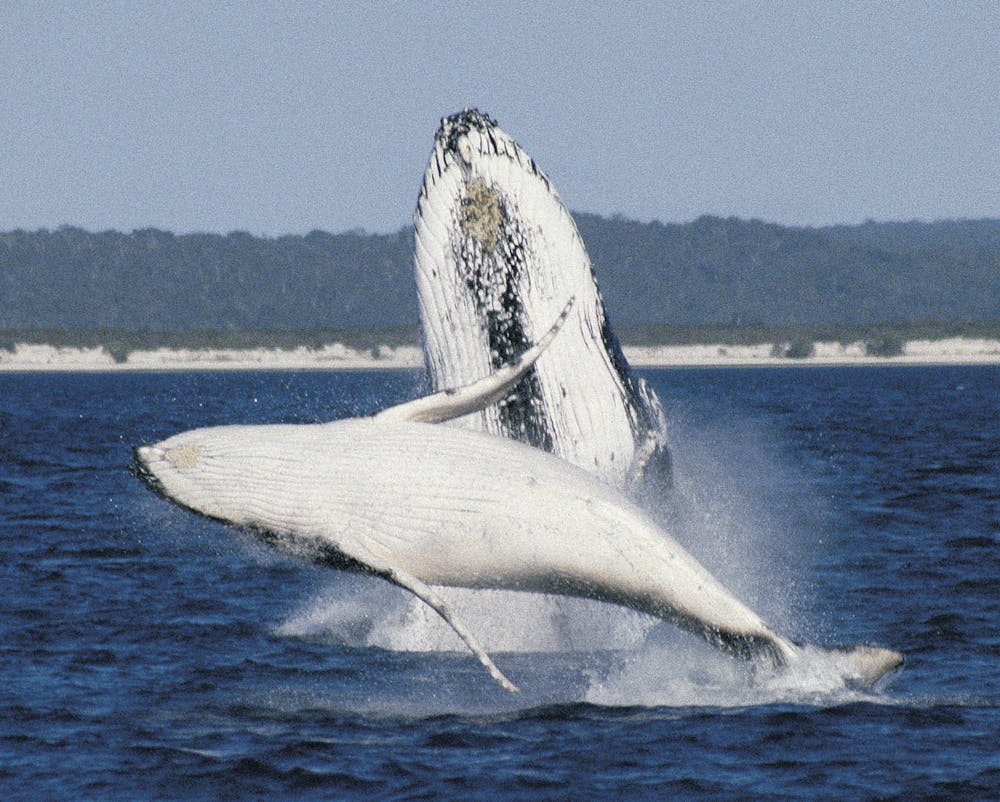 Humpback populations have grown strongly since we stopped killing them for oil.
AP/Oceania Project
Humpback populations have grown strongly since we stopped killing them for oil.
AP/Oceania Project
In this case, simply stopping what we were doing allowed the whales to rebound from near extinction. But we’re not so lucky with our kelp forests.
We have tried cleaning up water pollution, removing pest species and even stopping local harvests. But in many cases, stopping the original cause of decline hasn’t been enough to entice these ecosystems to return. This sobering fact means it’s time to put on our wetsuits and get to work actively restoring undersea forests.
So what can you do?
Do you run a business? Stopping pollution from flowing into rivers is one way to help kelp, as well as avoiding development in sensitive coastal areas.
Even better, some businesses are moving towards being nature positive. That is, their work regenerates nature rather than depletes it. Think of the people in Moreton Bay fisheries active in restoring local oyster reefs.
Tech companies can help by monitoring marine forest health. Kelp farmers can provide seed stock and baby kelp for restoration. Tourism operators can promote kelp forests and their creatures – think of the growing fame of the giant cuttlefish breeding season in Whyalla.
And if you’re a keen community member? You can help by volunteering your time with citizen science projects like the Reef Life Survey, forming community groups to steward and protect your patch of the ocean or contributing to existing restoration projects like Sydney’s Operation Crayweed.
We can no longer rely on the oceans to heal themselves. We’ll need help from all levels of society to make it happen.
Read more: Can selective breeding of 'super kelp' save our cold water reefs from hotter seas?
Authors: Aaron Eger, Postdoctoral research fellow, UNSW Sydney


















