

Nature is in crisis. Here are 10 easy ways you can make a difference
- Written by Matthew Selinske, Senior Research Fellow, RMIT University
Last month, Sir David Attenborough called on United Kingdom residents to “go wild once per week”. By this, he meant taking actions which help rather than harm the natural world, such as planting wildflowers for bees and eating more plant-based foods.
Australia should follow suit. We love our natural environment. But we have almost 10 times more species threatened with extinction than the UK. How we act can accelerate these declines – or help stop them.
We worked with 22 conservation experts to identify 10 actions which actually do help nature.
Why do we need to act for nature?
If you go for a bushwalk, you might wonder what the problem is. Gums, wattles, cockatoos, honeyeaters, possums – everything is normal, right? Alas, we don’t notice what’s no longer there. Many areas have only a few of the native species once present in large numbers.
We are losing nature, nation-wide. Our threatened birds are declining very rapidly. On average, there are now less than half (48%) as many of each threatened bird species than in 1985. Threatened plants have fared even worse, with average declines of over three quarters (77%).
Biodiversity loss will have far-reaching consequences and is one of the greatest risks to human societies, according to the OECD.
The small choices we all make accumulate to either help or harm nature.
Our top ten actions to help biodiversity
1. Choose marine stewardship council certified seafood products
Why? Overfishing is devastating for fish species. By-catch means even non-food species can die in the process.
Where to start: Look for the blue tick of the Marine Stewardship Council (MSC) or the green tick of the Aquaculture Stewardship Council (ASC) approval on seafood products where you shop, or use the Australia’s Sustainable Seafood Guide. Certified products are caught or farmed sustainably.
2. Keep your dog on a leash in natural areas – including beaches
Why? Off-leash dogs scare and can attack native wildlife. When animals and birds have to spend time and energy fleeing, they miss out on time to eat, rest and feed their young.
Where to start: Look for local off-leash areas and keep your dog leashed everywhere else.
 Walk your dog on a leash in natural areas so it can’t chase and scare native wildlife.
Jaana Dielenberg
Walk your dog on a leash in natural areas so it can’t chase and scare native wildlife.
Jaana Dielenberg
3. Cut back on beef and lamb
Why? Producing beef and lamb often involves destroying or overgrazing natural habitat, as well as culling native predators like dingoes.
Where to start: Eat red meat less often and eat smaller portions when you do. Switch to poultry, sustainable seafood and more plant-based foods like beans and nuts. Suggest a meatless Monday campaign in your friend and family group chat to help wildlife – and your own health.
 What a delicious looking veggie burger! Reducing beef and lamb consumption is a relatively easy way to reduce your impact on nature, given the wide range of vegetable, poultry and sustainable fish alternatives.
Theo Crazzolara/Flickr
What a delicious looking veggie burger! Reducing beef and lamb consumption is a relatively easy way to reduce your impact on nature, given the wide range of vegetable, poultry and sustainable fish alternatives.
Theo Crazzolara/Flickr
Read more: How to get the nutrients you need without eating as much red meat
4. Donate to land protection organisations.
Why? These organisations protect land in perpetuity. Donations help them expand and do important on-ground biodiversity management.
Where to start: Check out organisations such as the Australian Wildlife Conservancy, Bush Heritage Australia, Trust for Nature, and Tasmanian Land Conservancy.
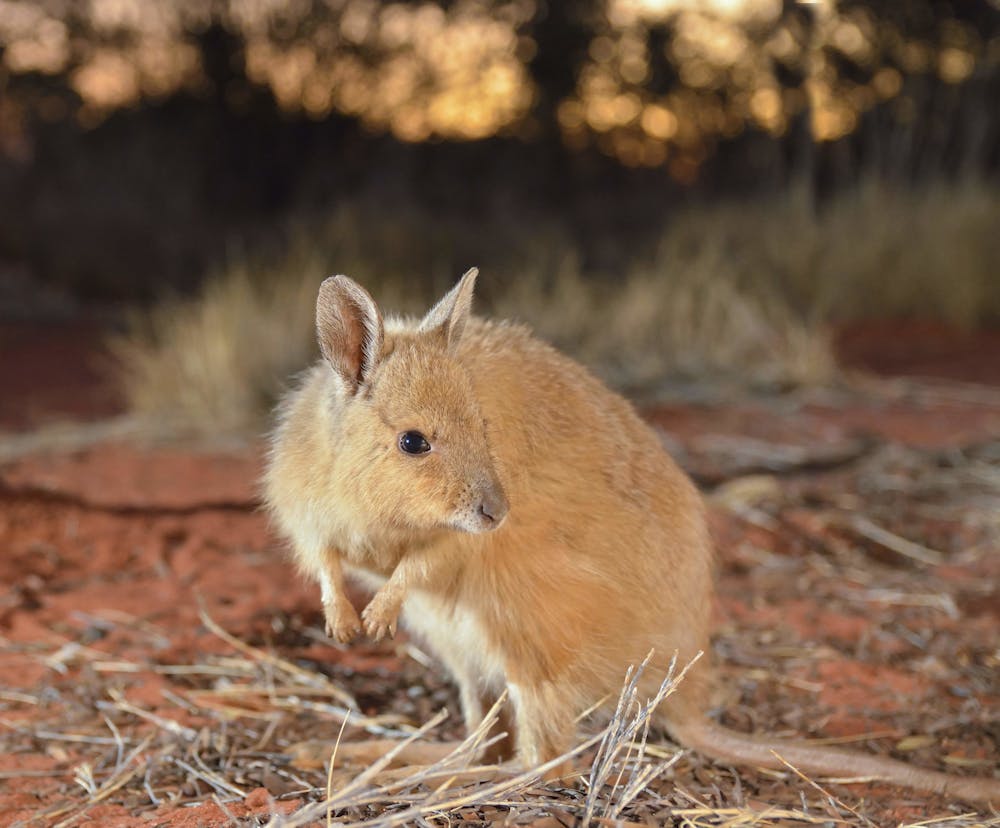 You can help threatened species like this critically endangered mala by donating to private land conservations organisations that do on-ground biodiversity management.
Wayne Lawler/Australian Wildlife Conservancy.
You can help threatened species like this critically endangered mala by donating to private land conservations organisations that do on-ground biodiversity management.
Wayne Lawler/Australian Wildlife Conservancy.
5. Make your investments biodiversity-friendly
Why? Many funds include companies whose business model relies on exploiting the natural environment. Your money could be contributing. Looking for biodiversity-positive investments can nudge funds and companies to do better.
Where to start: Look at the approach your superannuation fund takes to sustainability and consider switching if you aren’t impressed. You could also explore the growing range of biodiversity-friendly investment funds.
6. Donate to threatened species and ecosystem advocacy organisations
Why? These groups rely on donations to fund biodiversity advocacy, helping to create better planning and policy outcomes for our species.
Where to start: Look into advocacy groups like WWF Australia, Birdlife Australia, Biodiversity Council, Environment Centre NT, and the Environmental Defenders Office.
7. Plant and maintain a wildlife garden wherever you have space
Why? Our cities aren’t just concrete jungles – they’re important habitat for many threatened species. Gardening with wildlife in mind increases habitat and connections between green space in suburbs.
Where to start: Your council or native nursery is often a great source of resources and advice. Find out if you have a threatened local species such as a butterfly or possum you could help by growing plants, but remember that non-threatened species also need help.
8. Vote for political candidates with strong environmental policies
Why? Electing pro-environment candidates changes the game. Once inside the tent, environmental candidates can shape public investment, planning, policy and programs.
Where to start: Look into local candidate and party policies at every election. Consider talking to your current MP about environmental issues.
9. Desex your cat and keep it inside or in a cat run
Why? Research shows every pet cat kept inside saves the lives of 110 native animals every year, on average. Desexing cats avoids unexpected litters and helps to keep the feral cat population down.
Where to start: Keep your cat inside, or set up a secure cat run to protect wildlife from your cute but lethal pet. It’s entirely possible to have happy and healthy indoor cats. Indoor cats also live longer and healthier lives.
 Cats are excellent pets – and excellent killers of wildlife if let loose.
Shutterstock
Cats are excellent pets – and excellent killers of wildlife if let loose.
Shutterstock
Read more: One cat, one year, 110 native animals: lock up your pet, it's a killing machine
10. Push for better control of pest animals
Why? Pest species like feral horses, pigs, cats, foxes and rabbits are hugely destructive. Even native species can become destructive, such as when wallaby populations balloon when dingoes are killed off.
Where to start: Look into the damage these species do and tell your friends. Public support for better control is essential, as these issues often fly under the radar.
Making a difference
Conservation efforts may seem far away. In fact, our daily choices and actions have a considerable effect.
Talking openly about issues and actions can help these behaviours and habits spread. If we all do a small part of the work and support others to do the same, we will see an enormous effect.
Authors: Matthew Selinske, Senior Research Fellow, RMIT University

















