

Why are the poor shunned? The reasons are complicated
- Written by Nick Haslam, Professor of Psychology, The University of Melbourne
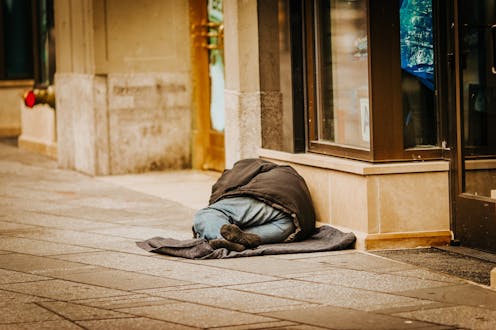
In a study of 19th century ideas of poverty, the German historian Beate Althammer observes a strange dichotomy. On the one hand, “there existed a deep-rooted tradition of ascribing to the poor a special proximity to God”. As a Hamburg teacher wrote in 1834:
Who obliges us more to sympathy and reverence than he who faces the inescapable blows of an erratic fate with manly steadiness, pious resignation and wise abstinence? What a dignified appearance is the neediness simultaneously ennobled and keenly veiled by an indestructible love of honor, which will bear suffering rather than pity!
Yet the same teacher sounds a dissonant note when writing about the “depraved, ignominious poverty” of the beggar, “who has rid himself of all shame and discipline on the way to impoverishment”.
“Where idleness has become a trade and begging a fraudulent art,” he continues, “all human feeling has died.”
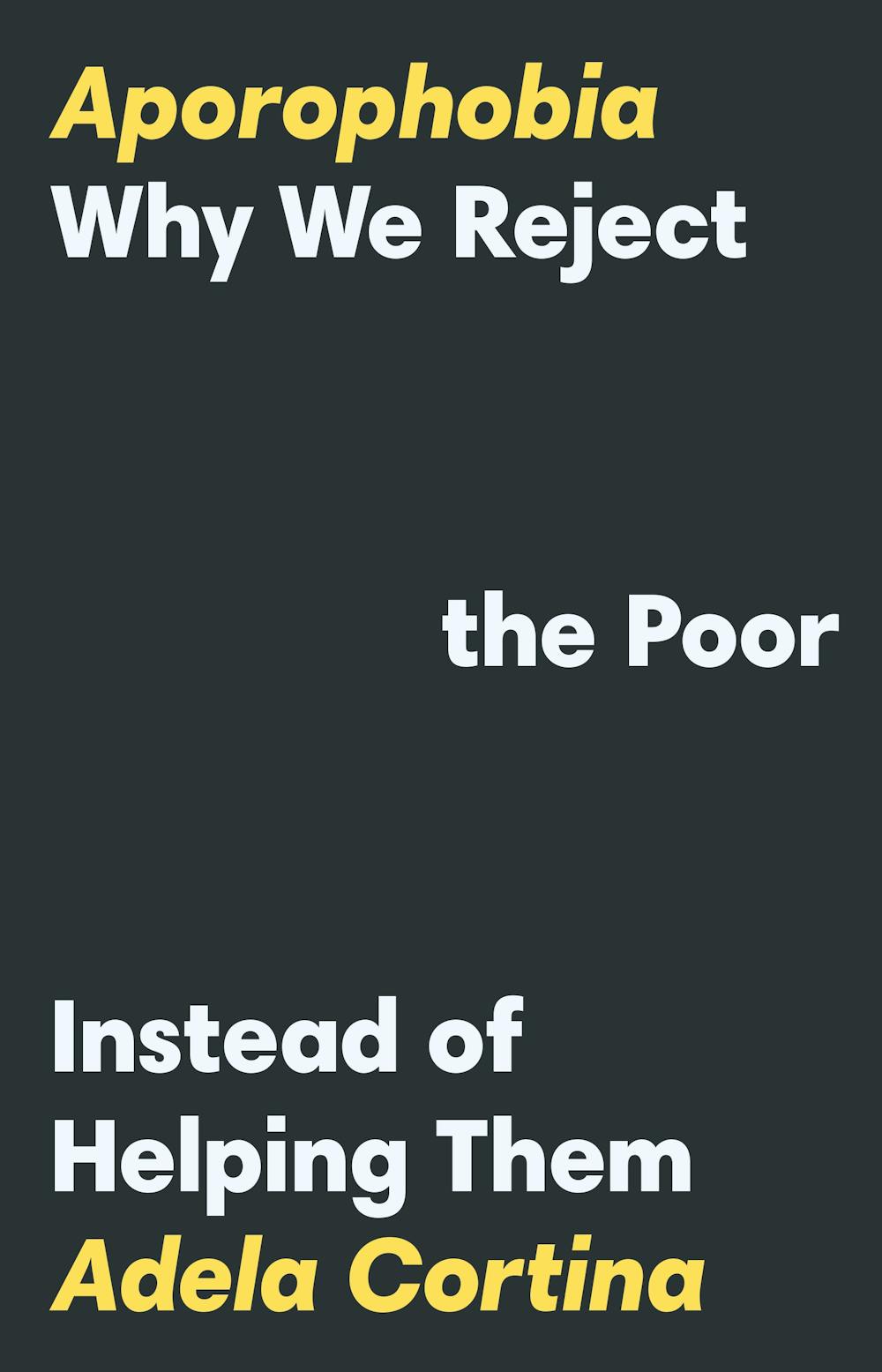
Review: Aporophobia: Why We Reject the Poor Instead of Helping Them – Adela Cortina (Princeton University Press).
The idea that the poor are impoverished morally as well as materially, that they lack humanity as well as means, has a long history. It is expressed most mordantly in Jonathan Swift’s A Modest Proposal, a 1729 satire on British attitudes to Irish poverty. Starvation among large families could be averted with a simple solution:
A young healthy child well nursed, is, at a year old, a most delicious nourishing and wholesome food, whether stewed, roasted, baked, or boiled; and I make no doubt that it will equally serve in a fricassee, or a ragout.
Swift’s suggestion that poor children could become a commercial food source is mocking heartless responses to poverty. His “proposal” rests on a dehumanising equation of people with animals or consumer goods. A new book argues that this animus is an enduring feature of contemporary society.
Aporophobia
Adela Cortina is a distinguished Spanish political philosopher who has written extensively on ethics, justice, civil society and democracy. Around the new millennium, she began to write on the rejection of the poor as an overlooked form of prejudice.

Cortina coined the term “aporophobia” – from the Ancient Greek aporos, meaning poor or without means – and published an influential 2017 book on the subject in Spanish. That book has now been published in English as Aporophobia: Why We Reject the Poor Instead of Helping Them.
Cortina does not present aporophobia as a clinical condition or narrowly as a species of fear. Much like other faux-phobias, such as homophobia and xenophobia, she takes it to be a widespread aversion, based on contempt as much as dread, which justifies the ongoing deprecation of the poor.
Her primary case for the reality and significance of aporophobia rests on the harsh treatment of immigrants and displaced people. What might first appear to be a xenophobic response, Cortina argues, may not be motivated by their foreignness or race, but by the perception that their poverty leaves them unable to reciprocate the host nation’s beneficence:
Do we reject immigrants because they are foreign or because they are poor and seem to bring problems while offering nothing of value in return?
Cortina observes that some groups of foreigners are welcomed. Tourists, investors and international students, all of whom bring resources, encounter widespread xenophilia. The roots of prejudice towards immigrants, refugees and asylum seekers, Cortina suggests, are therefore to be found in the perception of their indigence rather than their alienness.
 Having defined and made a theoretical case for aporophobia, Cortina moves on to the problem of hatred, understood as group-based animosity based on the assumed superiority of its perpetrators.
Hate crimes against the poor and homeless motivated by aporophobia, which she estimates as constituting around 1% of Spain’s total, must be acknowledged and taken seriously. Even so, she maintains that aporophobic hatred is distinct from other kinds because “involuntary poverty […] is neither a personal identity nor a choice”.
Cortina’s prescription for combating hate speech is the cultivation of “active respect” and “mutual recognition of dignity” in civil society. Juridical solutions are insufficient, she maintains. The grounds for objecting to hate speech is a proposed “right to self-esteem”, a right that some might seem to have in excess.
Although many examples of hate speech appear to be based on race, religion or ideology, Cortina proposes that poverty is their essential common ingredient. Aporophobia, she argues, “is inevitably at the root of speech acts that target those in subordinate positions”. On this expansive view, any form of subordination or “position of weakness” is interpreted as a form of poverty.
Overcoming hatred may be challenging because “our brains are aporophobic”. Cortina explores the neuroscience of social conflict, finding evidence of a “contractualist brain” that is primed to expect reciprocity and respond with moralistic aggression to violations of that principle. To override this brain-based rejection of free riders, she argues, we need a program of “moral bioenhancement”.
The ultimate way forward does not involve tinkering with our brains, however. “Economic institutions that eliminate poverty and inequality are the best ways to eradicate aporophobia.” In addition, universal values and “cosmopolitan hospitality” must be taught and practised. Cortina closes her book with suggestions for how a more compassionate citizenry and a more economically fair international order can be created.
Having defined and made a theoretical case for aporophobia, Cortina moves on to the problem of hatred, understood as group-based animosity based on the assumed superiority of its perpetrators.
Hate crimes against the poor and homeless motivated by aporophobia, which she estimates as constituting around 1% of Spain’s total, must be acknowledged and taken seriously. Even so, she maintains that aporophobic hatred is distinct from other kinds because “involuntary poverty […] is neither a personal identity nor a choice”.
Cortina’s prescription for combating hate speech is the cultivation of “active respect” and “mutual recognition of dignity” in civil society. Juridical solutions are insufficient, she maintains. The grounds for objecting to hate speech is a proposed “right to self-esteem”, a right that some might seem to have in excess.
Although many examples of hate speech appear to be based on race, religion or ideology, Cortina proposes that poverty is their essential common ingredient. Aporophobia, she argues, “is inevitably at the root of speech acts that target those in subordinate positions”. On this expansive view, any form of subordination or “position of weakness” is interpreted as a form of poverty.
Overcoming hatred may be challenging because “our brains are aporophobic”. Cortina explores the neuroscience of social conflict, finding evidence of a “contractualist brain” that is primed to expect reciprocity and respond with moralistic aggression to violations of that principle. To override this brain-based rejection of free riders, she argues, we need a program of “moral bioenhancement”.
The ultimate way forward does not involve tinkering with our brains, however. “Economic institutions that eliminate poverty and inequality are the best ways to eradicate aporophobia.” In addition, universal values and “cosmopolitan hospitality” must be taught and practised. Cortina closes her book with suggestions for how a more compassionate citizenry and a more economically fair international order can be created.
 Adela Cortina.
Montserrat Boix/Wikimedia Commons, CC BY-NC-SA
Read more:
The concept of class is often avoided in public debate, but it's essential for understanding inequality
Impoverished emotions
Cortina’s work is a philosophically rich and sometimes rousing call to end poverty and secure human dignity. Whether the concept of aporophobia can bear the interpretive load she places on it is another matter. The concept is both too narrow and too ambitious to serve its intended explanatory function. Its diagnosis of the source of antipathy to the poor is questionable in three respects.
First, the concept of aporophobia asserts that the ingredients of antipathy to the poor are fear and contempt. The poor are dreaded from a position of threat and scorned from a position of imagined superiority. These emotional elements may be present in responses to the poor, but indifference and neglect are at least equally powerful. The poor suffer as much from a cold lack of concern, reinforced by spatial separation, as they do from heated aversion. Residential segregation and national borders help to keep poverty out of sight and out of mind, but this motivated ignorance is invisible in Cortina’s account.
Second, the concept of aporophobia overlooks a key aspects of the rejection of the poor. By centring fear and contempt, Cortina omits the moral dimension of that aversion. The poor are not merely dreaded and scorned, but are also believed to have transgressed rules of fairness. This dynamic is evident in the dichotomous reactions to the virtuous and vicious poor characters mentioned at the beginning of this review. Polarised responses to people viewed as deserving and undeserving of their impoverished state are common. Those seen as not responsible for their condition are judged worthy, whereas those who are thought to have brought it on themselves are reviled. Attitudes to the poor hinge on moral evaluations of deservingness, which ideas of amoral aversion fail to capture.
Third, if our views of the poor are indeed polarised by judgements of deservingness, is there a powerful aversion to the poor as a class, as Cortina suggests, or only to its undeserving variety? The poor are sometimes stereotyped as lacking in warmth and capability – though not invariably. But it is unclear whether that perception reveals attitudes to poverty per se or only to that demonised form.
Recent Australian research suggests that evaluations of poverty may be quite benevolent. The study examined how public attitudes are influenced by poverty, unemployment and receipt of income support. It found that poverty itself carries little stigma. Members of the working poor were judged no less sympathetically than other workers.
Being unemployed, however, carried a negative charge, and receiving unemployment benefits an additional one. Benefit recipients were perceived as less disciplined, emotionally stable and warm than other unemployed people.
These findings are consistent with the well established phenomenon of benefit stigma, related to a stereotype of recipients as lazy, parasitic, and undeserving. They are not consistent with an aversion to poor people that is directly attributable to their poverty. Any account that invokes an amoral generalised aversion to the poor rather than a moralised aversion to the supposedly undeserving poor is incomplete.
Adela Cortina.
Montserrat Boix/Wikimedia Commons, CC BY-NC-SA
Read more:
The concept of class is often avoided in public debate, but it's essential for understanding inequality
Impoverished emotions
Cortina’s work is a philosophically rich and sometimes rousing call to end poverty and secure human dignity. Whether the concept of aporophobia can bear the interpretive load she places on it is another matter. The concept is both too narrow and too ambitious to serve its intended explanatory function. Its diagnosis of the source of antipathy to the poor is questionable in three respects.
First, the concept of aporophobia asserts that the ingredients of antipathy to the poor are fear and contempt. The poor are dreaded from a position of threat and scorned from a position of imagined superiority. These emotional elements may be present in responses to the poor, but indifference and neglect are at least equally powerful. The poor suffer as much from a cold lack of concern, reinforced by spatial separation, as they do from heated aversion. Residential segregation and national borders help to keep poverty out of sight and out of mind, but this motivated ignorance is invisible in Cortina’s account.
Second, the concept of aporophobia overlooks a key aspects of the rejection of the poor. By centring fear and contempt, Cortina omits the moral dimension of that aversion. The poor are not merely dreaded and scorned, but are also believed to have transgressed rules of fairness. This dynamic is evident in the dichotomous reactions to the virtuous and vicious poor characters mentioned at the beginning of this review. Polarised responses to people viewed as deserving and undeserving of their impoverished state are common. Those seen as not responsible for their condition are judged worthy, whereas those who are thought to have brought it on themselves are reviled. Attitudes to the poor hinge on moral evaluations of deservingness, which ideas of amoral aversion fail to capture.
Third, if our views of the poor are indeed polarised by judgements of deservingness, is there a powerful aversion to the poor as a class, as Cortina suggests, or only to its undeserving variety? The poor are sometimes stereotyped as lacking in warmth and capability – though not invariably. But it is unclear whether that perception reveals attitudes to poverty per se or only to that demonised form.
Recent Australian research suggests that evaluations of poverty may be quite benevolent. The study examined how public attitudes are influenced by poverty, unemployment and receipt of income support. It found that poverty itself carries little stigma. Members of the working poor were judged no less sympathetically than other workers.
Being unemployed, however, carried a negative charge, and receiving unemployment benefits an additional one. Benefit recipients were perceived as less disciplined, emotionally stable and warm than other unemployed people.
These findings are consistent with the well established phenomenon of benefit stigma, related to a stereotype of recipients as lazy, parasitic, and undeserving. They are not consistent with an aversion to poor people that is directly attributable to their poverty. Any account that invokes an amoral generalised aversion to the poor rather than a moralised aversion to the supposedly undeserving poor is incomplete.
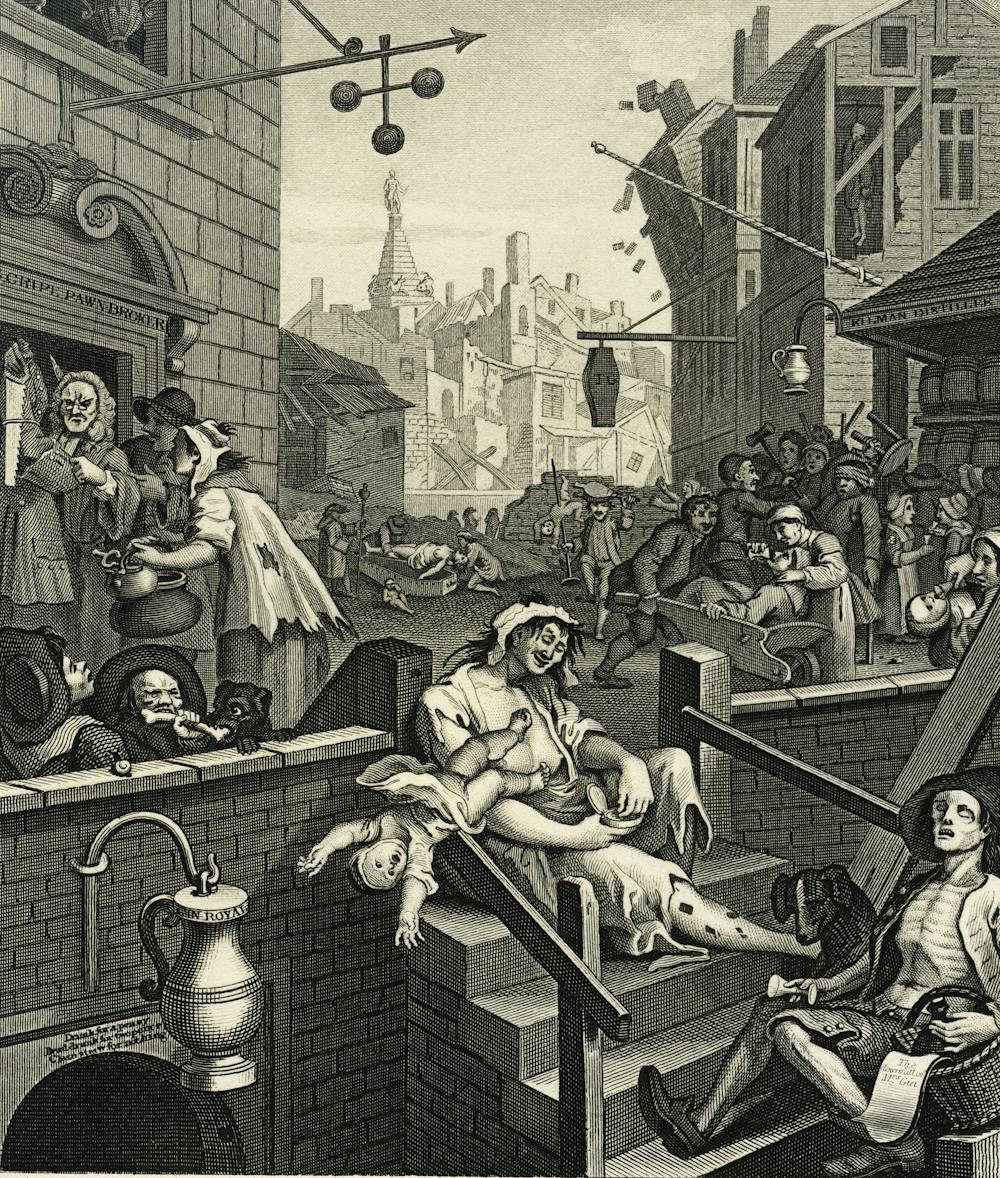 Gin Lane – William Hogarth (c.1750)
Public domain
Read more:
‘If only they made better life choices’ – how simplistic explanations of poverty and food insecurity miss the mark
Is aporophobia primary?
In addition to querying Cortina’s characterisation of the emotions underlying our views of the poor, we can also quibble with her argument for the primacy of aporophobia over xenophobia in the rejection of immigrants and displaced people.
It is unquestionably true that attitudes to outsiders are rarely monolithically negative, and that wealthy foreigners are welcomed in ways that refugees are not. But the argument that xenophobia can be reduced to aporophobia – not to mention the more general claim that aporophobia is at the root of all forms of subordination – is entirely far-fetched.
Our tendency to show an ethnocentric preference for our own kind – to value and favour in-group over out-group – is very well established and even wealthy outsiders are not immune to it. We routinely denigrate and distrust foreign nationals, even – and sometimes especially – when they are rich and powerful.
The fact that poverty is one reason for our rejection of immigrants or displaced persons does not make it the only one. Any rejection based on lack of means or reciprocity is compounded by rejection based on foreignness (xenophobia), on race, and potentially on other factors, such as religion or gender.
To reduce the hostility of rich European nations to immigrants from North Africa and beyond to aporophobia, as Cortina does, or to racism, as others prefer to do, is to oversimplify. Single-barrelled explanations overlook the fact that prejudice is layered.
Consider Australia’s historically unwelcoming attitude to many immigrants and displaced persons. It has been popular to view this rejection through a racism or xenophobia monocle. If that were the whole story, public attitudes would be equally antagonistic to immigrants, refugees admitted through the humanitarian program, and undocumented asylum seekers. But those attitudes are decidedly unequal.
Attitudes towards immigrants are typically warmer and more compassionate than those towards refugees, with special scorn reserved for undocumented boat arrivals. Aporophobia may help to account for some of these differences: immigrants are assumed to be skilled and economically self-sufficient, whereas refugees and asylum seekers are assumed to require substantial welfare supports.
However, much of the animus towards asylum seekers focuses not on their race, foreignness, or lack of resources, but on moralistic reactions to their mode of entry, as the shrill language of “illegals” and “queue-jumpers” attests. To reduce popular attitudes towards displaced people to racism, xenophobia or aporophobia is to bulldoze several tiers of aversion into one flattened explanation.
Gin Lane – William Hogarth (c.1750)
Public domain
Read more:
‘If only they made better life choices’ – how simplistic explanations of poverty and food insecurity miss the mark
Is aporophobia primary?
In addition to querying Cortina’s characterisation of the emotions underlying our views of the poor, we can also quibble with her argument for the primacy of aporophobia over xenophobia in the rejection of immigrants and displaced people.
It is unquestionably true that attitudes to outsiders are rarely monolithically negative, and that wealthy foreigners are welcomed in ways that refugees are not. But the argument that xenophobia can be reduced to aporophobia – not to mention the more general claim that aporophobia is at the root of all forms of subordination – is entirely far-fetched.
Our tendency to show an ethnocentric preference for our own kind – to value and favour in-group over out-group – is very well established and even wealthy outsiders are not immune to it. We routinely denigrate and distrust foreign nationals, even – and sometimes especially – when they are rich and powerful.
The fact that poverty is one reason for our rejection of immigrants or displaced persons does not make it the only one. Any rejection based on lack of means or reciprocity is compounded by rejection based on foreignness (xenophobia), on race, and potentially on other factors, such as religion or gender.
To reduce the hostility of rich European nations to immigrants from North Africa and beyond to aporophobia, as Cortina does, or to racism, as others prefer to do, is to oversimplify. Single-barrelled explanations overlook the fact that prejudice is layered.
Consider Australia’s historically unwelcoming attitude to many immigrants and displaced persons. It has been popular to view this rejection through a racism or xenophobia monocle. If that were the whole story, public attitudes would be equally antagonistic to immigrants, refugees admitted through the humanitarian program, and undocumented asylum seekers. But those attitudes are decidedly unequal.
Attitudes towards immigrants are typically warmer and more compassionate than those towards refugees, with special scorn reserved for undocumented boat arrivals. Aporophobia may help to account for some of these differences: immigrants are assumed to be skilled and economically self-sufficient, whereas refugees and asylum seekers are assumed to require substantial welfare supports.
However, much of the animus towards asylum seekers focuses not on their race, foreignness, or lack of resources, but on moralistic reactions to their mode of entry, as the shrill language of “illegals” and “queue-jumpers” attests. To reduce popular attitudes towards displaced people to racism, xenophobia or aporophobia is to bulldoze several tiers of aversion into one flattened explanation.
 A boatload of refugees from Pakistan, Bangladesh, Egypt, Somalia and Sri Lanka off the coast of Libya, April 4, 2023.
Salvatore Cavalli/AP
A confluence of factors
Social rejection can take many forms and have many determinants. The idea of “intersectionality” offers one perspective. How we evaluate and respond to a person may reflect the unique intersection of their identities. The stereotype of “Asian woman” is not a simple sum of the stereotypes of “Asian” and “woman” but may call up a distinct configuration of perceptions.
Sometimes, though, it helps to remember that some attitudes are not so much intersectional as additive, at least in their virulence. How negatively we perceive groups such as asylum seekers may reflect a confluence of factors: their outsider status, their race, their poverty, their officially sanctioned versus unsanctioned means of entering the country, and so on.
“Additivity” doesn’t have the same ring as “intersectionality”, but it might help to warn us off simplifying accounts of social exclusion.
Aporophobia is nevertheless a valuable addition to the social scientist’s conceptual arsenal. Cortina’s work draws welcome attention to a form of prejudice that is too often shunted aside by our identitarian focus on race, gender and sexuality.
We might quibble with some inflated claims for the primacy of aporophobia, with the imperfect analysis of its emotional signature, and with the omission of social class from Cortina’s discussion of economic inequality. Her emphasis on the rejection of displaced people within European nations – understandable given the book’s original publication in 2017 when a refugee crisis was convulsing the continent – can also be faulted. Examining public responses to the domestic poor might afford a clearer view of aporophobia than one complicated by displacement and ethnic differences.
Despite these reservations, Cortina has written a significant work of social philosophy that deserves close attention in the Anglophone world. Aporophobia is a provocative book that will stimulate discussion, argument and investigation.
Authors: Nick Haslam, Professor of Psychology, The University of Melbourne
A boatload of refugees from Pakistan, Bangladesh, Egypt, Somalia and Sri Lanka off the coast of Libya, April 4, 2023.
Salvatore Cavalli/AP
A confluence of factors
Social rejection can take many forms and have many determinants. The idea of “intersectionality” offers one perspective. How we evaluate and respond to a person may reflect the unique intersection of their identities. The stereotype of “Asian woman” is not a simple sum of the stereotypes of “Asian” and “woman” but may call up a distinct configuration of perceptions.
Sometimes, though, it helps to remember that some attitudes are not so much intersectional as additive, at least in their virulence. How negatively we perceive groups such as asylum seekers may reflect a confluence of factors: their outsider status, their race, their poverty, their officially sanctioned versus unsanctioned means of entering the country, and so on.
“Additivity” doesn’t have the same ring as “intersectionality”, but it might help to warn us off simplifying accounts of social exclusion.
Aporophobia is nevertheless a valuable addition to the social scientist’s conceptual arsenal. Cortina’s work draws welcome attention to a form of prejudice that is too often shunted aside by our identitarian focus on race, gender and sexuality.
We might quibble with some inflated claims for the primacy of aporophobia, with the imperfect analysis of its emotional signature, and with the omission of social class from Cortina’s discussion of economic inequality. Her emphasis on the rejection of displaced people within European nations – understandable given the book’s original publication in 2017 when a refugee crisis was convulsing the continent – can also be faulted. Examining public responses to the domestic poor might afford a clearer view of aporophobia than one complicated by displacement and ethnic differences.
Despite these reservations, Cortina has written a significant work of social philosophy that deserves close attention in the Anglophone world. Aporophobia is a provocative book that will stimulate discussion, argument and investigation.
Authors: Nick Haslam, Professor of Psychology, The University of MelbourneRead more https://theconversation.com/why-are-the-poor-shunned-the-reasons-are-complicated-194808

















