

Plastic action or distraction? As climate change bears down, calls to reduce plastic pollution are not wasted
- Written by Yolanda Lee Waters, PhD Candidate and Research Assistant, The University of Queensland
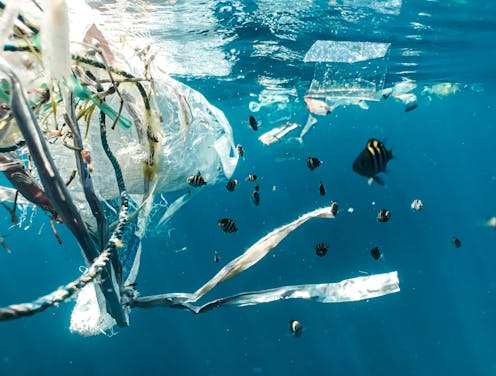
Climate change, pollution and overfishing are just a few problems that need addressing to maintain a healthy blue planet. Everyone must get involved – but it’s easy to feel overwhelmed and unsure where to start.
Of course we can start with the obvious - making sure we reduce, reuse and recycle. Yet, given the scale of the challenge, these small, relatively simple steps are not enough. So, how can we encourage people to do more?
There is controversy about the best approach. Some argue focusing on easy actions is distracting and can lead people to overestimate their positive impact, reducing the chance they will do more.
However, our new research found promoting small and relatively easy actions, such as reducing plastic use, can be a useful entry point for engaging in other, potentially more effective actions around climate change.
Read more: 6 reasons 2023 could be a very good year for climate action
The plastic distraction debate
Marine plastic pollution is set to quadruple by 2050 and efforts to reduce this have received a lot of attention. In this arena, Australia is making significant progress.
For example, last year scientists discovered the amount of plastic litter found on Australian coasts had reduced by 30% since 2012-13. Seven out of eight Australian states and territories have also committed to ban single-use plastics.
Read more: Why bioplastics won't solve our plastic problems
Yet, some scientists are concerned all this fuss about plastic distracts us from addressing the more pressing issue of climate change, which is degrading marine ecosystems at an alarming rate and making oceans hotter than ever before.
For example, without an urgent reduction in greenhouse gas emissions, coral reefs could lose more than 90% coral cover within the next decade. This includes our very own Great Barrier Reef.
When it comes to climate action, Australia is behind. Many Australians are also unsure which actions to take. For example, a 2020 study asked more than 4,000 Australians what actions were needed to help the Great Barrier Reef. The most common response (25.6%) involved reducing plastic pollution. Only 4.1% of people mentioned a specific action to mitigate climate change.
‘Spillover’ behaviour
We ran an experiment to test whether we could shift this preference for action on plastic into action on climate change.
Our experiment was based on a theory known as “behavioural spillover”. This theory assumes the actions we take in the present influence the actions we take in future.
For example, deciding to go to the gym in the morning may influence what you decide to eat in the afternoon.
Some experts argue focusing on reducing plastic use – a relatively simple action – can help build momentum and open the door for other environmental actions in the future. This is known as positive spillover.
Conversely, those in the “plastic distraction” camp argue if people reduce their plastic use, they might feel they have done enough and become less likely to engage in additional actions. This is known as negative spillover.
Experimenting with spillover from plastic to climate
To test whether we could encourage spillover behaviour in the context of the Great Barrier Reef, we conducted an online experiment with representative sample of 581 Australians.
Participants were randomly allocated to one of three experimental groups or a control group. The first group received information about plastic pollution on the reef along with prompts to remind them of their efforts to tackle the problem in the past week (a “behaviour primer”). The second group received the reef plastic information only. The third group received information about the reef and climate change. The control group received general information about World Heritage sites, with no call to action or mention of the Great Barrier Reef.
Participants were then asked whether they would be likely to take a range of climate actions, such as reducing personal greenhouse gas emissions and talking to others about climate change. They also had the opportunity to “click” on a few actions embedded within the survey such as signing an online petition for climate action.
Compared to the control group, those provided with information about plastic pollution were more willing to engage with climate actions, particularly when they were reminded of positive past behaviours. Whereas those provided with information about climate change showed no significant difference.
Plastic messages also had a stronger positive effect on climate action for those who were politically conservative, compared to those more politically progressive.
But the approach didn’t work for everyone. We repeated the experiment with 572 self-identified ocean advocates, many of whom already engaged with marine conservation issues. For this audience, talking about plastic and their past efforts made them less likely to engage with climate action compared to the control group.
So what does all this mean?
Our results suggest it’s possible to motivate climate action for the reef without slipping back into conversations about plastic. Here are four ways to help achieve this:
Remind people of the small actions they already take: reminding people of their positive contributions and making them feel like they are capable of doing more can open the gateway to further action.
Connect the dots between plastic and climate: plastics are primarily derived from fossil fuels and production alone accounts for billions of tonnes of greenhouse gas emissions each year. Making it clear that a fight against fossil fuels is a fight against both plastic and climate can help guide people towards those extra climate actions.
Provide clear calls to (climate) action: research shows most people are unable to identify climate actions on their own. As a result, they tend to get stuck on common behaviours such as recycling. Giving people clear advice on how they can contribute to mitigating climate change is crucial.
Know your audience: spillover from plastic to climate is more likely in a general audience. If your network is full of ocean advocates, it might be better to skip the plastic conversation and dive straight into conversations about climate change actions.
It’s important to remember that people’s first steps don’t have to be their only steps. Sometimes, they just need a little guidance for the journey ahead.
Read more: Households find low-waste living challenging. Here's what needs to change
Authors: Yolanda Lee Waters, PhD Candidate and Research Assistant, The University of Queensland

















