

Most people already think climate change is 'here and now', despite what we've been told
- Written by Ben Newell, Professor of Cognitive Psychology and Director of the UNSW Institute for Climate Risk and Response, UNSW Sydney

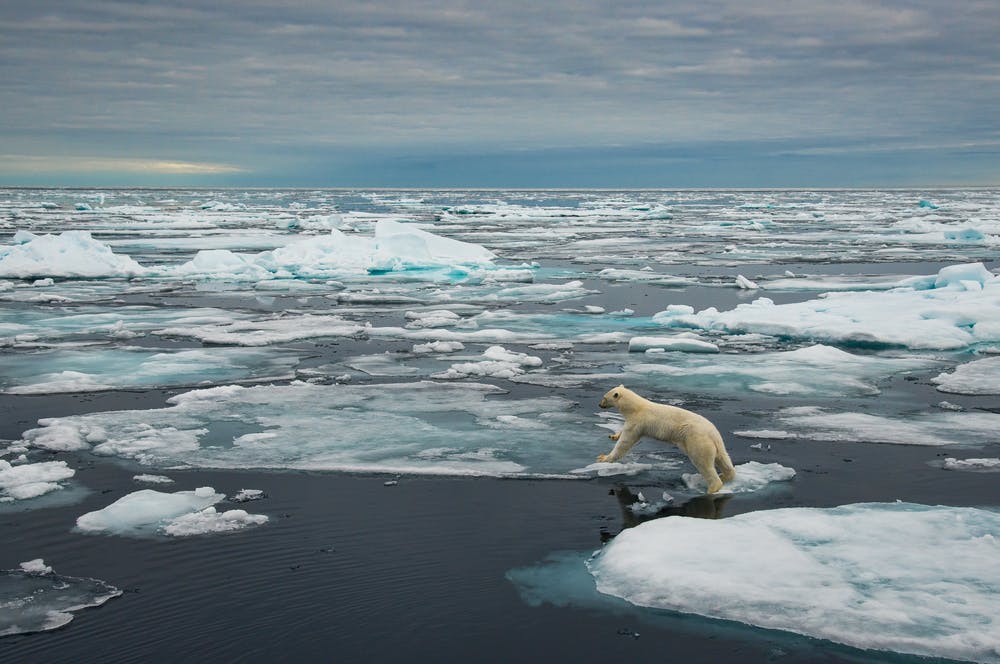
A quick search on the internet for “climate change images” readily yields the familiar photograph of a lone polar bear on a shrinking block of ice. Despite signifying an impending crisis, such images make climate change seem abstract – happening a long way off (for most of us), to animals we’ve probably never encountered.
The idea that climate change is perceived as “psychologically distant” – happening in the future, in distant places, to other people or animals – has long been presented as a major barrier to action on climate change.
Despite the intuitive appeal of this idea, new research published today in the journal One Earth by behavioural scientists at the University of Groningen now challenges it. The authors argue the psychological distance of climate change has been overestimated – according to their results, most people view climate change as “psychologically close”.
A review of the evidence
To investigate how prevalent psychological distance to climate change really is – and whether it might prevent climate action – the researchers systematically reviewed the available evidence.
First, they analysed data from 27 public opinion polls from around the world – including China, the US, UK, Australia and the EU – finding that most people perceive climate change as happening now and nearby. And this was not just in recent polls. Data from as far back as 1997 indicated almost half of US respondents believed climate change was already occurring.
Second, based on an analysis of past studies, they found people who perceive climate change as more distant do not necessarily engage in less climate action. Indeed, some studies have shown the opposite pattern. People who perceived climate change as affecting people in far-away locations were more motivated to support climate action.
In short, the evidence for the idea that psychological distance is preventing us from climate action is very mixed.
Third, after examining 30 studies, the team found very little evidence that experiments aimed at changing people’s perception of the psychological distance of climate change actually increase their climate action. For example, studies where people watch videos about the impacts of climate change in local versus distant locations do not show these people having different intentions to engage in environmental behaviour.
As I’ve written in an article on the new study, these results remind us that evidence should always trump intuition when it comes to applying psychological theory. The conclusions also echo earlier calls by me and colleagues to be cautious about the relevance of psychological distance when it comes to climate action.
How should we communicate about the climate, then?
Climate communication strategies and guidelines from a host of different organisations have popularised the idea that climate change is perceived as psychologically distant.
Our own Australian Psychological Society recommends reducing psychological distance by making the local impacts of climate change more salient. For example, highlighting the increase in the number of extreme heat days in one’s town or region.
But if the aim here is to increase climate action, is this good advice?
There is a trade-off between using psychological distance to capture attention, and the idea that it provides a scientific explanation for why people aren’t doing something.
I’ve often used the idea of psychological distance in talks, and spoken to journalists about it, because it starts a conversation and can be a good way to engage otherwise hard-to-reach audiences. But there is a risk of mixing up the narrative appeal with the scientific support.
At worst, repeating ideas about psychological distance could lead people to overestimate the extent to which others think climate change is psychologically distant. In turn, this might demotivate action. If everyone else thinks this is a problem for the future, why should I do something about it now?
Read more: For fossil-fuel reliant governments, climate action should start at home
We already know it’s here, now let’s act
Another implication is that advocacy groups and governments could be wasting effort on information campaigns that focus on reducing the psychological distance of climate change. If people know that climate change is near and now, why do we need to reinforce that idea?
Our efforts might be better spent increasing people’s belief in being able to take climate action (“self-efficacy”), and that those actions will be effective (“response-efficacy”).
This implies a need to make pro-environmental actions like driving less or eating more plant-based foods easier and cheaper. But it also highlights the need for structural and societal changes that incentivise behavioural change: from offering subsidies for electric vehicles or renewable energy installation, to international agreements on carbon emissions.
There is also a need to remind people of the moral imperative of taking action.
Read more: Climate change: multi-country media analysis shows scepticism of the basic science is dying out
Climate change hasn’t moved ‘closer’
There is no doubt climate change is becoming more “real” and more concerning for most of us. From 2018 to 2022, the number of Australians “very concerned” about climate change has nearly doubled, from 24% to 42%.
These changes in attitude are almost certainly linked to the Black Summer bushfires of 2019-20. But does explaining this shift as a reduction of psychological distance add anything to our scientific understanding?
The results of this new study strongly suggest the answer is no. It is time we moved on from considering psychological distance as an impediment to action.
We know climate change is affecting polar bears, but we also know it is affecting us right now. Our efforts now must be focused on changing behaviour at both the societal and individual level.
Read more: Why attending a climate strike can change minds (most importantly your own)
Authors: Ben Newell, Professor of Cognitive Psychology and Director of the UNSW Institute for Climate Risk and Response, UNSW Sydney

















