

Immigration system set for overhaul in wake of review's damning findings
- Written by: Anna Boucher, Associate Professor in Public Policy and Political Science, University of Sydney
The Albanese government’s review of Australia’s migration system offers a blueprint for overhauling the troubled system and addressing at least some of its shortcomings.
Touted as the biggest review of immigration since the 1988 FitzGerald Report, the Parkinson Review covers issues as diverse as our reliance on temporary immigration, skills lists and care shortages, immigration backlogs and ageing information technology systems in Home Affairs.
The review represents a wholesale critique and potential upheaval of the immigration system, rather than, in the words of Home Affairs Minister Clare O'Neil, “ad hoc” changes. At its centre is the argument that Australia has become too reliant on temporary migrants, without clear pathways for them to permanent residency.
Read more: Migration review warns against Australia becoming nation of 'permanently temporary' residents
What did the review find?
Because temporary visa numbers have been uncapped since the Howard government, they have been growing faster than permanent visa numbers. Temporary migrant numbers have doubled in the past 15 years.
Yet there are not always clear pathways to remain permanently in Australia. This has the effect that temporary visa-holders engage in a series of visa “hops” before gaining permanent residency. Sometimes, they do not gain permanent residency at all.
The review is critical of temporary migration when it does not provide pathways to permanency. It suggests Australia risks becoming a guest worker society like Germany or Switzerland in the post-second-world-war era. This “permanently temporary migration” system, it argues, has “caused harm to Australia and to migrants, and undermined community confidence in the migration system”. It results in less equality and fairness.
The exploitation of migrant workers is identified as another, associated issue. Other commentators have also made this point in academic and public inquiries, most notably the Fels Migrant Worker Taskforce that investigated the 7-Eleven scandal.
My research using litigated court cases to analyse the issue of migrant worker exploitation has demonstrated that those on temporary visas – and, indeed, visas without clear pathways to permanent status – are most at risk of exploitation.
The review identifies the Temporary Skilled Immigration Income Threshold (TSMIT), which is the salary benchmark used as a threshold for entry into temporary skills visas, as part of the exploitation problem. In O'Neil’s words, over time, the TSMIT has become “frozen” and failed to keep pace with increases in average wages of Australian workers.
My research shows workers at the lower occupational codes are more likely to face underpayment. O'Neil announced today the TSMIT will be increased from $53,900 to $70,000. Yet factors other than wage levels also affect exploitation risk, in particular visa status and whether migrants have access to trade union representation.
This reality that temporary status is in part responsible for exploitation risk presents challenges for another recommendation of the review: to create a visa to address shortages in the care sector.
The review proposes protections to ensure care workers do not face the same exploitation as other lower-wage workers. However, comparative research suggests it is difficult, if not impossible, to create temporary labour schemes without at least some exploitation. This will be a core challenge if the government adopts a low-skilled care visa.
Matching the migrant intake to Australia’s needs
The review makes the important point that Australia will need a more diverse economy to deal with an ageing population and reduced productivity. The development of skills and capabilities will be crucial to this, and immigration can play an important role.
In this regard, the review finds the Skilled Occupations List for the selection of skilled migrants (both permanent and temporary) is not working, as it cannot keep up with rapid changes in our labour market.
As a result, Australia is “falling behind in attracting skilled migrants in a fierce global competition for the best migrants”. This point is supported by research on migrant desire to come to Australia, which suggests migrants are being put off by backlogs, among other issues.
The review instead proposes selecting migrants through detailed identification of skill requirements by Jobs and Skills Australia. The body would focus on three types of skilled migrants: those with in-demand skills, those with high human capital, and “exceptional cases” (such as “an older prize-winning academic”).
Finally, the review raises concerns about the complexity of the system and immigration backlogs. A central challenge for reforming the immigration system is its size, complexity (with over 100 different visas as well as tailored labour agreements) and detailed admission requirements.
The Migration Act 1958 is one of Australia’s longest and most complicated pieces of federal legislation. Add to that a web of regulations and policy advice manuals, and migrants face huge challenges in navigating the system.
A study of comparable countries found Australia had the most complex visa system of major Western admission countries.
Last year, O'Neil identified immigration backlogs as a key challenge for the new government. This is another issue raised in the review.
While the government has responded by hiring more staff to process visas, the backlogs remain a problem, especially for family migrants. The review blames this in part on “cumbersome” and ageing computer systems in Home Affairs, which it suggests needs a complete overhaul.
Read more: Canada needs to consider the user experience of migrants when designing programs that impact them
Now, we need action
The review is bold and detailed. It represents a significant reform agenda, which will take years, if not decades, to implement. But it is probably worth it.
It provides intellectual and policy support for reforms to the way temporary immigration levels are set around the budget, the ease of movement between temporary and permanent visas, mitigation of exploitation risk and selecting skilled migrants. All of these concerns have been raised for some time, so it is heartening to see them reinforced by the expert review.
The challenge will be in its implementation, both practically and politically. For example, removing temporary visas without clear pathways to permanent residency (such as Working Holiday Maker Visas or some areas of international student visas) will be fought by affected stakeholders, whether they are the migrants themselves, or those that otherwise benefit from such immigration flows.
Reducing flows in one area can also create pressures on other parts of the system, as migrants may choose visa pathways based on availability. For instance, if a person cannot come as an international student, we may see an increase in sham spousal applications. Clarifying these different pathways will be particularly challenging at a time when our immigration system is already growing much faster than previously estimated.
Providing pathways for more temporary migrants could significantly increase the overall size of the permanent immigration program (although Minister O'Neil contests this), which may not be what is best for Australia at a time of a growing housing crisis, or what voters desire.
So, the government will need to tread carefully with its transitional arrangements that follow from this review and consider how to slowly change the system. At present, not all details of implementation have been announced.
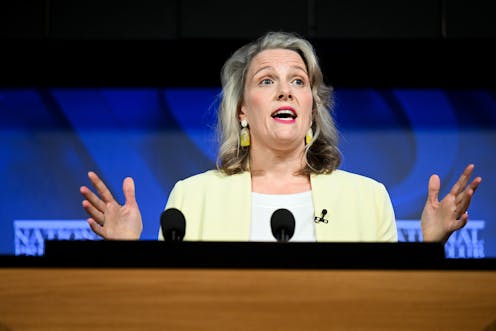
We know from O'Neil’s speech at the National Press Club that the government’s position is largely in step with the findings of the review. The TSMIT will be raised and there will be more pathways to permanent residency for current temporary workers. Reforms to tertiary education and international students will also be announced in future weeks.
These changes alone are unlikely to achieve all the goals of the review, but combined with reforms in the areas of worker exploitation and industrial relations, they may go some way to addressing its concerns.
Authors: Anna Boucher, Associate Professor in Public Policy and Political Science, University of Sydney


















