

Migrating birds could bring lethal avian flu to Australia's vulnerable birds
- Written by: Parwinder Kaur, Associate Professor | Director, DNA Zoo Australia, The University of Western Australia
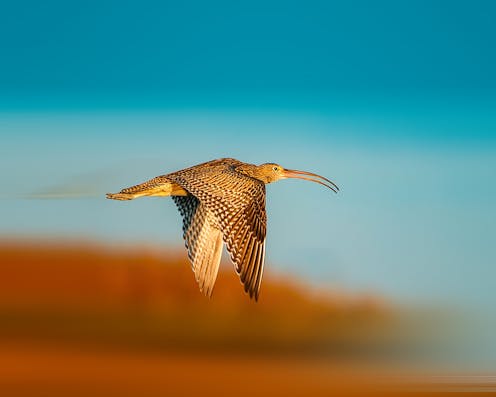
In 2021, avian influenza evolved into a new form – a new and remarkably lethal variant first found in Europe.
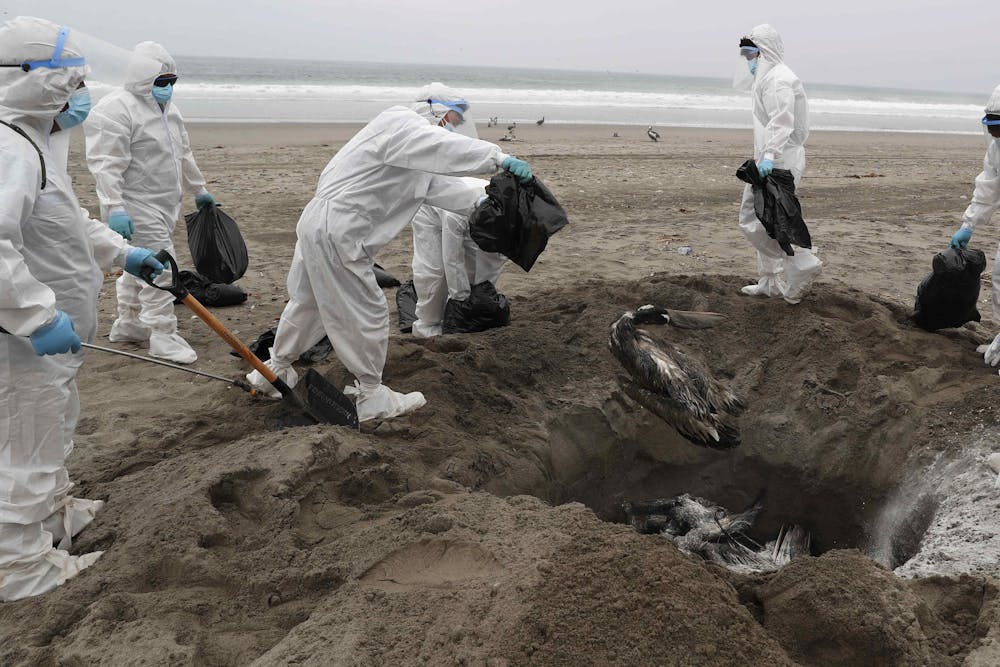
Bird flu is usually most dangerous to birds kept in close quarters, such as chicken farms. But as it spread around the world, the highly pathogenic HPAI A(H5N1) variant began killing millions and millions of wild birds too.
Seabird colonies in the UK have been decimated. The virus can kill up to half of the birds it infects. It has also spread into sea lions and seals.
Luckily, it doesn’t spread easily in humans. More than 50 million birds have already been culled over 37 countries in a bid to slow the spread.
Australia’s birds have so far dodged this bullet. Our isolation has kept us safe for now. Antarctica’s birds have stayed safe too. But if this variant makes it here in the lungs of a migratory shorebird, our unique birds will be at extreme risk. Black swans, for instance, are especially vulnerable to all types of avian flu.
The federal government will boost surveillance measures when large flocks of migratory birds begin arriving later this year. It’s unlikely to be enough, as we enter a time of high risk from September onwards.
Could it really get here?
Yes.
Surveillance of Australia’s vast coastlines is all but impossible. Instead, the government is likely to focus on the major wetlands and shallow inlets which attract migratory birds.
Every year, around eight million birds take the East Asian-Australasian Flyway – a route stretching from the Arctic Circle down through east and south-east Asia to Australia and New Zealand.
Is the H5N1 flu lethal enough to be self-limiting? Not necessarily. A bird could get a mild dose and still be infectious when it arrives. That means there’s a good chance this variant could arrive. It would only take one infectious shorebird to trigger outbreaks.
If it gets here, the virus would decimate poultry farms and wild birds, just as it has overseas. In densely populated farms, it can kill 90-100% of all birds.
It could pose an extinction threat to iconic birds such as black swans, which have an immune deficiency making them particularly at risk. Flocking birds like rainbow lorikeets and corellas would also be at extra risk of catching the virus.
 Black swans are particularly vulnerable to this virus.
Mitchell Luo/Unsplash, CC BY
Black swans are particularly vulnerable to this virus.
Mitchell Luo/Unsplash, CC BY
Federal Agriculture Minister Murray Watt has dismissed the idea Australia is unprepared.
He said his government had been “closely monitoring the global HPAI situation” and had boosted early warning efforts.
But what we don’t have is an action plan for what happens if the virus does arrive, as seems likely.
Responses like the mass destruction of beehives after the devastating varroa mite arrived are unlikely to work for a virus. A tailored vaccine could help domestic birds, but it would be all but impossible to administer to wild birds.
Over time, birds with natural resistance would survive and breed populations back up. But endangered species or those particularly vulnerable would find it much harder to bounce back.
Read more: Australia's iconic black swans have a worrying immune system deficiency, new genome study finds
Haven’t our birds survived bird flu before?
Yes, but not quite like this one.
In 2020, three egg producers in Victoria had an outbreak of another highly pathogenic influenza variant, H7N7. To stop it spreading, authorities culled all birds in the farms.
This variant emerged when low pathogenic viruses carried by local wild birds evolved into a deadlier form. While authorities stopped its spread on poultry farms, they could do nothing about the wild reservoir of the virus.
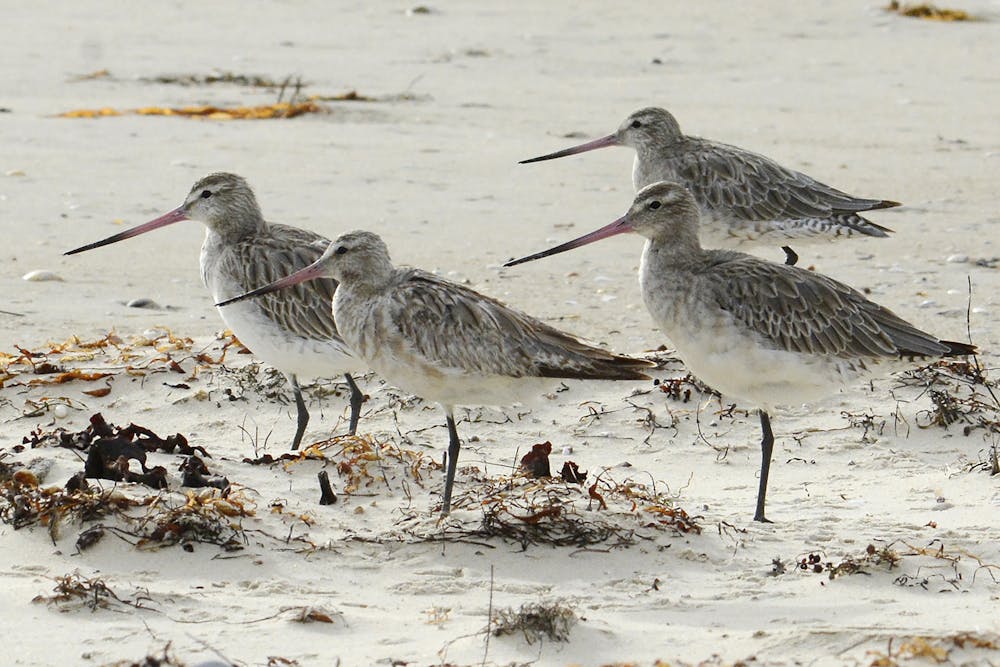 Far eastern curlews travel thousands of kilometres to get to Australia and New Zealand. One could be carrying the virus.
AP
Far eastern curlews travel thousands of kilometres to get to Australia and New Zealand. One could be carrying the virus.
AP
If H7N7 is still around, it could pose even more problems. When two different influenza virus subtypes infect the same host cell, their genetic material can mix to create a new virus, which could be milder – or more severe.
Australian scientists have researched the impact of low pathogenic avian influenza on many bird families, which gives some insight into how highly pathogenic avian influenza may spread in Australia. For instance, arid areas would likely be better protected from the virus, which does not like dry conditions.
But can we act in time? We know what to do when there’s an outbreak in domesticated birds. But if the virus gets into wild birds and takes off, we have no plan.
Rapid monitoring and surveillance of wildlife pathogens is a major gap in Australia’s biosecurity framework – and one we should fill.
We must prepare
COVID from bats or raccoon dogs. Ebola from bats. Avian flu from birds. As we back nature into a corner, we can find ourselves more exposed to the viruses wild animals carry.
So far, the HPAI H5N1 strain is only known to have jumped into humans a handful of times.
That’s lucky. Around 800 people have contracted one of the variants of bird flu since 2003. Of these, more than half died. That’s a similar death rate to many of the birds dying of the avian flu elsewhere in the world. The main protection we have at present is the fact avian flu finds it hard to infect us in the first place.
To save our birds – and potentially, ourselves – we need a better way to detect and track viral outbreaks in wildlife, particularly those which could jump across into humans.
Authors: Parwinder Kaur, Associate Professor | Director, DNA Zoo Australia, The University of Western Australia


















