

why Australia and NZ could become republics – and still stay in the Commonwealth
- Written by: James Mehigan, Senior Lecturer in Law, University of Canterbury
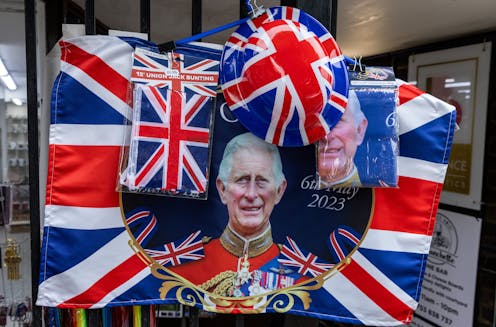
The imminent coronation of King Charles III is an ideal time for Australia and New Zealand to take stock of the British monarchy and its role in national life – including certain myths about what becoming a republic might mean.
In particular, there is a common assumption that both nations must remain monarchies to retain membership of the Commonwealth of Nations. It might sound logical, but it’s entirely wrong.
There is no basis for it in the rules of the Commonwealth or the practice of its members. Australia could ditch the monarchy and stay in the club, and New Zealand can too, whether it has a king or a Kiwi as head of state.
Yet this peculiar myth persists at home and abroad. Students often ask me about it when I’m teaching the structure of government. And just this week a French TV station interpreted the New Zealand prime minister’s opinion that his country would one day ideally become a republic to mean he would like to see it leave the Commonwealth.
What does ‘Commonwealth’ mean?
The implication that breaking from the Commonwealth would be a precursor to, or consequence of, becoming a republic relies on a faulty premise which joins two entirely separate things: the way we pick our head of state, and our membership of the Commonwealth.
It would make just as much sense to ask whether Australia or New Zealand should leave the International Cricket Council and become a republic.
The confusion may derive from the fact that the 15 countries that continue to have the British sovereign as their head of state are known as “Commonwealth Realms”.
What we usually refer to as the Commonwealth, on the other hand, is the organisation founded in 1926 as the British Commonwealth of Nations. This is the body whose membership determines the competing nations of the Commonwealth Games, the highest-profile aspect of the Commonwealth’s work.
King Charles III is the head of state of the 15 Commonwealth Realms and the head of the international governmental organisation that is the Commonwealth of Nations. The Commonwealth has 56 members – but only 15 of them continue to have the king as head of state.
Joining the Commonwealth club
To be fair, confusion over who heads the Commonwealth is nothing new. A 2010 poll conducted by the Royal Commonwealth Society found that, of the respondents in seven countries, only half knew the then queen was the head of the Commonwealth.
A quarter of Jamaicans believed the organisation was led by the then US president, Barack Obama. One in ten Indians and South Africans thought it was run by former UN secretary-general Kofi Annan.
Read more: What is it about a republic that stumps our leaders?
Given the king’s overlapping leadership roles and the different use of the word in the contexts of Commonwealth Realms and the Commonwealth of Nations, these broad misunderstandings are perhaps understandable. In fact, it was this ambiguity that allowed for the development of an inclusive Commonwealth during the postwar years of decolonisation.
However the confusion arose, it is also very simple to correct. The Commonwealth relaxed its membership rules regarding republics when India became one in 1950.
According to Philip Murphy, the historian and former director of the Institute of Commonwealth Studies, this decision was based on the erroneous idea that India’s huge standing army would underwrite Britain’s great-power status in the postwar world.
From that point on the Commonwealth of Nations no longer comprised only members who admitted to the supremacy of one sovereign. To make the change palatable, a piece of conceptual chicanery was needed. Each country did not need a king, but the king was to be head of the organisation comprising equal members.
Read more: God save the King: why the monarchy is safe in Aotearoa New Zealand – for now
Monarchy optional
Since then, the number of Commonwealth members has steadily increased to the 56 we have today.
As early as 1995, membership was extended to countries with no ties to the former British Empire. With the support of Nelson Mandela, Mozambique became a member, joining the six Commonwealth members with which it shared a border.
Rwanda, a former German and then Belgian colony, joined in 2009. It became an enthusiastic member and hosted the biennial meeting of states known as CHOGM (Commonwealth Heads of Government Meeting). The most recent countries to take up Commonwealth membership are the former French colonies of Togo and Gabon.
According to the Commonwealth’s own rules, membership is based on a variety of things, including commitment to democratic processes, human rights and good governance. Being a monarchy is entirely optional.
The new king offers the chance for a broader debate on the advantages of monarchy. But let’s do so knowing Commonwealth membership is entirely unaffected by the question of whether or not the country is a republic.
Authors: James Mehigan, Senior Lecturer in Law, University of Canterbury


















