

An unreliable narrator and a stormy relationship propel Stephanie Bishop's moody new novel
- Written by: Jessica Gildersleeve, Professor of English Literature, University of Southern Queensland

Cathy Caruth’s foundational work on trauma theory, Unclaimed Experience: Trauma, Narrative, and History (1996), includes a chapter on the notion of the falling body.
Caruth sees in this a way of understanding language’s capacity for representation. She quotes Paul de Man, who uses a marionette performance to describe the relationship between author and text:
The puppets have no motion by themselves but only in relation to the motions of the puppeteer […] All their aesthetic charm stems from the transformations undergone by the linear motion of the puppeteer as it becomes a dazzling display of curves and arabesques […] The aesthetic power is located neither in the puppet nor in the puppeteer but in the text that spins itself between them.
The puppet seems to dance more beautifully than the human body because, controlled by unseen hands, it is temporarily exempt from the force of gravity that makes bodies fall. Caruth thus argues that the beauty of the dancing puppet
lies in its elimination of any referential weight of a personal authorial self; the puppeteer is lost entirely in the movements of the puppets. The graceful image of the human body arises precisely, here, in the loss of any referential particularity.
But separate the puppet and the puppeteer and the beauty is lost. One cannot create beauty without the other.
Read more: Ian McEwan's Lessons, his most autobiographical novel, is a new experiment in vulnerability
Creative synchronicity
Caruth’s example describes the synchronicity inherent in the artistic creation. At the same time, it recognises that “direct or phenomenal reference to the world means, paradoxically, the production of a fiction”.
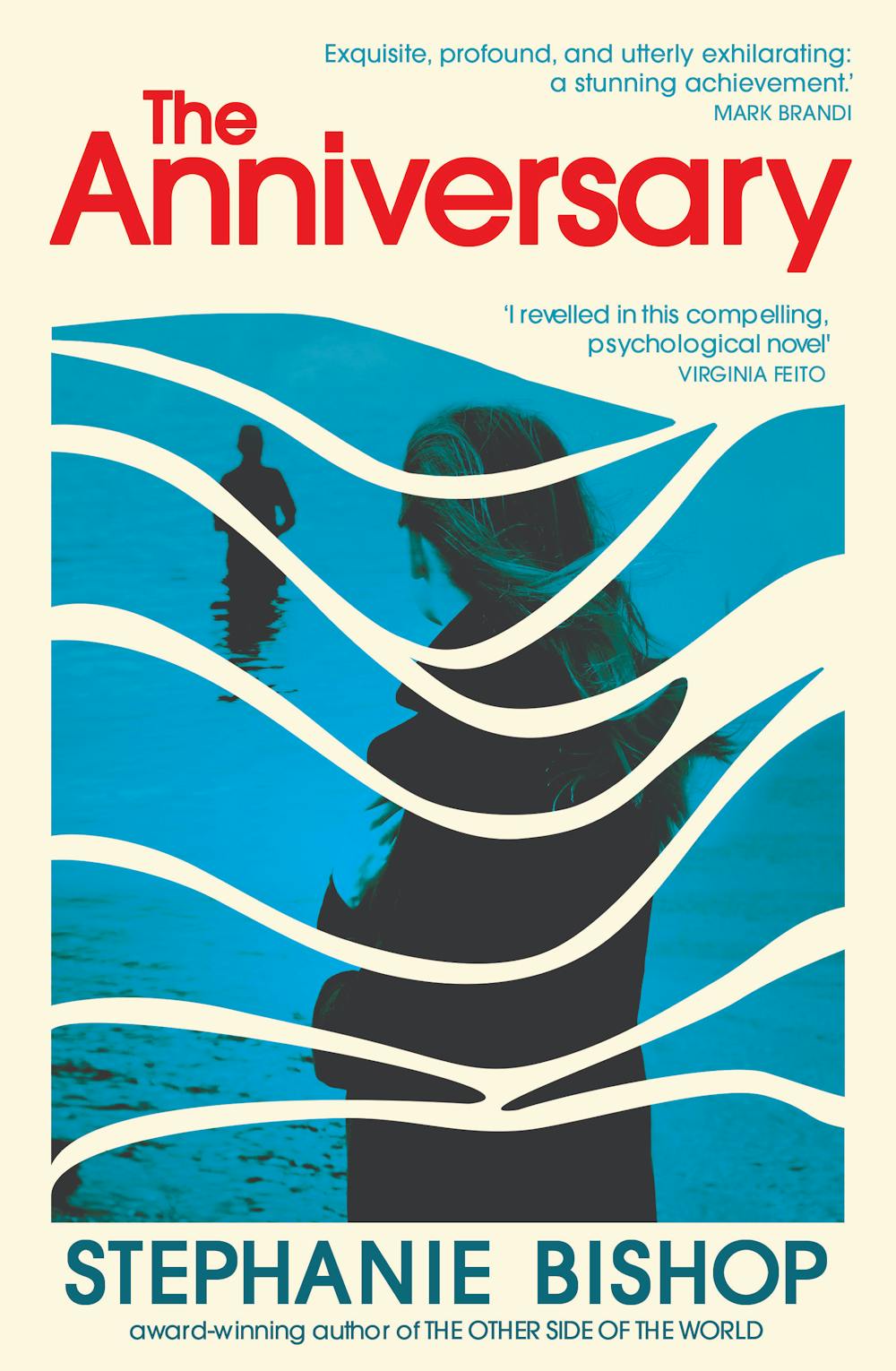
These ideas are at the core of Stephanie Bishop’s latest novel The Anniversary, central to its commentary on the creation of art and its potential to have traumatic effect on the artist’s life.
Review: The Anniversary – Stephanie Bishop (Hachette)
Author J.B. Blackwood has booked a luxurious cruise to celebrate her wedding anniversary with her husband Patrick, a prominent film director – and J.B.’s former professor. She is at the peak of her career. Scheduled for the cruise’s conclusion is a prize ceremony, at which J.B. will be presented with a major literary award for her latest book.
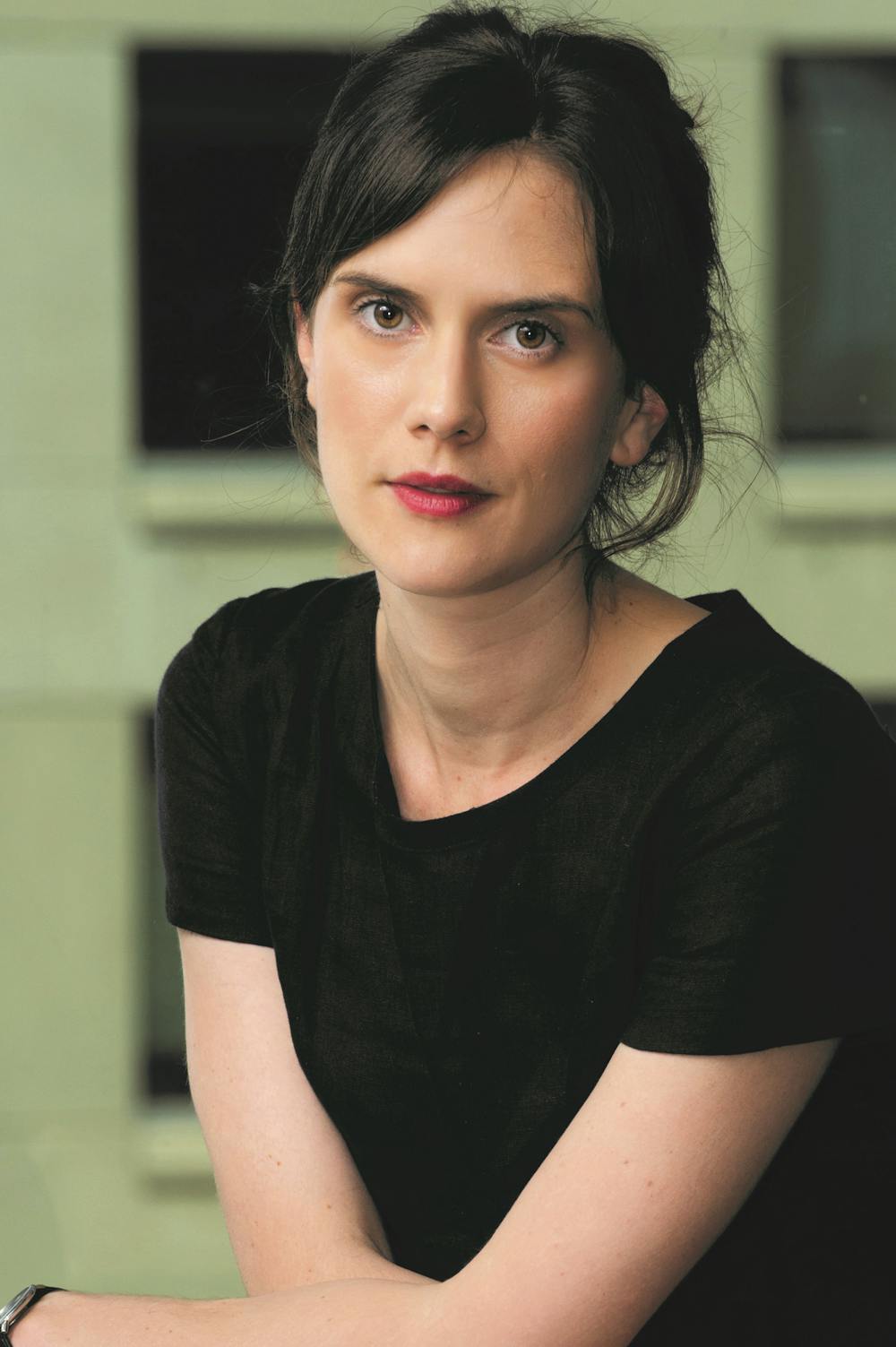 Stephanie Bishop.
Hachette.
It is a subtle correction, but one that catches the reader – well, what did she say, we wonder. And if J.B. cannot get this detail correct, what else might she be misremembering or failing to record?
Even her name is unstable. Her family calls her Lucie, her given name. She publishes as J.B. – her middle initials (for Joy-Beth). Patrick often affectionately calls her by her middle name, Joy.
Truth, in The Anniversary, is hard to reach. Just like the “rumours” about Patrick’s death that float around the ship – “every whispered possibility […] a near-truth, a likelihood, the real story” – J.B.’s narration can only ever approach the truth about any aspect of her life. As she observes,
There is never only one version. […] I could not tell them that all too often I doubt my own version of events. There are things I did not wholly remember, but which I am sure did happen – there is an outline of them in my head, but the content is missing.
That the novel does not include direct markers of speech reflects this loose connection to the truth. J.B. cannot present a consistent statement about what she witnessed prior to Patrick’s death, a problem she had also experienced as a child when she was interviewed by police about her mother’s disappearance:
I didn’t say enough, and then I said too much, and then what I said at first didn’t match the thing I said after that.
Details about J.B.‘s life which might seem significant are brushed away. A probing profile article refers to her migrant parents, her father’s life in India, her childhood in the Australian bush.
One gets the sense that J.B. is finely crafting her life for us, painstakingly editing, revising the manuscript of her experiences. Only what she wants us to know will be included. Even the apparently unequivocal fact of a video recording is called into question. Patrick’s fall from the ship has been captured on CCTV, but the scene is incomplete, fragmentary:
The footage was grainy: the white side of the ship, the grey sea. In this his body appears black, it looks like he’s bouncing off the side of the boat, or trying to cling to it, like a cat leaping, tumbling. Later, on the television news, they made a spotlight around his body as it fell, a lighter, brighter circle that made his outline clear. They slowed the footage down, zoomed in. Repeated it from the beginning. It didn’t show the top railing, the one he went over, just the side of the ship. Not the beginning or end of the fall. Like in a dream.
Patrick’s fall is thus made cinematic. J.B. compares it to a long list of other falls in film: La Roue, The Matrix, Lethal Weapon, The Fugitive, The Game.
But all of her examples are fictional. She does not mention the most famous image of a falling man: the unnamed man who jumped from the Twin Towers as they burned and collapsed on September 11, 2001. In this way, J.B.’s attempts to fictionalise and manipulate are subtly pointed out. Her version of events is shown to be further and further from the real.
Bishop’s novel is a moody and clever work about the nature of the relationship between art and life, the way the puppeteer and the puppet rely on one another for the creation of beauty. But it is also about art produced within a marriage – a marriage in which two artists are making art from the same life, the creative labour of each informing the work of the other. The Anniversary cracks open the resentment of artistic synchronicity that exists between them.
Authors: Jessica Gildersleeve, Professor of English Literature, University of Southern Queensland
Stephanie Bishop.
Hachette.
It is a subtle correction, but one that catches the reader – well, what did she say, we wonder. And if J.B. cannot get this detail correct, what else might she be misremembering or failing to record?
Even her name is unstable. Her family calls her Lucie, her given name. She publishes as J.B. – her middle initials (for Joy-Beth). Patrick often affectionately calls her by her middle name, Joy.
Truth, in The Anniversary, is hard to reach. Just like the “rumours” about Patrick’s death that float around the ship – “every whispered possibility […] a near-truth, a likelihood, the real story” – J.B.’s narration can only ever approach the truth about any aspect of her life. As she observes,
There is never only one version. […] I could not tell them that all too often I doubt my own version of events. There are things I did not wholly remember, but which I am sure did happen – there is an outline of them in my head, but the content is missing.
That the novel does not include direct markers of speech reflects this loose connection to the truth. J.B. cannot present a consistent statement about what she witnessed prior to Patrick’s death, a problem she had also experienced as a child when she was interviewed by police about her mother’s disappearance:
I didn’t say enough, and then I said too much, and then what I said at first didn’t match the thing I said after that.
Details about J.B.‘s life which might seem significant are brushed away. A probing profile article refers to her migrant parents, her father’s life in India, her childhood in the Australian bush.
One gets the sense that J.B. is finely crafting her life for us, painstakingly editing, revising the manuscript of her experiences. Only what she wants us to know will be included. Even the apparently unequivocal fact of a video recording is called into question. Patrick’s fall from the ship has been captured on CCTV, but the scene is incomplete, fragmentary:
The footage was grainy: the white side of the ship, the grey sea. In this his body appears black, it looks like he’s bouncing off the side of the boat, or trying to cling to it, like a cat leaping, tumbling. Later, on the television news, they made a spotlight around his body as it fell, a lighter, brighter circle that made his outline clear. They slowed the footage down, zoomed in. Repeated it from the beginning. It didn’t show the top railing, the one he went over, just the side of the ship. Not the beginning or end of the fall. Like in a dream.
Patrick’s fall is thus made cinematic. J.B. compares it to a long list of other falls in film: La Roue, The Matrix, Lethal Weapon, The Fugitive, The Game.
But all of her examples are fictional. She does not mention the most famous image of a falling man: the unnamed man who jumped from the Twin Towers as they burned and collapsed on September 11, 2001. In this way, J.B.’s attempts to fictionalise and manipulate are subtly pointed out. Her version of events is shown to be further and further from the real.
Bishop’s novel is a moody and clever work about the nature of the relationship between art and life, the way the puppeteer and the puppet rely on one another for the creation of beauty. But it is also about art produced within a marriage – a marriage in which two artists are making art from the same life, the creative labour of each informing the work of the other. The Anniversary cracks open the resentment of artistic synchronicity that exists between them.
Authors: Jessica Gildersleeve, Professor of English Literature, University of Southern Queensland 
















