

Raimond Gaita farewells writer, historian and son-in-law, Mark Raphael Baker
- Written by: Raimond Gaita, Honourary professorial fellow, Melbourne Law School, The University of Melbourne
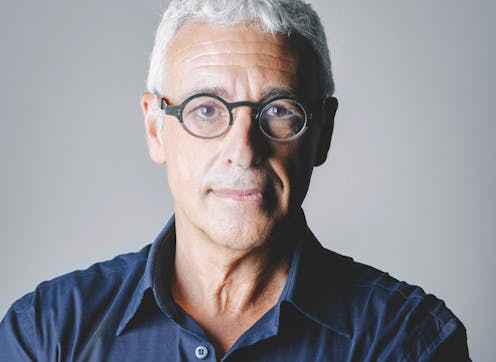
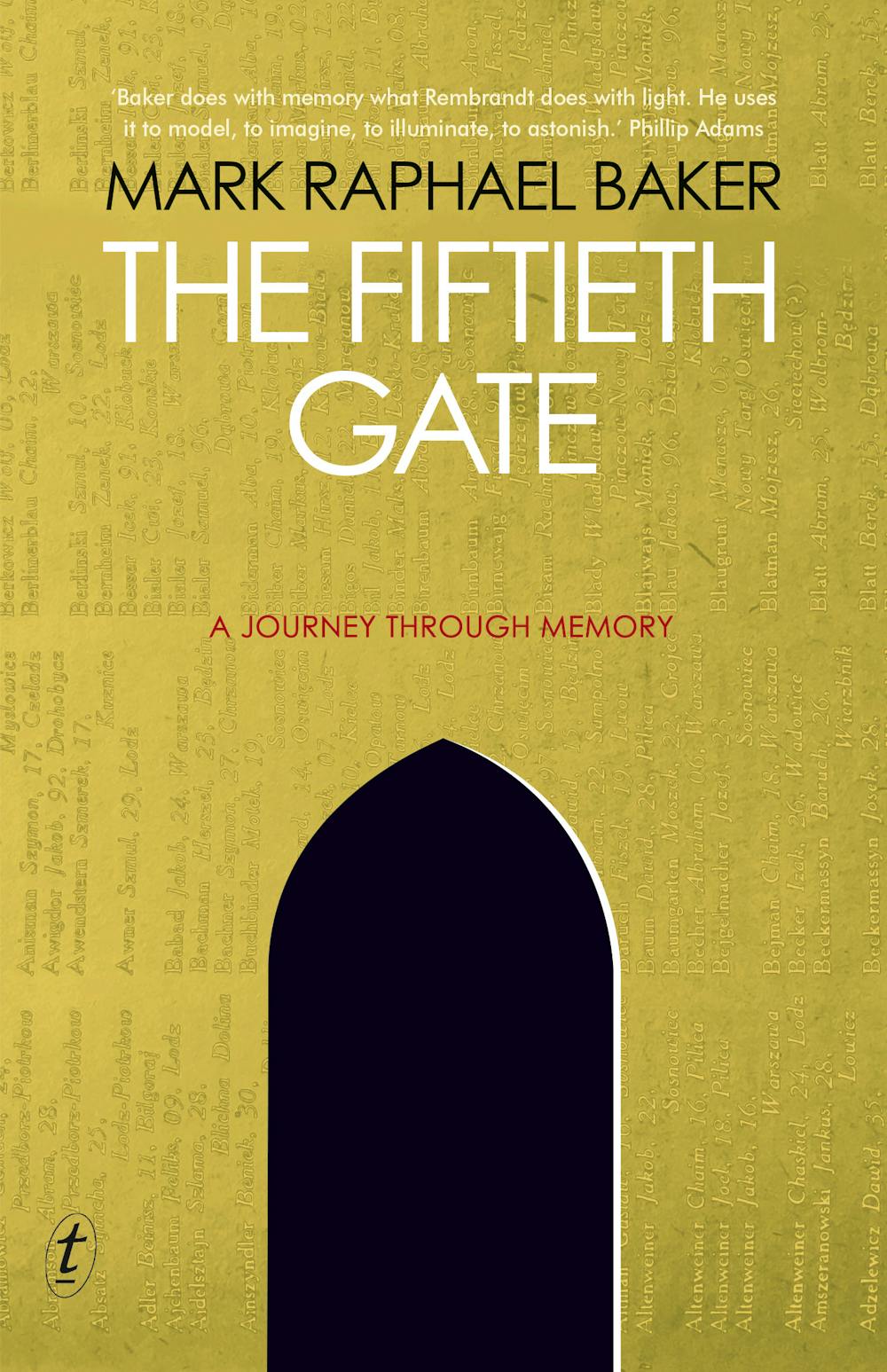
Mark Raphael Baker, who died on May 4, is best known for two outstanding books, radically different in kind. The groundbreaking Holocaust historian Christopher R. Browning describes Mark’s award-winning memoir The Fiftieth Gate, about his parents’ experience in the Holocaust, thus: “Combining precise historical research and poetic eloquence […] The Fiftieth Gate remains the gold standard of second-generation Holocaust memoirs”.
When it was reissued for its 20-year anniversary five years ago, it had sold over 70,000 copies.
In The Fiftieth Gate, Mark entered his parents’ memories – and in the darkness, found light. Across the silence of 50 years, he and his family travelled from Poland and Germany to Jerusalem and Melbourne, as Mark struggled to uncover the mystery of his parents’ survival: his father Yossl was imprisoned in concentration camps and his mother Genia was forced into hiding after the Jews of her village were murdered.
In an introduction to the book’s 20th anniversary edition, Mark reflected on how the testimonial culture in Holocaust studies has spread to awareness of other genocides and our responsibility (and failure) to prevent them.
Thirty Days, Mark’s memoir about the dying and death of his first wife Kerryn, was written in the first 30 days of mourning, and published in 2017. Wrote author Miranda Richmond Mouillot: “Piercing, unsparing and sweet, this book will break your heart and put it back again”.
Mark recalled their life together and wrote of Kerryn’s death and dying in many tones – lyrically, tenderly, with self-deprecating irony, embarrassed candour and more – but one heard in them all pain so raw and need so desperate that it sometimes threatened to unhinge him. This elegy of love and grief takes back to our hearts knowledge that is too often only in our heads – that the disappearance of a human personality will forever be mysterious to us because every human being is irreplaceable.
Much later, long after I first wrote these words about his book, Mark met and married his second wife, Michelle Lesh – my stepdaughter.
Two new books will be published, hopefully this year and early next year. Mark’s novel, The Alphabet of Numbers, is a literary thriller in the mould of Dan Brown’s Da Vinci Code and Donna TartT’s The Secret History.
A Season of Death is a memoir, written after Mark was diagnosed with pancreatic cancer in April 2022. Michelle and I will prepare it for publication.
When I sent Mark’s final draft to his children (from his marriage to Kerryn) I wrote:
I’m sure you will be profoundly moved by your father’s last work – deep, poignant, inspiring, painfully - sometimes unbearably – raw, yet often characteristically funny.

Friendship and courage
My relationship to Mark had two phases. In the first, we knew each other as writers and academics. In 1999, my book Romulus My Father and Mark’s The Fiftieth Gate competed for premier’s literary awards in two states. Perhaps it was good for our future relationship that we were awarded one each – though Mark also got a trip Sydney, with an overnight stay (all expenses paid, I assume).
Over the next decade, our friendship developed, though it was not yet close. For the most part, it centred on academic matters. He invited me to speak on two or three occasions to the Centre for Jewish Civilisation at Monash University, of which he was director.
I invited him to give a lecture in a series of six I curated on Israel’s invasion of Gaza in 2009. Each week the lecture theatre was packed, usually by an audience hostile to Israel – for the most part the same audience.
 A poster for the Gaza lecture series.
Author provided
A poster for the Gaza lecture series.
Author provided
A significant number of that audience showed their distaste – sometimes verbally, but more often in unnervingly expressive body language – at the prospect of hearing many and fine distinctions drawn in service to an attempt to judge whether the Israeli invasion was justified. Such an attempt, many of them seemed to think, was indecent.
The content of Mark’s lecture was excellent and its delivery eloquent. More impressive was his ability to engage the serious attention of that difficult audience because he spoke so obviously from a heart made open to their hostility – and even mockery.
He condemned Israel’s crimes and also the growing tendency to believe they were a reason for it to cease to exist as a Jewish state. It was then that I came to respect his integrity, both moral and intellectual, and to admire his courage.
Courage is one of the most important virtues: without it, some values cannot develop, and others will be forsaken. Wisdom – as distinct from cleverness – will not develop unless one cares fearlessly for truth, against fashion, peer pressure, vanity and so on. Loyalty will come to nothing if betrayed by cowardice. Ditto for political commitment.
Ghassan Hage was also one of the speakers at my lecture series. He is a renowned anthropologist, who last year gave the prestigious annual Margaret Mead Lecture at Columbia University. His hostility to Zionism is uncompromisingly fierce. When I shared the video announcing Mark’s death on Facebook, Ghassan wrote a comment:
Dear Rai, I am sorry for you and your daughter’s loss. I’ve only met Mark a few times and it is some time ago now. We had some rather strong disagreements, but I know you’d know that I am not saying a platitude when I say that he always came across as a fine human being who never let political disagreements come in the way of decent and sincere interpersonal relations.
Given how passionately Ghassan and Mark held the beliefs that brought them into irreconcilable conflict, that is a fine tribute. I’m grateful, on Mark’s behalf, that Ghassan made it.
Looking over old emails, I noted I had praised Mark’s courage to his brother Johnny as early as 2012 – and did the same later in that year in an email to Mark himself. The courage to which I referred in those emails was not as it showed in his defence of Israel against people critical of it.
 It was to the way he manifested criticism of Israel – loyal always to the nation and its founding ideals as he believed them to be, but not therefore to any of its governments. It was criticism that hurt and offended a community of Holocaust survivors not ready for it to be made outside the community – and, in fact, often not ready for it, period.
It was primarily Mark’s posts that kept me on Facebook, which I had joined more or less accidentally. His condemnation of the occupation and the brutal treatment of Palestinians provoked hostile criticism more often than friendly (albeit critical) support. “I applaud your courage and good judgement in seeing so clearly the difference between patriotism and jingoism,” I wrote in that 2012 email.
Almost always Mark responded to attacks with a determination to keep discussion rational and answerable to facts. I say “almost always” because he could be hot-headed – but given the provocation he received, it was hardly worth remarking on.
I also looked to his posts for the articles he recommended. I was struck that Mark was probably one of the most well-read people I know – one of three, indeed.
Apart from his writings, his work at the Centre for Jewish Civilisation was his most important contribution to Australian cultural and intellectual life. He brought many eminent international speakers – writers, historians, social theorists, religious scholars – to Monash, and from there to universities around Australia. Some of the centre’s activities were closed to participants in workshops or conferences, but many were open to the public. The lectures were always packed. The gratitude of the audience for the opportunity Mark made available, and the respect and affection they showed him, was almost palpable.
During his directorship, his uncompromising commitment to academic freedom ensured the Centre’s independence from pressure to not alienate important figures in the Jewish community on matters regarding Israel – pressure applied by academics and donors.
It was to the way he manifested criticism of Israel – loyal always to the nation and its founding ideals as he believed them to be, but not therefore to any of its governments. It was criticism that hurt and offended a community of Holocaust survivors not ready for it to be made outside the community – and, in fact, often not ready for it, period.
It was primarily Mark’s posts that kept me on Facebook, which I had joined more or less accidentally. His condemnation of the occupation and the brutal treatment of Palestinians provoked hostile criticism more often than friendly (albeit critical) support. “I applaud your courage and good judgement in seeing so clearly the difference between patriotism and jingoism,” I wrote in that 2012 email.
Almost always Mark responded to attacks with a determination to keep discussion rational and answerable to facts. I say “almost always” because he could be hot-headed – but given the provocation he received, it was hardly worth remarking on.
I also looked to his posts for the articles he recommended. I was struck that Mark was probably one of the most well-read people I know – one of three, indeed.
Apart from his writings, his work at the Centre for Jewish Civilisation was his most important contribution to Australian cultural and intellectual life. He brought many eminent international speakers – writers, historians, social theorists, religious scholars – to Monash, and from there to universities around Australia. Some of the centre’s activities were closed to participants in workshops or conferences, but many were open to the public. The lectures were always packed. The gratitude of the audience for the opportunity Mark made available, and the respect and affection they showed him, was almost palpable.
During his directorship, his uncompromising commitment to academic freedom ensured the Centre’s independence from pressure to not alienate important figures in the Jewish community on matters regarding Israel – pressure applied by academics and donors.
 Mark Raphael Baker at Treblinka death camp on a research trip for The Fiftieth Gate.
Author provided
From colleague to father-in-law
The second phase of my relationship to Mark was by far the most important. I call it “the father-in-law phase”. Strictly speaking, I was his stepfather-in-law, but we resisted the qualification – eventually dropping it, unless some occasion or protocol required strict veracity. We spoke to one another about this aspect of relationship in several tones, but always with a touch of bemused disbelief.
In my speech at Michelle and Mark’s wedding, I said: “I have often laughed incredulously at the thought that Mark Baker would be my stepson-in-law. I don’t know if I will ever stop.” On a number of occasions, however, we publicly expressed pride in our new relationship. I’ve stopped laughing.
Mark’s fine mind – open, sharp, witty, critical and self-critical – is known to all who have read, or conversed with him, as was his impressive knowledge. Few people would not have been humbled by the extent and depth of his reading. Those qualities made him one of the most important figures in the Jewish community and beyond – and a fine writer. They made our many conversations fruitful and enjoyable.
It’s so very painful for me now to remember how much I’d been looking forward to years of those conversation, at the dinner table in our St Kilda homes, seven minutes’ walk from one another. We agreed about a lot, but anybody who eavesdropped on our conversation would think we were often in constant and sometimes passionate disagreement.
The intellectual qualities I have described were impressive, but a moment’s reflection will tell you that they can be possessed by someone quite superficial and even by people who are evil – as the Wannsee conference, littered by PhDs who planned the Final Solution, proved.
For that reason, I have never been greatly impressed by intelligence in the sense conveyed when we praise someone for being bright, or quick on their feet, intellectually high-flying. After 50 years in academic life, I’ve seen a lot of it and have often been reminded of a remark by Albert Camus. He said he admires intelligence, but distinguishes between “intelligent intelligence” and “stupid intelligence”.
What’s the difference? Intelligence is stupid when it is only, even at its best, what I just described. Intelligent intelligence is what Mark showed in his Gaza lectures. It is ethically serious – but not thereby earnest.
Mark was never earnest. He was renowned and loved for his wit and gaiety. But he was also known for his passion for truthfulness. Sceptical about any temptation to award the concept of truth a capital “T”, he never doubted the importance of trying to see things as they are, rather than as they appear from the perspective of distorted loyalty, or vanity, or fear of what people might think of you. And he never doubted the importance of the need, for the sake of democratic politics, to make one’s thoughts answerable to the facts – especially after Trump.
Read more:
Raimond Gaita on Donald Trump's America: a cloud cuckoo land devoid of fact, evidence and argument
Love, care and fatherhood
Important and pleasurable though the intellectual dimension of our relationship was, it would never have taken me even to affection. I’ll describe two occasions that took me from admiration and affection to love.
Michelle was invited in 2018 to Geneva to join the United Nations Human Rights council to investigate the bloody events at the Gaza border that year. But she was morally compelled to resign – a decision accompanied by great stress and anxiety – before the council delivered its scathing report accusing Israel of violations of Human Rights Law and International Humanitarian Law. Not because she disagreed in any serious way with the ethical/political content of the council’s judgement, as she anticipated it, but because of the way she believed it came to that judgement. The route to a judgement in law is as important as its destination. Concern for the integrity of law and its respect in the international community ethically compelled her resignation.
That was when my affection for Mark turned into love. His support for Michelle when she was desperately in need of it was unwavering. In Geneva, he made good in a dramatic fashion on the promise he made to my wife Yael and me at the beginning of his relationship with Michelle. “I love her. I will care for her. I will be good to her”.
There was another period where he showed even greater supererogatory devotion. Michelle and Mark underwent 22 IVF procedures. Twenty-two! It’s almost impossible to believe. Mark tells their heartbreaking journey and its joyful outcome in A Season of Death. In my reading, most people found the heartache of three IVF failures too much to bear. “Twenty-two might be a world record,” Mark writes in his memoir.
I remember vividly an evening, again at the kitchen table at our house in St Kilda, when Michelle, Mark, Yael and I discussed whether they should try again, a 22nd time, with one of two remaining eggs; or should they, after so many years of heartbreak, opt for surrogacy?
Hesitantly, Yael and I told Michelle that we believed that if she didn’t, she would spend her life wondering what would’ve happened if she did. I remember catching Mark’s eyes. I could see that he was wondering whether their spirits could withstand yet another assault of searing disappointment. I saw also in his eyes the realisation that they had no choice but to try again and to steel themselves for the consequences. It’s no wonder that it is said in so many cultures that the eyes are the window to the soul.
I don’t know if the advice we gave that evening played a part in bringing Melila to this world – Melila the miracle child, who everyone loves – but if we did, it was one the best things we have done in our lives.
Mark Raphael Baker at Treblinka death camp on a research trip for The Fiftieth Gate.
Author provided
From colleague to father-in-law
The second phase of my relationship to Mark was by far the most important. I call it “the father-in-law phase”. Strictly speaking, I was his stepfather-in-law, but we resisted the qualification – eventually dropping it, unless some occasion or protocol required strict veracity. We spoke to one another about this aspect of relationship in several tones, but always with a touch of bemused disbelief.
In my speech at Michelle and Mark’s wedding, I said: “I have often laughed incredulously at the thought that Mark Baker would be my stepson-in-law. I don’t know if I will ever stop.” On a number of occasions, however, we publicly expressed pride in our new relationship. I’ve stopped laughing.
Mark’s fine mind – open, sharp, witty, critical and self-critical – is known to all who have read, or conversed with him, as was his impressive knowledge. Few people would not have been humbled by the extent and depth of his reading. Those qualities made him one of the most important figures in the Jewish community and beyond – and a fine writer. They made our many conversations fruitful and enjoyable.
It’s so very painful for me now to remember how much I’d been looking forward to years of those conversation, at the dinner table in our St Kilda homes, seven minutes’ walk from one another. We agreed about a lot, but anybody who eavesdropped on our conversation would think we were often in constant and sometimes passionate disagreement.
The intellectual qualities I have described were impressive, but a moment’s reflection will tell you that they can be possessed by someone quite superficial and even by people who are evil – as the Wannsee conference, littered by PhDs who planned the Final Solution, proved.
For that reason, I have never been greatly impressed by intelligence in the sense conveyed when we praise someone for being bright, or quick on their feet, intellectually high-flying. After 50 years in academic life, I’ve seen a lot of it and have often been reminded of a remark by Albert Camus. He said he admires intelligence, but distinguishes between “intelligent intelligence” and “stupid intelligence”.
What’s the difference? Intelligence is stupid when it is only, even at its best, what I just described. Intelligent intelligence is what Mark showed in his Gaza lectures. It is ethically serious – but not thereby earnest.
Mark was never earnest. He was renowned and loved for his wit and gaiety. But he was also known for his passion for truthfulness. Sceptical about any temptation to award the concept of truth a capital “T”, he never doubted the importance of trying to see things as they are, rather than as they appear from the perspective of distorted loyalty, or vanity, or fear of what people might think of you. And he never doubted the importance of the need, for the sake of democratic politics, to make one’s thoughts answerable to the facts – especially after Trump.
Read more:
Raimond Gaita on Donald Trump's America: a cloud cuckoo land devoid of fact, evidence and argument
Love, care and fatherhood
Important and pleasurable though the intellectual dimension of our relationship was, it would never have taken me even to affection. I’ll describe two occasions that took me from admiration and affection to love.
Michelle was invited in 2018 to Geneva to join the United Nations Human Rights council to investigate the bloody events at the Gaza border that year. But she was morally compelled to resign – a decision accompanied by great stress and anxiety – before the council delivered its scathing report accusing Israel of violations of Human Rights Law and International Humanitarian Law. Not because she disagreed in any serious way with the ethical/political content of the council’s judgement, as she anticipated it, but because of the way she believed it came to that judgement. The route to a judgement in law is as important as its destination. Concern for the integrity of law and its respect in the international community ethically compelled her resignation.
That was when my affection for Mark turned into love. His support for Michelle when she was desperately in need of it was unwavering. In Geneva, he made good in a dramatic fashion on the promise he made to my wife Yael and me at the beginning of his relationship with Michelle. “I love her. I will care for her. I will be good to her”.
There was another period where he showed even greater supererogatory devotion. Michelle and Mark underwent 22 IVF procedures. Twenty-two! It’s almost impossible to believe. Mark tells their heartbreaking journey and its joyful outcome in A Season of Death. In my reading, most people found the heartache of three IVF failures too much to bear. “Twenty-two might be a world record,” Mark writes in his memoir.
I remember vividly an evening, again at the kitchen table at our house in St Kilda, when Michelle, Mark, Yael and I discussed whether they should try again, a 22nd time, with one of two remaining eggs; or should they, after so many years of heartbreak, opt for surrogacy?
Hesitantly, Yael and I told Michelle that we believed that if she didn’t, she would spend her life wondering what would’ve happened if she did. I remember catching Mark’s eyes. I could see that he was wondering whether their spirits could withstand yet another assault of searing disappointment. I saw also in his eyes the realisation that they had no choice but to try again and to steel themselves for the consequences. It’s no wonder that it is said in so many cultures that the eyes are the window to the soul.
I don’t know if the advice we gave that evening played a part in bringing Melila to this world – Melila the miracle child, who everyone loves – but if we did, it was one the best things we have done in our lives.
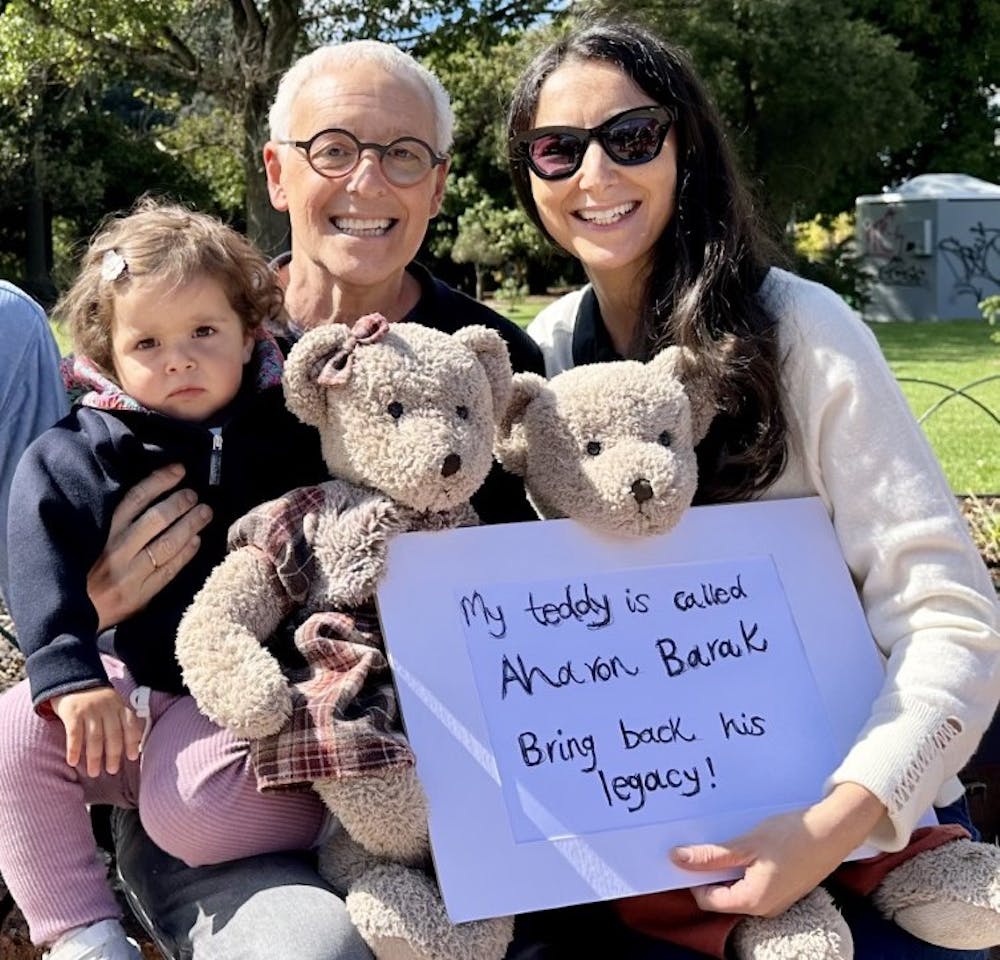 Mark, Michelle and Melila, ‘the miracle child’, protesting for democracy in Israel.
Author provided
Final words, from Mark
I’ll end with Mark’s words from A Season of Death, because they are so beautiful. He had taken Melila to a walk on St Kilda Beach, to a small Jetty.
After I was diagnosed with cancer, Michelle organised a private yoga class at home on my birthday. I loved it so much that the teacher returns each week, then twice a week. It’s the only thing that gets me out of my head and allows me to forget that I have cancer for a single hour on the mat. I tell the teacher that my aim is to once again stand on my head and see the world upright — my upside-down world.
I go down on all fours onto the hard floor of the pier. I know I should have a rubber mat but the risk of falling on wood spurs me on. I place my arms outwards and kick my feet up. They fall back on the ground. I try again. The same thing. On the third attempt, I feel my body rise, the tumour and liver spot stretching inside me, and for one millisecond I am suspended in the air. I wonder what Melila is thinking watching her Dadda upside down. And then I fall hard on the ground onto my back. The back that has been screaming for pain relief.
I lie there for a few seconds and look up at the vaulted sky. Rain has begun to fall lightly. I pull myself up and unlock the brakes on Melila’s wheels. I sing her a Yiddish song that my father used to sing to me, and me to my children, and now my mother to Melila. I turn the masculine words into the feminine. I dare myself to dream about my baby’s future.
Go to sleep my beautiful girl,
Close your little dark eyes
A little girl who already has all her teeth
Still needs her Dadda to sing her a lullaby.
The skies open and whip us with torrential rain. I push my daughter homeward and protect my sweet Melila, my zisseleh, by picking up speed. Am I really running?
Authors: Raimond Gaita, Honourary professorial fellow, Melbourne Law School, The University of Melbourne
Mark, Michelle and Melila, ‘the miracle child’, protesting for democracy in Israel.
Author provided
Final words, from Mark
I’ll end with Mark’s words from A Season of Death, because they are so beautiful. He had taken Melila to a walk on St Kilda Beach, to a small Jetty.
After I was diagnosed with cancer, Michelle organised a private yoga class at home on my birthday. I loved it so much that the teacher returns each week, then twice a week. It’s the only thing that gets me out of my head and allows me to forget that I have cancer for a single hour on the mat. I tell the teacher that my aim is to once again stand on my head and see the world upright — my upside-down world.
I go down on all fours onto the hard floor of the pier. I know I should have a rubber mat but the risk of falling on wood spurs me on. I place my arms outwards and kick my feet up. They fall back on the ground. I try again. The same thing. On the third attempt, I feel my body rise, the tumour and liver spot stretching inside me, and for one millisecond I am suspended in the air. I wonder what Melila is thinking watching her Dadda upside down. And then I fall hard on the ground onto my back. The back that has been screaming for pain relief.
I lie there for a few seconds and look up at the vaulted sky. Rain has begun to fall lightly. I pull myself up and unlock the brakes on Melila’s wheels. I sing her a Yiddish song that my father used to sing to me, and me to my children, and now my mother to Melila. I turn the masculine words into the feminine. I dare myself to dream about my baby’s future.
Go to sleep my beautiful girl,
Close your little dark eyes
A little girl who already has all her teeth
Still needs her Dadda to sing her a lullaby.
The skies open and whip us with torrential rain. I push my daughter homeward and protect my sweet Melila, my zisseleh, by picking up speed. Am I really running?
Authors: Raimond Gaita, Honourary professorial fellow, Melbourne Law School, The University of Melbourne 

















