

What Australia's new gas tax will mean for new projects, the economy and the climate
- Written by: Samantha Hepburn, Professor, Deakin Law School, Deakin University
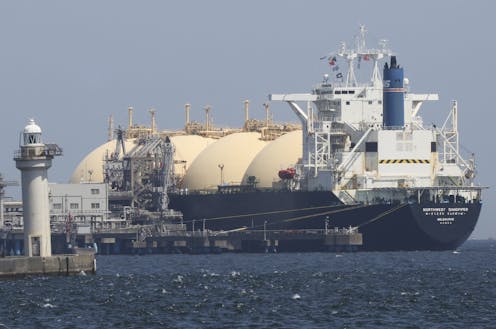
Treasurer Jim Chalmers has announced higher taxes on gas industry profits, which he says will give Australians a “fairer return” on their natural resources.
On Sunday Chalmers flagged changes to the petroleum resource rent tax (PRRT) – a tax on the profits from oil and gas exports – that he says will mean the offshore LNG industry “pays more tax, sooner”.
Many profitable LNG projects are not paying tax under the current regime. Indeed, it has been predicted that most LNG projects will never pay tax.
Changes to the tax are long overdue. As an economic “rent tax”, the mechanism seeks to capture revenue from resource extraction minus the costs of supply. Good resource tax design is a social investment that allows profits to be subject to taxes without those taxes operating as a disincentive on investment. Bad resource tax design works against this because it means those resource profits are immune from tax.
Dusting off review recommendations
The changes come in response to recommendations from two reviews: the Callaghan Petroleum Resource Rent Tax review released in 2017 by then-treasurer Scott Morrison; and a subsequent Treasury review released on Sunday.
The Callaghan report recommended changes to the tax only be applied to new projects, to maintain the stability of the sector.
It said the tax was more effective for oil rather than gas projects because, under the existing scheme, profits are taxed after deducting earlier losses.
Currently, an entity’s liability is levied at 40% of the taxable profit made from its interest in the project. This 40% is levied on offshore oil and gas projects once they start making profits.
The level of deductions that oil and gas projects can carry forward is known as the uplift rate. Australia applies two uplift rates: the long-term bond rate plus 5% (for general losses), and the long-term bond rate plus 15% (for exploration losses).
The long-term bond rate can grow over time, so it effectively doubles every four years. This has meant relatively moderate exploration deductions can accumulate into significant amounts over time. This is not as much of an issue for oil projects because they start making profits relatively quickly. Gas projects accumulate deductions because they take much longer to make a return.
The Callaghan report found if a direct “netback” method was implemented (that is, profit minus extraction/liquefaction costs), an additional A$89 billion could be raised between 2023 and 2050 including an extra $68 billion between 2027 and 2039 at the higher prices.
Changes to the petroleum resource rent tax began in April 2019 when the uplift rate was reduced. Subsequently, onshore gas projects were removed from the scope of the tax, meaning offshore companies could no longer use them as deductions. No further amendments were implemented until now.
On Sunday, Chalmers finally released a final Treasury report of the tax scheme.
His government accepted eight of the 11 recommendations from that review and eight recommendations from the Callaghan Review (recommendations accepted but not implemented by the previous government).
Modest, balanced or weak reform?
Labor’s proposed changes are too modest and are only expected to net the government about $2.4 billion over the next four years. The proposed tax scheme will cap deductions to limit the proportion of PRRT assessable income that can be offset by deductions to 90%. It will also mean that producers will start paying petroleum resource rent tax immediately rather than in 2030 as is the current expectation.
How have the reforms been received?
Samantha McCulloch, chief executive of industry peak body the Australian Petroleum Production and Exploration Association, said the announcement provided greater investment certainty for industry. She went on:
The changes aim to get the balance right between the undeniable need for a strong gas sector to support reliable electricity and domestic manufacturing for decades to come and the need for a more sustainable budget.
She called on the government “to work constructively and cooperatively with the opposition”.
The alternative is negotiating with The Greens and the teals. The Greens want the government to eliminate the $284bn of accumulated credits that allow gas companies to reduce their tax liability.
The teals want to further strengthen the tax. Independent Member for Goldstein Zoe Daniel says that while increasing the revenue take from the PRRT is a good start, “lowballing it is a wasted opportunity”.
LNG exports are worth more than $90 billion per year, yet this step will yield only $600 million annually. These are Australian resources, and this is a weak step towards a fair return.
There have been claims the tax hike may threaten new gas projects.
West Australian energy giant Woodside Energy is expected to be hit the hardest. Local liquified natural gas producer Santos and multinationals including Shell, Chevron, and ConocoPhillips may also be affected, media reports suggest.
Real change is desperately needed
Significant change to the petroleum resource rent tax is desperately needed to address budget repair and blowouts.
In the decade before the Gladstone LNG port opened, when Australia’s gas exports soared, company taxes and the resource tax paid by the industry were approximately 15% of revenue. Since then, it has averaged 6%, and in 2019-20 was just 3.3%.
In 2022, Australia exported a record 81.4 million metric tonnes of LNG, earning the industry $92.8 billion (when expected revenue was $44 billion). If all of these windfall benefits were taxed, the revenue could be used to completely rewire the nation and accelerate the shift to a clean energy future.
This has not happened and the weak reform proposals by Labor do little more than scratch the surface.
Authors: Samantha Hepburn, Professor, Deakin Law School, Deakin University


















