

If the budget ditched the Stage 3 tax cuts, Australia could save every threatened species – and lots more
- Written by: Sarah Bekessy, Professor in Sustainability and Urban Planning, Leader, Interdisciplinary Conservation Science Research Group (ICON Science), RMIT University
The Albanese government has made bold environmental promises over the last year. Given the parlous state of nature in Australia, these commitments are important.
The promises include ending new extinctions, fixing national nature laws and protecting 30% of our land and waters. Achieving these goals requires a lot of money. So how does last night’s federal budget stack up?
Our collective expertise spans biodiversity conservation science and policy. In our view, the budget takes very small steps towards making good on the many government’s promises, but falls well short of what is needed.
Australia’s threatened species and ecosystems will not survive more funding neglect. It’s time to question our national priorities, and start funding the environment that sustains us.
A suite of big promises
First, let’s take a closer look at what the federal government said, ahead of the budget, it would achieve for Australia’s environment.
The government has promised to prevent any further species from becoming extinct. In the words of the government’s own report, “the challenges to the existence of the plants and animals that define Australia are bigger than ever”.
It will also strengthen national nature laws, otherwise known as the Environment Protection and Biodiversity Conservation (EPBC) Act. It follows a scathing independent review of the act in 2020.
As part of those reforms, the government pledged to establish a new national environmental watchdog to enforce the law and decide on project approvals and conditions.
And the Australian government has also promised to protect 30% of land and water by 2030, as well as restore 30% of degraded ecosystems, as part of a United Nations agreement it signed last year. This includes pledges to create ten new Indigenous Protected Areas and double the number of Indigenous Rangers.
So how far does the federal budget go to achieving the government’s ambitious conservation agenda?
Getting tough on environmental laws
The most promising budget announcement was A$121 million over four years to set up the new watchdog agency, to be known as Environment Protection Australia. A further $34 million will be spent on implementing national law reform and delivering a needed overhaul of conservation planning.
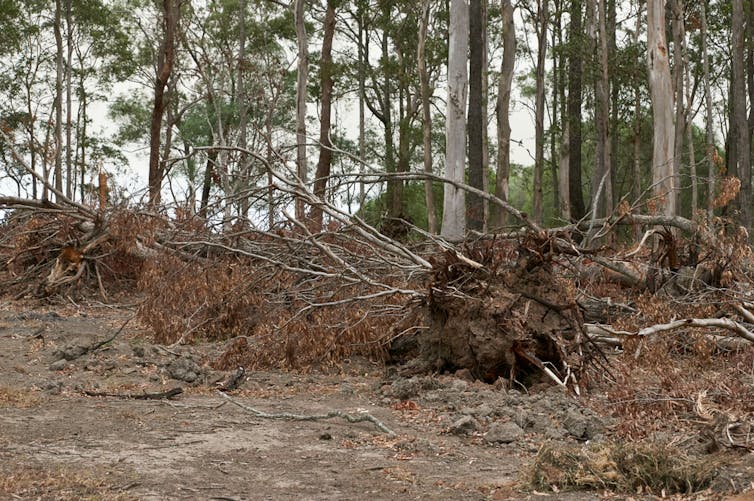
The new agency is sorely needed to address the national crisis of threatened species habitat loss in Australia. Research has found 93% of this destruction occurs without formal federal approval.
This is a good start, but the agency will need much greater funding, as well as independence, to function fearlessly as is intended. And it will only be effective if new environmental laws – currently being negotiated – give it the powers to prevent further biodiversity loss.
The budget also promises $51 million to create another new agency, Environment Information Australia. This body would provide high quality environmental data to support environmental regulation, planning and reporting.
This function is sorely needed to guide effective regulatory assessments and investments. There is also growing demand for biodiversity data for environmental accounting, business disclosures and the proposed Nature Repair Market.
However, the funding promised will only provide a basic data management and storage system. Far more is needed to fund the data collection necessary to fill the immense gaps in our biodiversity mapping and monitoring systems.
Read more: 'Complete elation' greeted Plibersek's big plans to protect nature - but hurdles litter the path
What else for nature?
The budget allocates $262 million over four years to Commonwealth national parks and marine reserves. A significant portion will be spent maintaining and upgrading infrastructure.
Effective protected area management needs stronger investment and active conservation, including management of invasive species and restoring degrading environments.
Many of Australia’s existing protected areas are badly damaged by feral pests such as weeds, foxes and feral cats, as well as inappropriate fire regimes and more. The budget commitment is tepid relative to the scale of these challenges.
Our current Commonwealth reserve system is already under-managed and many species and ecosystems are being neglected. It’s crucial that expanding the reserve system does not exacerbate these existing problems.
The lack of funding for Commonwealth reserves means Indigenous Protected Areas must take on an even greater share of the burden when it comes to improving biodiversity. However, this will require a dramatic increase in resourcing.
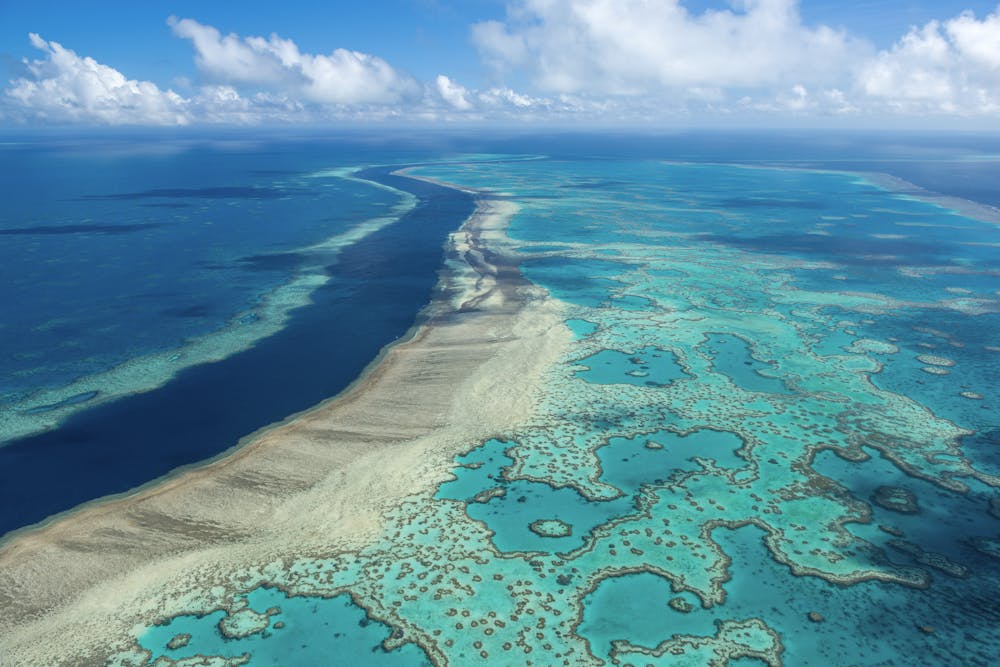
The budget includes significant commitments to climate action, funding for the Australian Institute of Marine Sciences, a review of the Murray Darling Basin Plan, and further investment to improve water quality flowing into the Great Barrier Reef. All of these should deliver some benefits for biodiversity.
The budget also contains $28 million to develop a much-needed national climate risk assessment, which includes risks to biodiversity. But a far greater investment will be needed to adapt to these risks.
And $439.2 million was committed over five years to support programs that repair World Heritage properties, restore Ramsar wetlands and conserve threatened species and habitats. This is a continuation of existing funding for natural resource management.
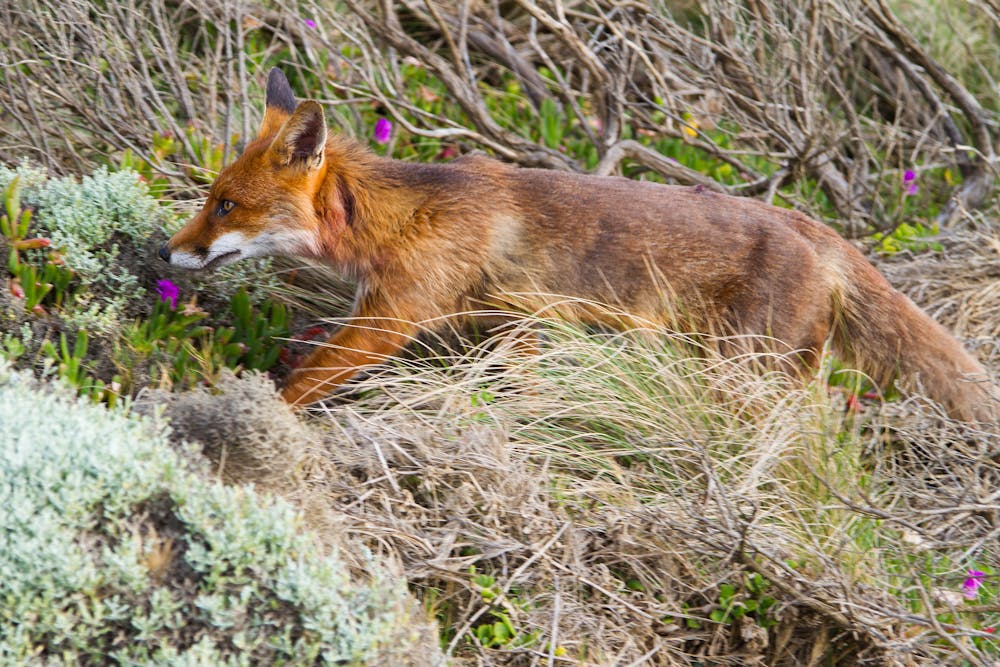 Feral animals such as foxes can damage ecosystems in protected areas.
Shutterstock
Feral animals such as foxes can damage ecosystems in protected areas.
Shutterstock
Getting our priorities straight
Overall, the budget spending does not represent the substantial increase to existing funding needed to halt biodiversity declines or recover threatened species.
Research suggests Australia must spend $2 billion a year to save its 1,900 most-imperilled species. And an additional $2 billion a year for 30 years could also restore 13 million hectares of Australia’s degraded land.
Meanwhile, the cost of adequately conserving our World Heritage areas and Ramsar wetlands is not yet known.
In light of this, the federal government’s budget investment is way off the mark.
The federal government could have scrapped the Stage 3 tax cuts, and redeployed the many billions of dollars a year to conserving species and ecosystems and properly funding Indigenous Protected Areas and ranger groups.
If it did that, Australia could recover all its threatened species by 2030 and have plenty left over for meeting national commitments to protecting and restoring degraded lands, and ensuring Indigenous people have more of a say over how Country is managed.
We endorse the government’s plans to strengthen Australia’s environment protection laws. But it must increase, by an order of magnitude, spending on threatened species and damaged ecosystems.
This is not a trade-off between the environment and the economy. Roughly half our GDP relies on natural systems. And nature has enormous benefits for the health and wellbeing of people and communities.
We must seriously examine our national priorities, and demand that Australian governments invest our national wealth in the species and ecosystems we depend on.
Read more: Australia could 'green' its degraded landscapes for just 6% of what we spend on defence
Authors: Sarah Bekessy, Professor in Sustainability and Urban Planning, Leader, Interdisciplinary Conservation Science Research Group (ICON Science), RMIT University


















