

Modern Australian
The Times

a new 'family tree' traces their 100-million-year journey across the globe

  • Written by Michael F. Braby, Associate Professor, Australian National University
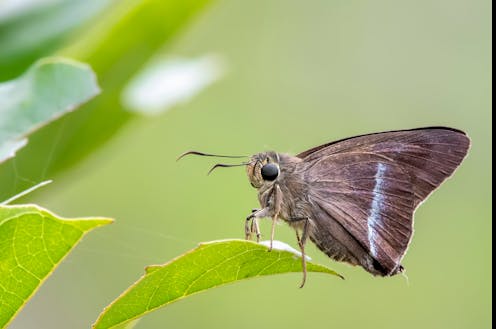
a new 'family tree' traces their 100-million-year journey across the globe

How old are butterflies, and where did they evolve? And perhaps more importantly, how and when did they reach the isolated continent of Australia?

Answers to these simple questions have baffled scientists for decades. Until recently we had very little idea when butterflies evolved, and hypotheses concerning their place of origin were largely educated guesses.

In recent years, however, several studies have indicated butterflies most likely arose sometime during the Cretaceous period, when dinosaurs dominated the Earth. Now, an international collaboration (of which I am a member) has placed the time of origin much more precisely: 101.4 million years ago, give or take 1.2 million years.

These early butterflies were different from nocturnal moths, their ancestors. They flew during the day, rather than at night, and were attracted to brightly coloured flowers for their rich nectar.

A 100-million-year history

To reach this conclusion, researchers from dozens of countries needed to construct the world’s largest “family tree” of butterfly species. This tree of life was assembled with DNA from 2,244 species representing all butterfly families and 92% of genera.
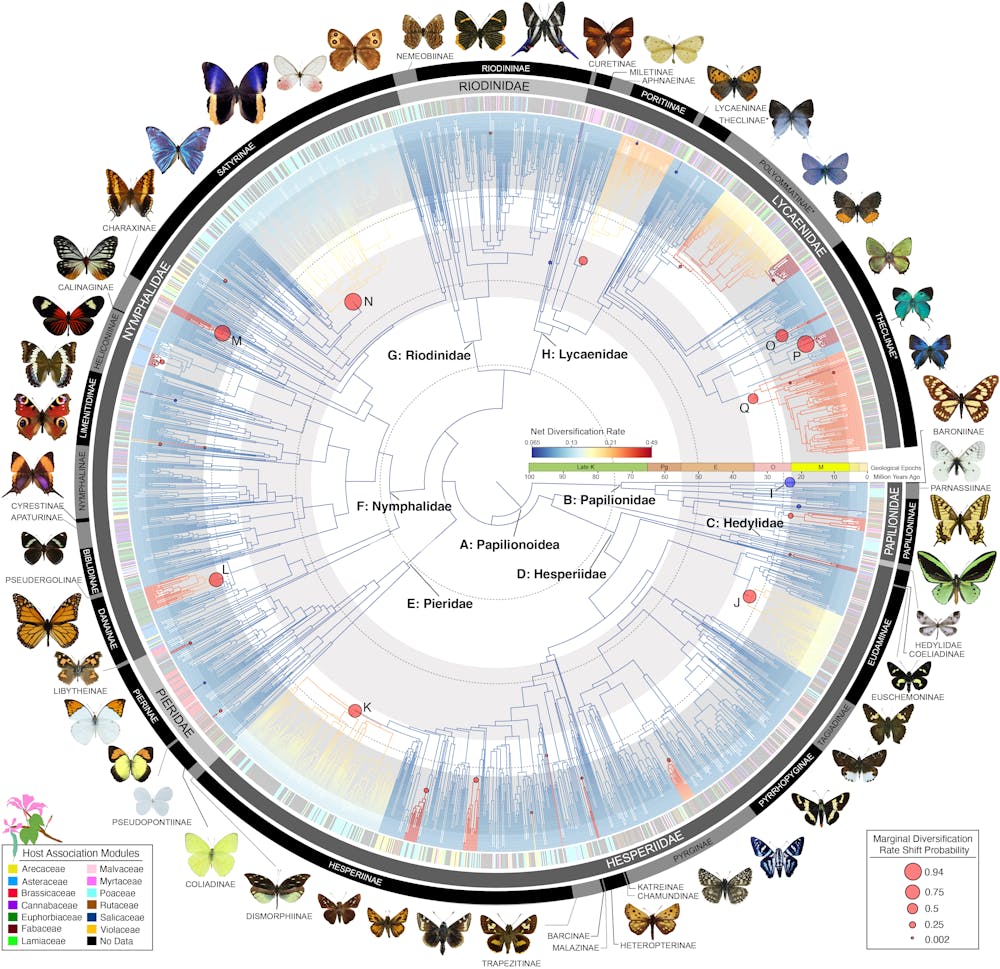
The ‘family tree’ of butterfly species was pieced together using DNA from 2,244 species. Kawahara et al. / Nature Ecology & Evolution, CC BY

There are roughly 19,000 butterfly species in the world, and piecing together the 100-million-year history of the group required assembling the world’s largest dataset of butterfly DNA sequences, geographical distributions and larval host plants.

Underlying the analysis were 11 rare butterfly fossils, without which the analysis would have been impossible. Butterflies are rarely preserved in the fossil record, and those that are preserved are frequently difficult to identify.

These fossils served as calibration points on the evolutionary tree. Once the tree was calibrated researchers could then estimate the timing of key events in butterfly evolution, starting with their origin.

North American origins

Not only did this latest study determine the age of butterflies, it also discovered where the butterflies first originated. By assembling a database of the distributions of all modern species and the plants on which they lay their eggs, the scientists were able to trace the movements of butterflies through time and space.

The study tells a dynamic story – one rife with rapid diversifications, faltering advances, and improbable dispersals. Some groups travelled over what seem impossibly vast distances, and others seem to have stayed in one place while continents, mountains and rivers moved around them.
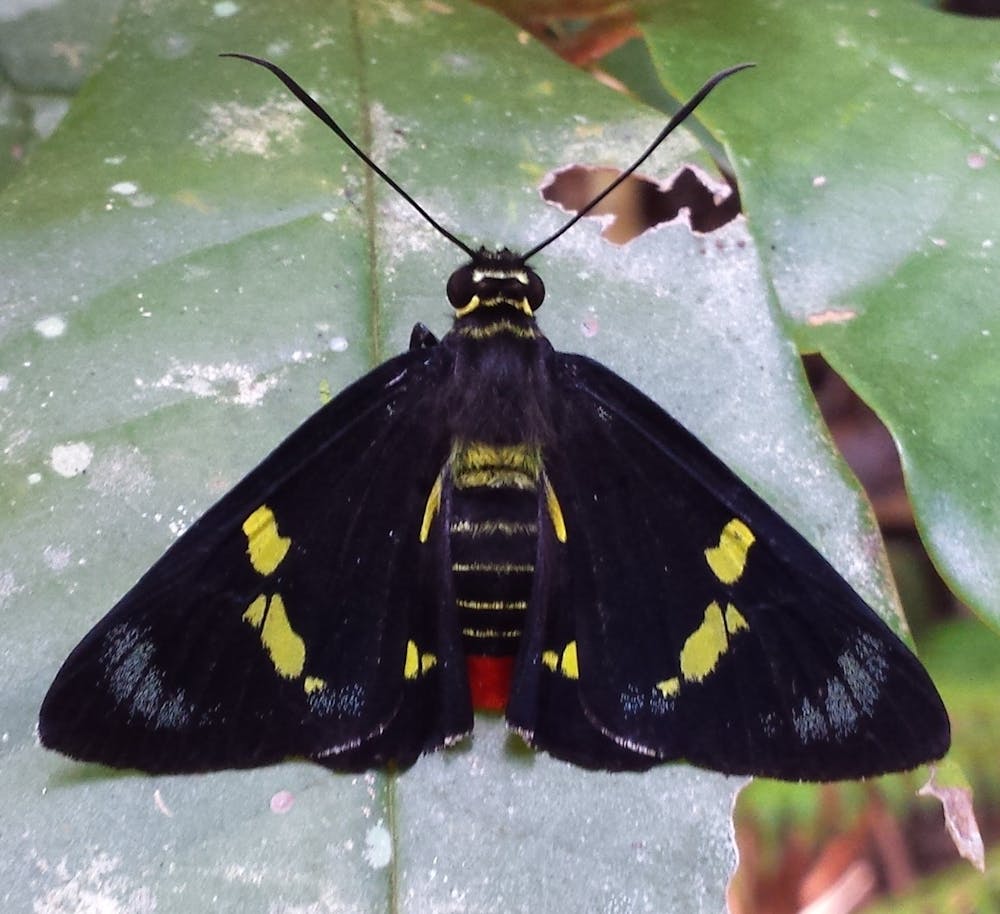
A photo of a black butterfly with yellow markings sitting on a green leaf. The Regent Skipper butterfly (Euschemon rafflesia), found only in the rainforests of Australia’s east coast, is the last remaining species of the Euschemoniinae subfamily. MF Braby, Author provided

According to this latest research, butterflies first appeared somewhere in Central and western North America.

At that time in the mid-Cretaceous, the continent of North America was part of eastern Laurasia, and it was bisected by an expansive seaway that split the continent in two. Present-day Mexico was joined in a long arc with what is now the United States, Canada and Russia.

North and South America had not yet joined via the isthmus of Panama, but butterflies seem to have had little difficulty crossing the water gap into the Southern Hemisphere. Once they reached South America, the early butterflies diversified to an astonishing degree.


From there, many groups not only moved back into North America, but they also dispersed to Australia via Antarctica. At the time, the three continents were still connected to form Southern Gondwana, a remnant of the supercontinent Gondwana. The path to Australia – and the rest of the world Two of the earliest butterfly lineages to reach Australia via Antarctica were the subfamilies Coeliadinae (awl skipper butterflies) (around 72 million years ago) and Euschemoniinae (around 65 million years ago). The Euschemoniinae are a group of butterflies found only in Australia, containing just a single remaining species – the spectacular regent skipper (Euschemon rafflesia) – restricted to the rainforests along the east coast. To reach Australia, butterflies must have once lived in Antarctica in the Late Cretaceous and Early Paleogene periods when global temperatures were considerably warmer than today. They would have made their way across the continent to Australia before the two landmasses separated some 34 million years ago. A photo of a butterfly with black wings and iridescent blue-green markings. The greater peacock awl butterfly (Allora major) is descended from the first butterflies to reach Australia some 72 million years ago. CSIRO Publishing, Author provided Other groups of butterflies entered Australia much later via the islands of South-East Asia. They had earlier reached Asia from North America across the Bering land bridge. From there, they quickly covered ground, spreading and diversifying across Southeast Asia, the Middle East and the Horn of Africa. They even made their way to India, which was then an isolated island, separated by kilometres of open sea on all sides. Once butterflies had become established in Central and North America approximately 101 million years ago, they quickly diversified alongside their plant hosts over the next 25 million years, with the last two families (Riodinidae and Lycaenidae) evolving around 76 million years ago. By the time dinosaurs were wiped out 66 million years ago, all six modern butterfly families had arrived on the scene. Authors: Michael F. Braby, Associate Professor, Australian National University

Read more https://theconversation.com/how-butterflies-conquered-the-world-a-new-family-tree-traces-their-100-million-year-journey-across-the-globe-205487

Outdoor Wall Lights: Improving Exterior Lighting Around Your Home

Lighting can influence how a room looks, feels and functions, so the right fitting should be selected according to both appearance and practical req...

Commercial Office Cleaning: Combining Routine Office Cleaning With Melbourne Service

Keeping a workplace clean requires a service that can accommodate everyday tasks as well as the particular needs of the business. Professional comme...

Caravan Sales in Queensland: How to Find the Right Caravan for Sale QLD

Caravan ownership is about more than having somewhere to sleep while travelling. For many Queenslanders, it is one of the best ways to explore regio...

What Sir Walter Buffalo Turf Actually Costs in 2026 (And Why Quotes Vary So Much)

Two quotes landed on a Hills District homeowner's kitchen table last spring for the exact same 80-square-metre backyard. One said $12 a metre. The o...

Nearly 1,300 NSW Hospital Beds Are Occupied By People Who Are Ready To Go Home

1,276 people in NSW hospitals have been medically cleared for discharge but remain in hospital because they're still waiting for NDIS or aged care sup...

National Survey Launched to Measure Operational Impacts of Federal NDIS Policy Reforms

The effects of recent NDIS reforms are beginning to move beyond policy papers and into day to day service delivery. A new national survey is asking ...

Beyond the Nappy Cake: Baby Shower Gifts That Get Used

What new Australian parents unwrap, keep, and quietly thank you for months later. Six weeks after my daughter was born, I did an audit of the baby sh...

Parent-Advocates Are Reshaping Frontline Disability Service Delivery

Parents have always been part of the disability sector. They advocate, coordinate services, challenge decisions and often become the person holding ev...

Vista Cruises Enters "Two-Flagship Era" as Vista Aurora Completes Inaugural Voyage

Vista Aurora Sets Sail along the Yangtze. (Photo courtesy of the company)YICHANG, China — August 5, 2026 — Vista Aurora, a high-end interprovinc...

A Digital Preparation Checklist For International Medical Conferences

An international medical conference compresses many responsibilities into a few days. A delegate may need to present research, move between venues, ...

The Growing Popularity of Lab Grown Diamonds in Sydney and Hong Kong

The diamond industry has changed significantly in recent years as more buyers seek ethical, affordable, and sustainable alternatives to mined diamon...

Modern AI SEO Agency vs Traditional SEO: What’s the Difference

Search engine optimisation has changed dramatically over the past few years. Search engines have become smarter, user behaviour has evolved, and bus...

Caravan Travel for Modern Australian Getaways: Plan a Comfortable Holiday

A family road trip is one of the best ways to explore Australia together. And, travelling by caravan gives you the freedom to take your time, stop a...

Mini Excavator and Trailer Package for Sale: What I Buy as One Deal in 2026

The first client who asked me for a mini excavator and trailer package for sale wasn’t trying to save a few hundred dollars on shipping. They we...

Make Dad a Guest in His Own Home This Father’s Day

Father’s Day can accidentally turn Dad into the unpaid event manager of his own celebration. He lights the barbecue, finds extra chairs, checks wh...

Where to Enjoy Your Off-Road Caravan on the Gold Coast

With a caravan, you can travel anywhere and everywhere without battling the rush of the peak holiday season or last-minute reservations. While the r...

How Osteopathy Supports Recovery from Sciatica and Nerve Pain

Sciatica isn't just annoying. It's genuinely painful. It sits deep in your glute and shoots straight down the back of your leg. It turns something as...

The Winter Jewellery Edit: Five Pieces You'll Wear All Season

As wardrobes shift to cosy knits, tailored coats and rich seasonal textures, jewellery becomes the finishing touch that pulls every winter outfit to...
















