

Illegal, occasionally deadly, and not much fun. What is the frog toxin Kambô and why do people use it?
- Written by: Martin Williams, Research fellow, Swinburne University of Technology
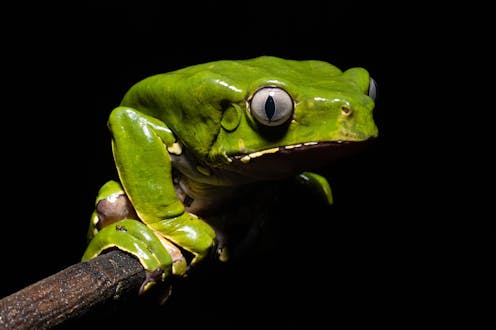
Kambô is an oozy substance harvested from the defensive skin secretions of the Amazonian giant monkey tree frog. In the traditional medicine of some indigenous peoples of the Amazon, Kambô is applied to superficial burns on the skin of participants to produce an intense purging effect.
In the past decade, Kambô use has also been on the rise in neo-shamanic or complementary medicine in Western countries. Many users say they experience positive after-effects, but bad outcomes ranging from prolonged vomiting to seizures and even death have also been reported.
In Brazil, it’s illegal to sell or market Kambô. In Australia, where two deaths after Kambô rituals have led to coronial inquests, it was listed by the Therapeutic Goods Administration in 2021 as a Schedule 10 poison: “a substance of such danger to health as to warrant prohibition of sale, supply and use”.
Despite government bans and several fatalities, Kambô use in Western countries still seems to be going strong. So what does Kambô do, and what do users get out of it?
The Kambô ritual
Kambô comes from the giant monkey tree frog (Phyllomedusa bicolor) which lives in the Upper Amazon rainforest. The frogs are captured and their limbs are tied with thread to four vertical twigs, to enable harvesting of their secretions by gentle scraping. The frogs are then released, physically unharmed.
The clear mucus-like secretion is typically spread onto bamboo sticks and air-dried for storage and transport. The Kambô is then prepared by reconstituting with water before application.
Kambô contains a range of biologically active molecules that most likely provide the frogs with defences against predators.
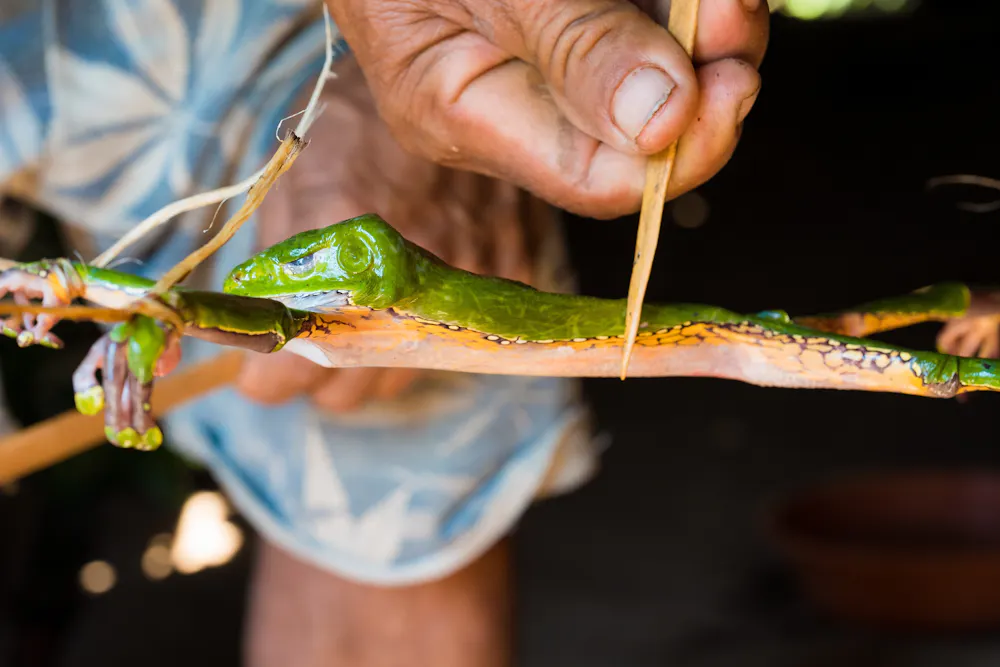
In the ritual, superficial burns are first made on the recipient’s skin, then Kambô is applied to the burns using a short length of rainforest vine. Next, the thick red sap of the “dragon’s blood” tree (Croton lechleri) is applied to the burns as an antiseptic.
Traditionally, among the indigenous Amazonian tribes that use Kambô, there is virtually no ceremony involved. It plays more of a role in their traditional medicine and hunting practices than in informing their cosmology.
In Kambô rituals catering to Westerners, the practice is often carried out in a ceremony involving songs, musical instruments, burning of incense, and prayers.
Traditionally, three to five small burns are made with a smouldering stick on the upper arm or lower leg of the recipient.
In Western neo-shamanic practice, however, Kambô is often applied to a larger number of burns. The burns may be located elsewhere on the body, including the neck, upper back, chest, and the Yogic chakra locations.
What Kambô does to the body
Following introduction via the small burns, the active ingredients of the Kambô pass rapidly into the body. They move through the lymphatic system – essentially the body’s drainage system, running parallel to the blood circulatory system – and thence into the bloodstream.
As a result, participants experience a short, intense purgative experience. The physiological effects are complex, rapid and sometimes paradoxical.
Typically, the first symptoms reported are an initial rush of heat and redness of the face. Nausea and vomiting are often experienced within several minutes, accompanied by general malaise, racing heart, dizziness and swelling of the face, and sometimes an urge to defecate.
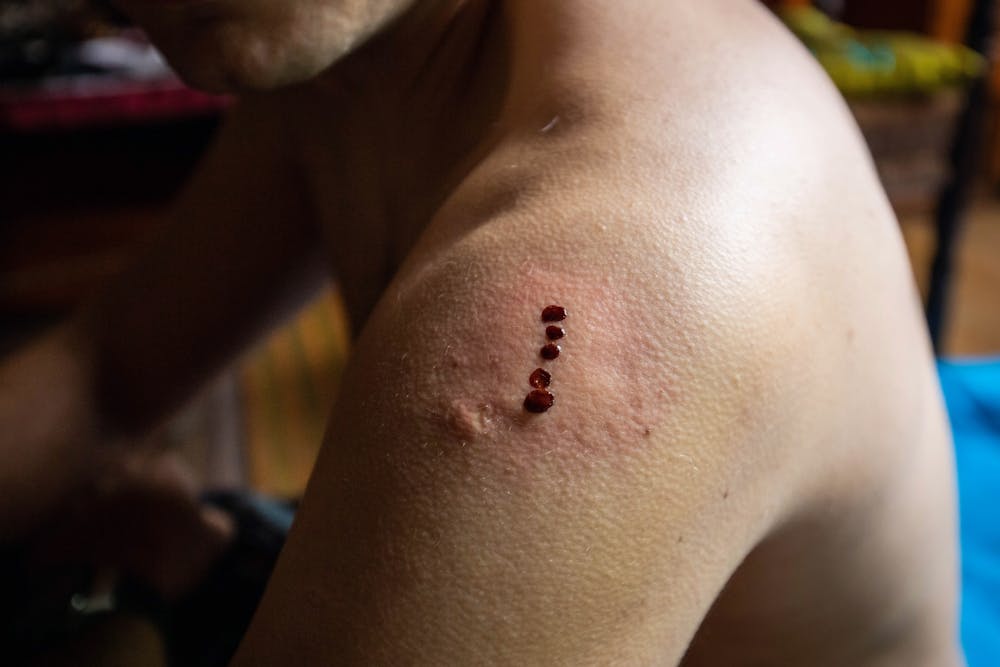 Kambô is typically applied to superficial burns, which are then covered with an antiseptic sap.
Shutterstock
Kambô is typically applied to superficial burns, which are then covered with an antiseptic sap.
Shutterstock
Further effects include the feeling of a lump in the throat or difficulty swallowing, abdominal pain, nausea, vomiting, diarrhoea, runny nose and tears, swollen lips, eyelids or face, and occasionally a swollen tongue or throat.
These physiological effects are generally expected, and indeed sought, by those performing and undergoing the Kambô ritual.
Aside from the range of physiological effects discussed above, Kambô is not regarded as exerting any direct psychedelic or hallucinogenic effects. Nor is it known to be used by anyone for this purpose.
What can go wrong?
The duration of the physical effects is usually 15–30 minutes. However, individual responses vary considerably and, on occasion, the symptoms may last several hours.
Kambô has caused harm in only a very limited number of documented cases, although the documented harms have included death. A handful of case reports describe incidents of hepatitis, psychosis, prolonged vomiting, hyponatremia (low blood sodium), seizure, rupture of the oesophagus and cardiac arrest.
Those extreme consequences are particularly few relative to the presumably large number of administrations globally, in both the traditional indigenous and the recent Western contexts.
Accurate figures about usage are impossible to obtain, but one academic source notes over 6,000 members of various closed Facebook groups devoted to Kambô, and the International Association of Kambô Practitioners’ Facebook page has over 2,500 followers.
What are the perceived benefits of Kambô?
Despite the documented harms, the great majority of users of Kambô anecdotally report positive physical, emotional and spiritual after-effects.
In Western societies, including Australia, the use of Kambô for healing or wellness has risen rapidly in recent years. The rise has coincided with the emergence of a subculture that questions the merits of the Western medical model and embraces alternative modes of health and medicine.
However, there is limited evidence of the directly measurable health benefits of Kambô in the peer-reviewed academic literature. The putative benefits claimed by the Kambô community largely remain to be substantiated by clinical research.
The actual or potential health benefits conferred by Kambô treatment can be difficult to distinguish from the anticipated or perceived benefits related to psychological effects. These psychological effects in turn may relate to the belief or faith systems that may be involved.
One important aspect of the Kambô experience is purging, particularly by way of vomiting but also defecation.
Many advocates see purging as representing a means of personal transformation through cleansing or detoxification. Purging may also be thought to expel various harmful, negative or generally undesirable aspects of both an emotional and a spiritual nature.
Read more: Ayahuasca: the shamanic brew that produces out-of-body experiences
Participants may also feel a benefit from the overall “ordeal” or “challenge”. In this regard, significant parallels may be drawn between the purging elicited by Kambô and that associated with the psychoactive brew ayahuasca.
To understand what people gain from Kambô, we may need to move into the domain of philosophical speculation. However, the concepts of personal transformation and spiritual growth are very real to many adherents, and their role in Kambô’s perceived benefits should not be discounted.
Authors: Martin Williams, Research fellow, Swinburne University of Technology


















