

Australia’s Year 4 students have not lost ground on reading, despite pandemic disruptions
- Written by: Kylie Hillman, Senior Research Fellow, Australian Council for Educational Research
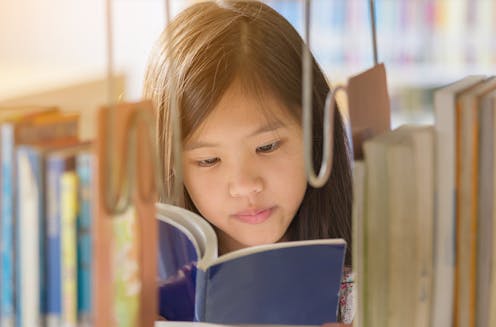
Australia’s Year 4 students have not lost ground on their reading skills, despite all the disruptions to schooling during the pandemic.
A major international test has found about 80% of students have “more than elementary” skills in reading comprehension. This is the same result Australian students recorded in the last round of PIRLS testing in 2016.
But reading performance among students from disadvantaged backgrounds and rural areas still tends to be lower than among other students.
What do the PIRLS results tell us? And how can we improve reading skills?
Why is PIRLS important?
The Progress in International Reading Literacy Study – PIRLS for short – is an international assessment of Year 4 students’ reading comprehension skills. It is one of three international assessments Australia participates in, along with the Trends in International Mathematics and Science Study (TIMSS), which covers maths and science in Year 4 and Year 8, and the Programme for International Student Assessment (PISA), which assesses reading, mathematics and science in 15-year-olds.
These assessments involve a nationally representative, random selection of schools and students. The results provide an overview of how different groups of students are performing in these key areas of learning, both within and between countries.
Unlike NAPLAN, these assessments are not designed to report on individual students’ performance.
What does PIRLS measure?
PIRLS has been conducted about every five years since 2001, and Australia has taken part since 2011. It focuses on Year 4 students because many students at this level are moving on from learning to read and are now reading to learn.
In other words, they are now fairly comfortable with the mechanics of reading, and more of their learning will require them to interact with text – whether searching the internet for information about a certain country or discussing the experiences of a lead character in a novel.
The Year 4 students who participate in PIRLS each read two texts – either two narrative texts, like a short story; two non-fiction texts, like a short article; or one of each.
They then answer a set of questions about the content, style and purpose of those texts.
Read more: Research shows the importance of parents reading with children – even after children can read
How did Australia go?
The 2021 PIRLS assessment was conducted in the midst of the COVID pandemic, which saw interruptions to normal schooling in many participating countries, including Australia.
In Australia, 281 schools and 5,487 students were involved.
Australia’s average score was 540 points. This was statistically similar to Australia’s average score in 2016 (544 points) and higher than the average score in 2011 (527 points).
The 2021 result is also significantly higher than the average scores of 28 other countries, including Germany, New Zealand and France.
Australia scored lower than average scores for six other countries: Singapore, Hong Kong and England (who tested in English) as well as Russia, Finland and Poland.
Twenty-one countries, including usually strong performers like Russia and Finland, recorded significant drops in their average score since 2016.
Meeting the ‘proficient standard’
Australian students also held their ground when it came to the proportion who met the Australian “proficient standard” for reading. This involves students demonstrating “more than elementary skills expected at that year level”.
About 80% of Australian students met or exceeded the proficient standard in 2021, as they did in 2016. Students at this level can make straightforward inferences, interpret reasons for characters’ feelings or actions, and provide information about central ideas within texts.
We still have 20% of students behind
At the same time, this means we still have about 20% of students who do not meet the proficient standard, compared to just one in ten in the highest performing countries, such as Singapore, Hong Kong and Russia.
These figures increase if students are from an equity group.
For example, 42% of students in remote schools, 40% of First Nations students and 31% of students in disadvantaged schools did not meet the proficient standard.
How can we improve?
The PIRLS study highlights behaviours, attitudes and strategies that seem to be associated with higher scores on the reading assessment.
Students who tell us they enjoy reading, are confident readers or are engaged during their reading lessons tend to perform at higher levels than young people who do not enjoy reading, aren’t confident or aren’t engaged during their reading lessons.
Students in classrooms where teachers report students are tired, disruptive, uninterested or don’t have the prerequisite skills or knowledge they need tend to score lower than students in classes that aren’t impacted by these factors.
And students in schools where principals tell us most students have early literacy skills (like knowing letters or reading short words) before starting school tend to score higher, on average, than students in schools where fewer students have early literacy skills when they start school.
Read more: What is that voice in your head when you read?
Australia’s achievement in PIRLS 2021 is a good result in the context of the pandemic and a testament to our teachers’ dedication and professionalism.
Ultimately, though, every child deserves the chance to become a competent reader. Early support for students who find reading challenging is essential to prevent them falling behind in other learning areas, and if we hope to see improvement on future national and international assessments.
Authors: Kylie Hillman, Senior Research Fellow, Australian Council for Educational Research


















