

what shows like Bridgerton get wrong about whalebone and corsetry
- Written by: Sarah Bendall, Research Fellow, Gender and Women's History Research Centre, Institute for Humanities and Social Sciences, Australian Catholic University
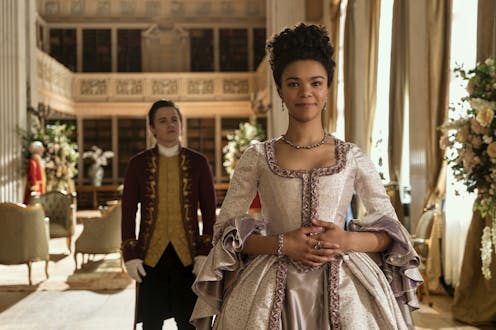
The hotly anticipated prequel to the popular Bridgerton series, Queen Charlotte: A Bridgerton Story, has just been released on Netflix. The Bridgerton writers have once again taken aim at the corset in the opening sequence of the first episode.
Sitting uncomfortably in a carriage on her way to London to meet King George III, Princess Charlotte of Mecklenburg-Strelitz laments that her underpinnings (stays - the 18th-century term for corset - and hoop petticoat) are not only uncomfortable but made of “the bones of whales”. These “whalebones”, she claims, are “delicate” and “sharp” and may stab her if she makes a wrong move.
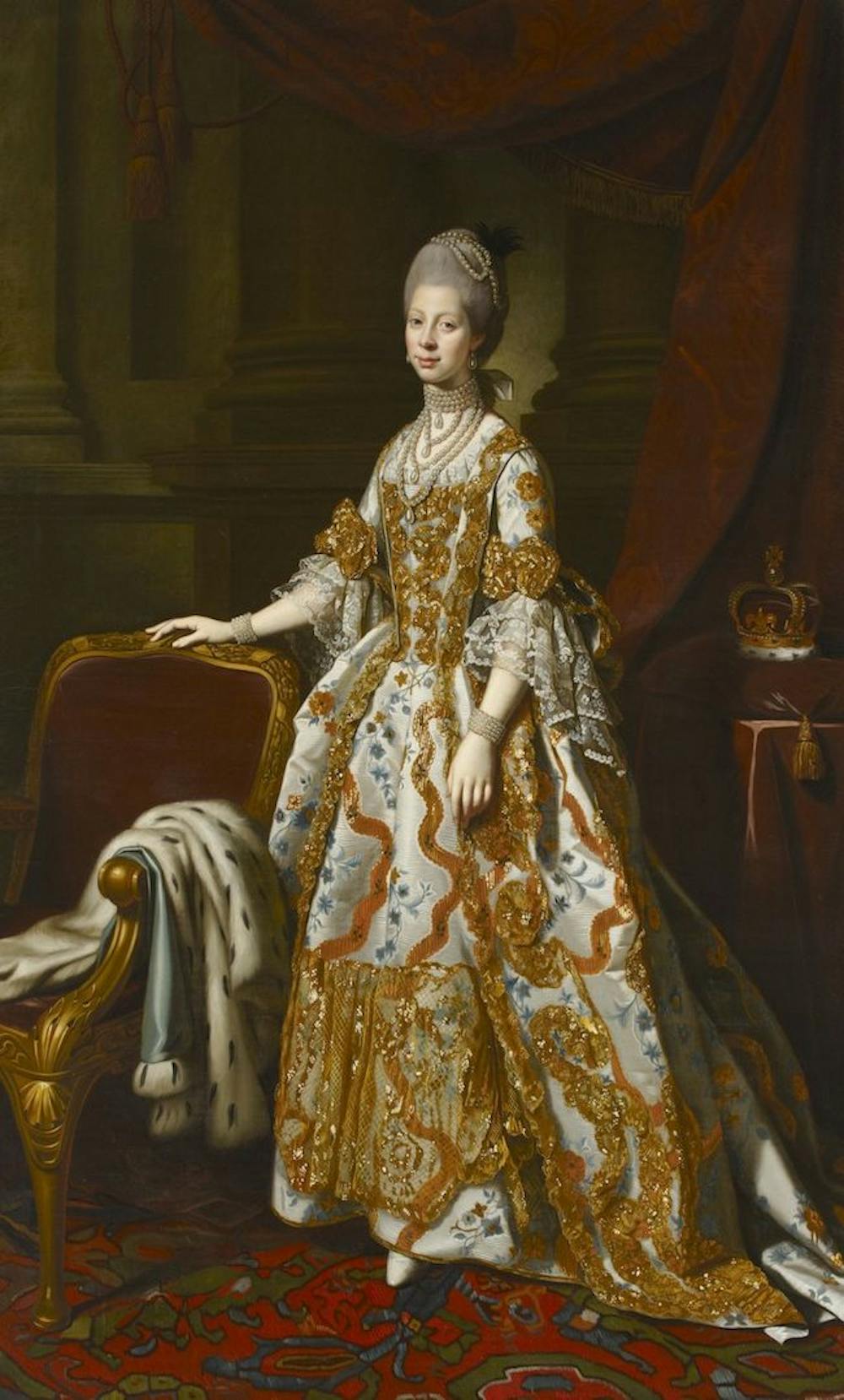
While it is true that whales died to provide one key material used in the manufacture of women’s underpinnings from the 16th through to 20th centuries, the real Princess and then Queen Charlotte, who had a keen interest in the natural world, would have understood whalebone is not actually delicate bone.
What is Whalebone?
Whalebone is the colloquial English term for a material known as baleen. Baleen is not bone. Rather, it is the name given to long hairy plates made of keratin – the same substance that makes hair, fingernails and horn – in the mouth of various species of baleen whales.
Baleen allows the whale to feed, as it traps small sea creatures such as krill in the mouth as the animal gulps and then expels water.
Baleen whales had been hunted around the world since prehistoric times. However, modern commercial whaling first began in the 16th century, when Spanish and French Basques began hunting these animals around Labrador in Newfoundland, Canada.
By the start of the 17th century, Europeans (Basques, French, English, Dutch, Germans and Portuguese, to name a few) also began to hunt baleen whales along the shorelines of Brazil and in the Arctic in Spitsbergen in Norway, and then around Greenland.
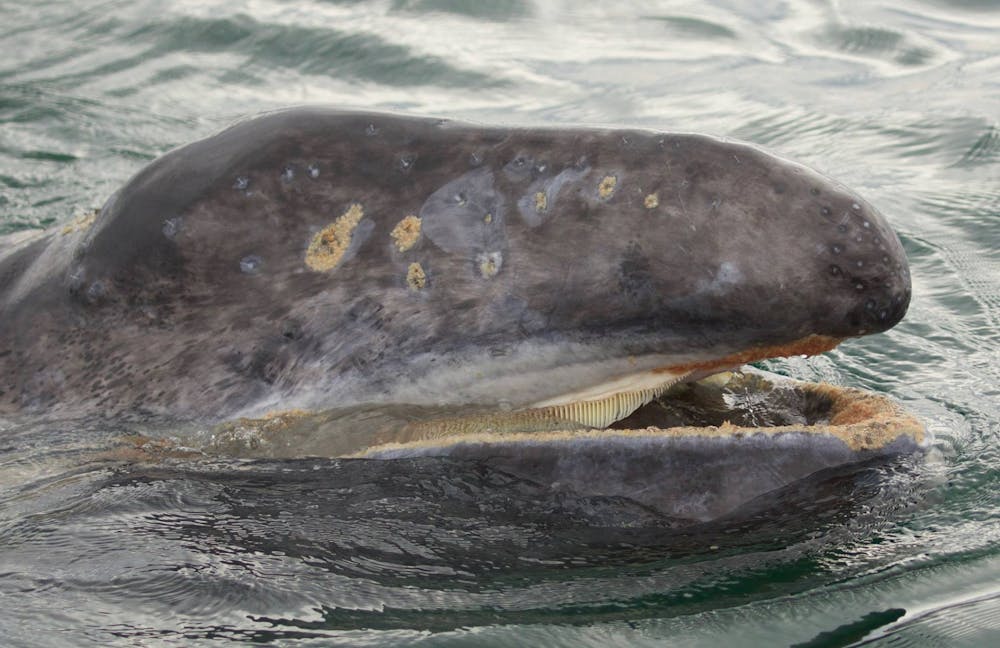 Gray whale calf with mouth open, showing baleen.
Wikimedia
Gray whale calf with mouth open, showing baleen.
Wikimedia
Whaling and fashion
Whalebone had been used in European fashion since the mid-to-late 16th century when it began to be used to structure women’s farthingales and bodies (hoop skirts and corsetry) and to stiffen men’s doublets and collars. The first references to whalebone in Britain come from the wardrobe accounts of Mary Queen of Scots and Elizabeth I. By the 18th century it was used in foundation garments, bonnets, walking sticks, parasols and even dentistry!
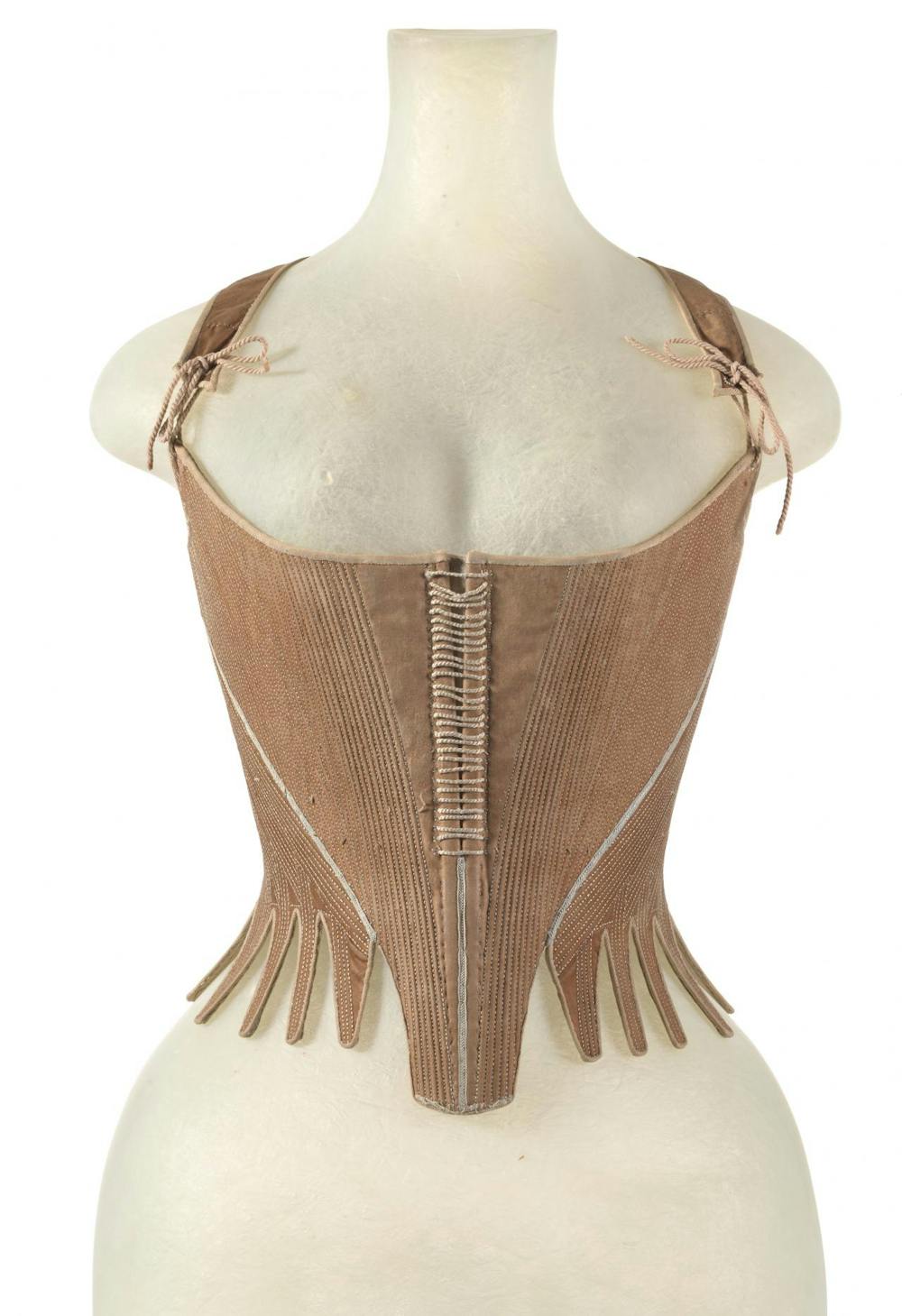 Corset. made of cotton, linen, silk, baleen (c. 1770-1780)
National Gallery of Victoria, Melbourne
Corset. made of cotton, linen, silk, baleen (c. 1770-1780)
National Gallery of Victoria, Melbourne
While Charlotte in the Netflix series may claim that whales died so women “could look like this” - pointing to her fashionable outfit shaped by corsets and hooped skirts - fashion was not the driving motivator for whaling during the 18th century.
The primary motivator for commercial whaling for much of its history was oil. During the 18th century, the main species of whales targeted were the Bowhead Whale and the North Atlantic Right Whale. Both species were the “right” whales to hunt as they were slow swimmers that yielded large amounts of blubber.
Once removed from the whale, strips of blubber were placed in large iron vats called tryworks, and slowly boiled until rendered into oil. Oil was used for a variety of purposes: textile manufacturing, soap-making, lubrication and, most importantly, lighting.
As commercial competition between European nations expanded and the want for oil increased, so too did the whaling industry. By the end of the 18th century, British whalers began to venture into the South Atlantic and eventually places in the Pacific such as Australia to hunt baleen whales. They also began to hunt toothed sperm whales for oil and spermaceti.
Baleen was a useful and valuable byproduct, but it was not the main motivator for the whaling industry in the 18th century. It was not until the late 19th century, when petroleum products replaced the need for oil, that whales were killed primarily for their baleen.
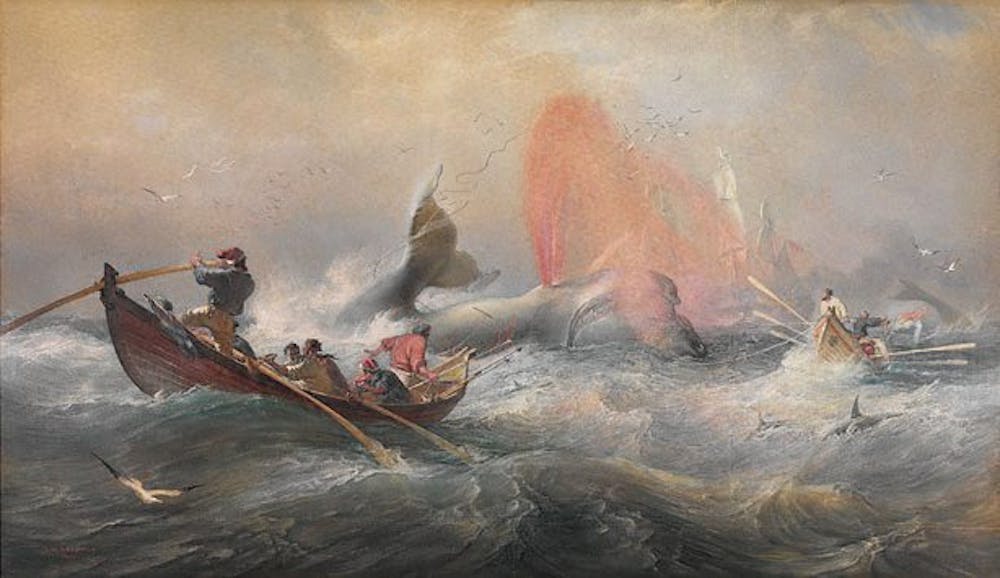 Oswald Brierly, Whalers off Twofold Bay, New South Wales, 1867.
Wikimedia Commons
Oswald Brierly, Whalers off Twofold Bay, New South Wales, 1867.
Wikimedia Commons
Whalebone corsets: dangerous?
Soon after the expansion of whaling, Europeans began to realise the unique properties of baleen that would make it highly valuable for centuries to come: it was strong but flexible and lightweight. It could also be moulded into various shapes with heat. Essentially, it was a natural plastic and used in ways we use modern plastic now.
Court cases from the 18th century attest to the lightness of whalebone stays and the elasticity of whalebone within them.
This is a far cry from the description given in Queen Charlotte: A Bridgerton Story. Still, just as modern underwires in bras can come loose, sometimes baleen could stick out of the top and bottom of a corset, poking women in the underarms or hips. However, these were easily fixed by women or their staymakers.
While film and television may continue to make us hate corsets with their emphasis on tightlacing, which was far from the everyday experience of this garment, the reality of whalebone was that it was lightweight, flexible and strong, which made it perfect for use in corsetry that not only created the fashionable shape of the time but also gave women breast and back support.
Authors: Sarah Bendall, Research Fellow, Gender and Women's History Research Centre, Institute for Humanities and Social Sciences, Australian Catholic University


















