

From mangroves to fjords, coastal ecosystems can take up or emit greenhouse gases. But globally, they're a vital sink
- Written by: Judith Rosentreter, Senior research fellow, Southern Cross University
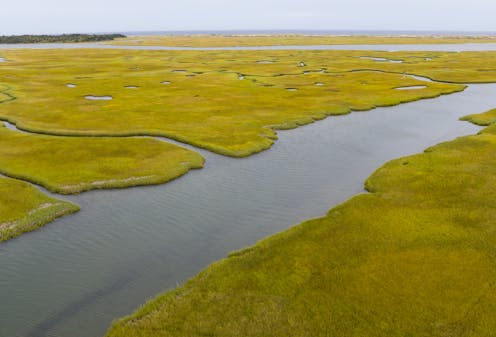
Coastal ecosystems can absorb or emit the three main greenhouse gases: carbon dioxide, methane and nitrous oxide.
We explored how coasts in ten regions of the world differ in greenhouse gas uptake and emissions. Our research published today in Nature Climate Change finds that, globally, our coastal ecosystems are a net greenhouse gas sink, but smaller emissions of potent methane and nitrous oxide gases reduce some of the carbon dioxide uptake.
We found coasts in Europe and Russia are net emitters, while coasts in Southeast Asia and North America have a large uptake of these gases.
Like upland forests and rainforests, ecosystems like coastal wetlands can take up atmospheric CO₂ and turn it into new leaves, roots and other organic matter. When some of this carbon is stored long-term in deep sediments, it can help battle rising CO₂ levels in our atmosphere.
The coastal net greenhouse gas uptake should not be confused with carbon storage. Only part of the coastal greenhouse gas uptake is stored long-term in coastal sediments, while another part is transported to the ocean where it might be stored or released back to the atmosphere.
Not all coasts are the same
Africa and Australia have large swathes of sandy coastline and coastal wetlands. By contrast, Europe and Russia’s cold coastline lacks mangroves or tropical coastal wetlands. These differences drive the changes we found in how different coasts take up or emit greenhouse gases.
The strongest coastal greenhouse gas sink is Southeast Asia, because of its extensive and productive tropical mangrove forests and seagrasses which soak up large amounts of CO₂. North America’s coast is another excellent sink for greenhouse gases, with its salt marshes, mangroves, seagrasses – and Canada’s fjords, glacier-made valleys filled with seawater.
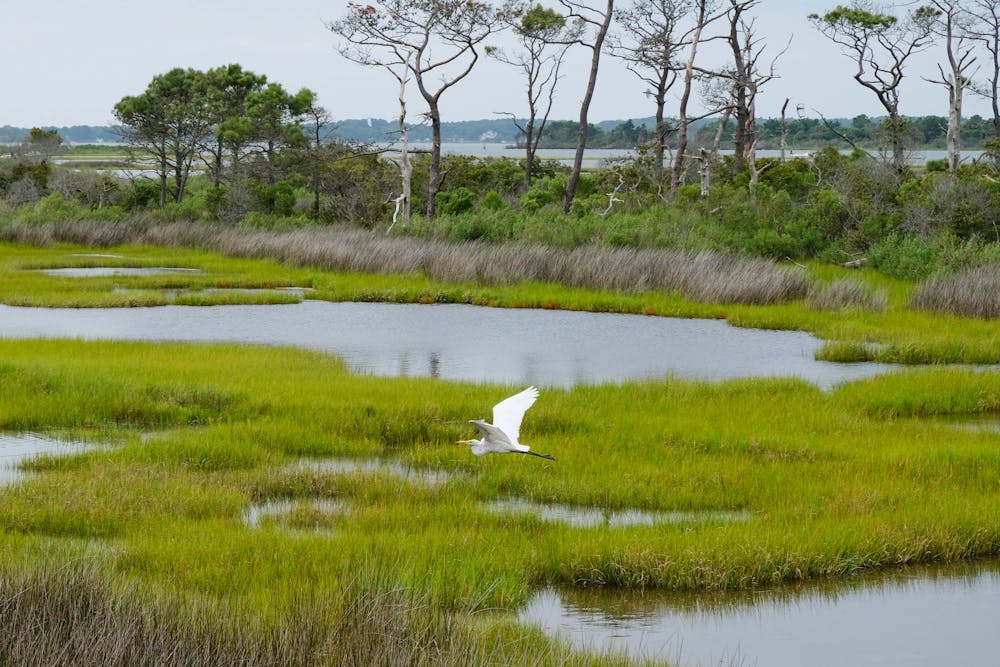
While Australia and New Zealand have long stretches of coastal wetlands soaking up CO₂, this is offset by a large number of estuaries, many of which are a source of greenhouse gases produced by decaying organic matter.
Coasts in Europe and Russia actually release more greenhouse gases than they absorb. Their many polluted tidal estuaries release greenhouse gases, but the colder climate means this region has fewer coastal wetlands to soak these gases back up.
But across the three main greenhouse gases, eight out of the ten world coastal regions are a net greenhouse gas sink.
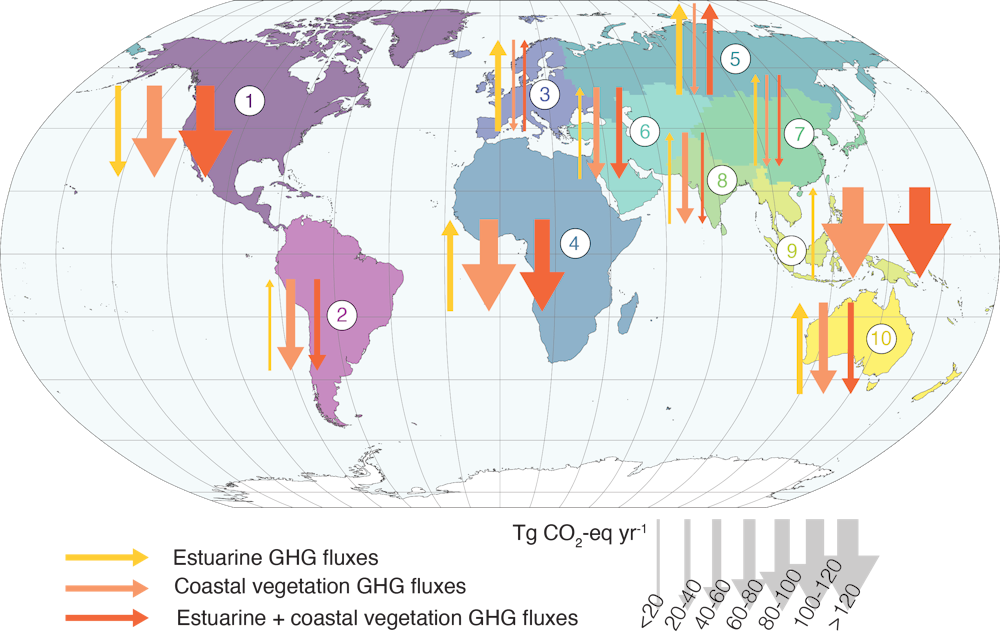 This figure shows the net fluxes of carbon dioxide, methane and nitrous oxide in estuaries (yellow arrows), coastal vegetation (peach arrows) and combined (red arrows) in 10 regions around the world. Southeast Asia (9), North America (1) and Africa (4) are strong coastal greenhouse gas sinks. South America (2), Australasia (10), and West Asia (6) are moderate sinks, while East Asia (7) and South Asia (8) are weak sinks. Europe (3) and Russia (5) are weak coastal sources of greenhouse gases.
Figure from Rosentreter et al. (2023) Nature Climate Change, CC BY
This figure shows the net fluxes of carbon dioxide, methane and nitrous oxide in estuaries (yellow arrows), coastal vegetation (peach arrows) and combined (red arrows) in 10 regions around the world. Southeast Asia (9), North America (1) and Africa (4) are strong coastal greenhouse gas sinks. South America (2), Australasia (10), and West Asia (6) are moderate sinks, while East Asia (7) and South Asia (8) are weak sinks. Europe (3) and Russia (5) are weak coastal sources of greenhouse gases.
Figure from Rosentreter et al. (2023) Nature Climate Change, CC BY
Some coasts soak up greenhouse gases while others emit more
The world’s coastal ecosystems are enormously diverse, ranging from tropical lagoons to polar fjords to coastal mangrove forests to underwater seagrass meadows. This sheer variety means they differ greatly in how they take up or release greenhouse gases.
For example, we show that fjords around the world take up around 40% of CO₂ that would otherwise be released from tidal systems, deltas and lagoons. Most (86%) of this important CO₂ uptake by fjords comes from the North America region.
By contrast, salt marshes and mangroves are home to trillions of microorganisms which live in deep, oxygen-free sediments, eating dead organic matter and emitting methane and nitrous oxide. Some of these gases reach the atmosphere, making many coastal waters a source of methane and nitrous oxide.
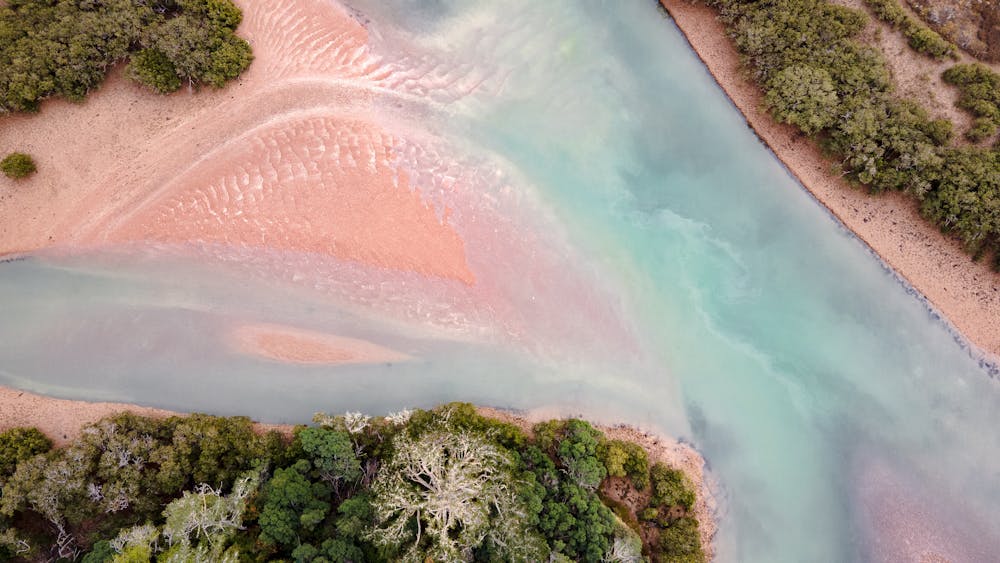 Some coastal ecosystems take up large amounts of carbon dioxide.
Unsplash, CC BY
Some coastal ecosystems take up large amounts of carbon dioxide.
Unsplash, CC BY
Coastal wetlands release more than three times more methane than all estuaries in the world. But coastal wetlands, also called coastal “blue carbon” wetlands, can be strong sinks of CO₂ and some also take up nitrous oxide. On balance, these coastal ecosystems become a net greenhouse sink when we consider the net effect of these three most important greenhouse gases.
What does the big picture look like? Globally, our research shows our coasts’ ability to take up CO₂ is offset between 9% and 20% by coastal methane and nitrous oxide emissions.
Read more: Half of global methane emissions come from aquatic ecosystems – much of this is human-made
Why is this knowledge important?
If we understand how our coastal ecosystems take up or emit greenhouse gases, we can target the most crucial ecosystems for preservation or restoration.
That’s why many researchers are interested in blue carbon as a way to boost long-term carbon storage. By protecting and restoring mangroves and salt marshes in nations rich in blue carbon, such as Indonesia, we can expand their ability to take these gases back out of the atmosphere and ultimately store some of the carbon long-term in their sediments.
And by reducing nutrient overload, organic matter and wastewater flows into our coastal waterways, we can cut the greenhouse gases emitted by polluted estuaries.
Read more: Floods of nutrients from fertilisers and wastewater trash our rivers. Could offsetting help?
We shouldn’t just see our coastal ecosystems as a boon to carbon credit markets. They have much more to offer, including many valuable ecosystem services. Our coasts protect our shorelines from severe weather and tides. They are a nursery for many fish and plants. And they’re vital to us as a place to be in nature.
Protecting our coasts is good for us, for nature and for the earth system as it plunges into the climate crisis.
Acknowledgements: We would like to thank our international team of scientists and the Global Carbon Project for initiating this research.
Authors: Judith Rosentreter, Senior research fellow, Southern Cross University


















