Google AI


Modern Australian

Study finds 2 billion people will struggle to survive in a warming world – and these parts of Australia are most vulnerable

  • Written by: Annabelle Workman, Research Fellow, Melbourne Climate Futures and Melbourne School of Population and Global Health, The University of Melbourne
Study finds 2 billion people will struggle to survive in a warming world – and these parts of Australia are most vulnerable

Two billion people, including many Australians, will find themselves living in dangerously hot places this century if global warming reaches 2.7℃, research released today reveals.

The authors calculated how many people would be left outside the “human climate niche” by 2100. The niche is defined as places with an average temperature of about 13℃, or about 27℃ in the tropics. Human population has historically peaked in these areas.

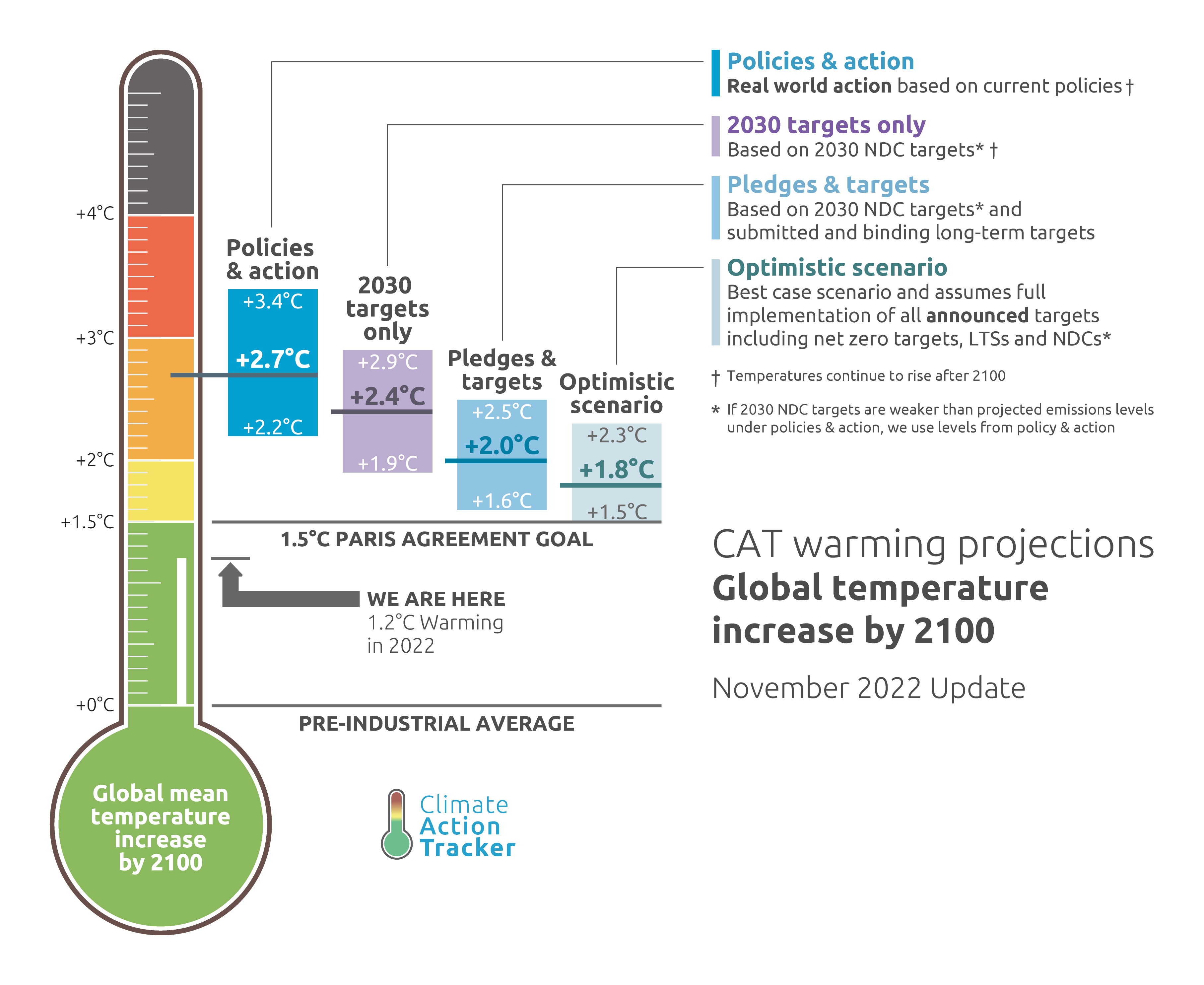
The world is on track for 2.7℃ of warming by 2100. This would push a third of people on Earth outside the human climate niche. This includes people in parts of northwest Australia such as Darwin, Broome and Port Hedland. It also includes parts of Southeast Asia, India, Africa and South America.

Limiting warming to 1.5℃ would substantially reduce the number of people exposed, including most of those affected in northwest Australia.

We were not involved in the research, which was conducted by researchers in the United Kingdom, China, Europe and United States. We are Australian experts in the health implications of global warming. Below, we discuss the broader implications of these globally significant findings.

four young men cool off on balcony
Two billion people will find themselves living in dangerously hot places this century. Pictured: young men cool off during a heatwave in Spain in 2021. Joan Mateu Parra/AP

What is the human cost of global warming?

The research calculated the number of people outside the “human climate niche” under different demographic scenarios and levels of warming. Exposure to unprecedented heat was the main factor pushing people out of the niche.

This includes an average temperature greater than or equal to 29℃, as well as a high number of days with a maximum temperature above 40℃ or in humid places, with a wet-bulb temperature greater than 28℃. The wet-bulb temperature (as opposed to the standard dry-bulb temperature) reflects humidity and is a method used to measure heat stress. That’s because it’s the point at which sweating is no longer effective as a means of cooling.

The study says a wet-bulb temperature of 35 ℃ can be fatal, especially for vulnerable people, because the body can no longer cool itself.

Above the present level of about 1.2 ℃ global warming, the authors found exposure to unprecedented average temperatures increased markedly, along with increased exposure to temperature extremes.

But 2.7 ℃ of warming threatens a third of the world’s population. The below map shows where in the world people will suffer the worst heat. Almost the entire area of some countries, such as Burkina Faso and Mali in West Africa, would be exposed to unprecedented heat.
Source: Nature Sustainability Why is warming a health hazard? Just last week, the World Meteorological Organization predicted global surface temperatures would rise to record levels within the next five years. The temperature is also likely to temporarily climb 1.5℃ above pre-industrial levels. This spells trouble for human health. Even incremental warming increases exposure to health hazards including potentially deadly heatwaves, infectious diseases and diet-related health issues. Let’s be clear. A 1.5℃ world will result in injury and death, particularly for people in Asia and Africa. Importantly, the people most at risk will be the least capable of protecting themselves: children, the elderly and those with existing health conditions. While populations closer to the equator are more likely to experience heat-related harm, Australians are by no means immune. For example, a 2019 study found heat-related health issues in Australia have been grossly underestimated. It found more than 36,000 deaths between 2006 and 2017 were attributable to heat. And experts predict Darwin could experience an average 265 days a year above 35℃ in a 3℃ warmer world. Read more: Here's why having chocolate can make you feel great or a bit sick – plus 4 tips for better eating The risks to Australia of a 3℃ warmer world (Australian Academy of Science)As in other parts of world, primarily high-risk populations in Australia will experience some of the worst impacts from a changing climate. In essence, climate change creates and maintains health inequities. To date, the Earth’s average surface temperature has warmed 1.2℃ above pre-industrial levels. We must enact ambitious climate policies now if we are to change our dangerous trajectory. For too long, we have focused disproportionately on the economic costs of climate action for current – often wealthy – groups at the expense of considering the economic costs of inaction for all, including future generations. Historically health has rarely been included in these economic assessments, much less ethical considerations. Emissions reduction policies need to consider health and equity issues, and in doing so can provide governments with a strategic rationale to act. How can extreme heat harm health? There are multiple ways in which climate change can harm human health. Extreme heat can have direct effects, such as dehydration and heat stroke. Groups most at risk include the elderly and those already unwell. Extreme heat can also harm mental health, increasing rates of injury and death by aggravating existing mental illness. Beyond direct effects, heat can affect health by influencing, for example, agricultural productivity, water security and air quality. Read more: Australians are 3 times more worried about climate change than COVID. A mental health crisis is looming There are physiological limits to adaptation, particularly to heat. These limits can have negative consequences for labour productivity, especially for outdoor workers, and for health service demand, leading to increased hospital admissions, emergency department visits, and ambulance calls. Pursuing adaptation measures in an effort to reduce the harmful effects of existing climate change is vital, but to protect the health of all, it is critical that we pursue strong emissions reduction measures. An infographic tracking climate action against global warming projections
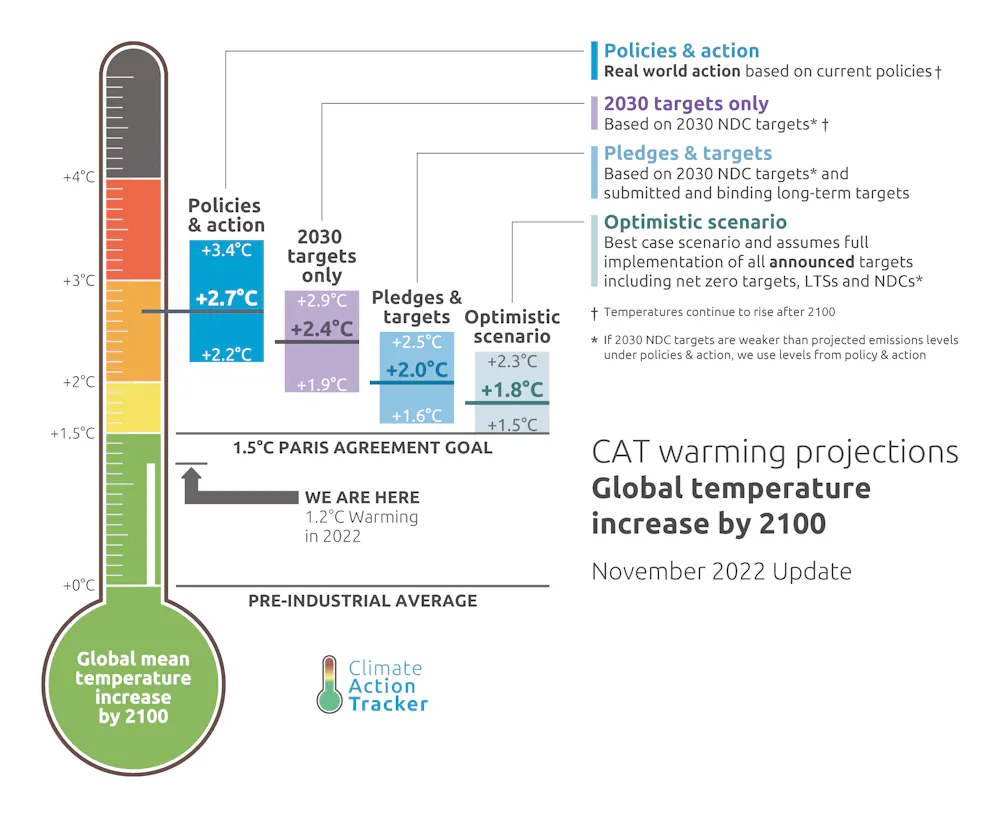
The Climate Action Tracker charts policies and action against global mean temperature increase by 2100. Climate Action Tracker is an initiative of Climate Analytics and the NewClimate Institute

Developing healthier climate policies

Australian climate action targets have improved under the Albanese government, however they remain incompatible with keeping warming to 1.5℃.

Approving additional coal projects is not helpful for reducing emissions or demonstrating climate leadership.

A commitment to develop and implement a National Health and Climate Strategy and establish a National Sustainability and Climate Unit are promising initiatives. This will help to address our woeful performance in a recent assessment showing how national climate commitments don’t link with health.

Last week, the Victorian Government committed to reducing emissions by 75-80% compared with 2005 levels by 2035. Their analysis indicates it will lead to A$5.7 billion in health benefits from improved air quality between 2035 and 2045.

As today’s new research states, the findings highlight the need for “more decisive policy action to limit the human costs and inequities of climate change”. Australia, in particular, must protect children, the elderly and the broader population from the harms they face in a warmer world.

Read more: Deadly heatwaves threaten to reverse India's progress on poverty and inequality – new research

Authors: Annabelle Workman, Research Fellow, Melbourne Climate Futures and Melbourne School of Population and Global Health, The University of Melbourne


Read more https://theconversation.com/study-finds-2-billion-people-will-struggle-to-survive-in-a-warming-world-and-these-parts-of-australia-are-most-vulnerable-205927

What Are the Benefits of Renovating an Older Home in Sydney?

Sydney has plenty of character homes, from Federation cottages to mid-century brick homes. Renovating rather than rebuilding can preserve what makes t...

Pool and Deck Design: How to Plan the Perfect Outdoor Living Space for Your Sydney Home

For many Australians, the backyard is where life happens. Summer barbecues, weekend swims and long evenings outdoors are all part of the lifestyle, ...

Is Solar Pool Heating Worth It? What Sydney Homeowners Should Know

There's nothing quite like a backyard pool on a hot Sydney day. But once autumn rolls in, many pools sit unused for months because the water is simp...

Planning a Luxury House Move: A Week-by-Week Timeline for Prestige Sydney Homes

Selling or buying a prestige home is a major milestone. Whether it's a waterfront residence in Birchgrove, a grand Federation home in Haberfield or ...

Downsizing or Upgrading Your Caravan? Here's How to Sell It Without the Hassle

Selling a caravan can feel like a major task, especially when you are unsure about its value, paperwork, or how to find a buyer. Whether you are dow...

The Best Overseas Adventure Holidays for Australians Who Love the Outdoors

Australia offers no shortage of incredible outdoor experiences, but sometimes the best way to satisfy your sense of adventure is to head overseas. A...

Cape Town Wine Shuttle: Winelands Tasting & Tours

Embark on an unforgettable journey through the picturesque Cape Winelands, where world-class wines and breathtaking scenery await. Our Cape Town Win...

Metal Fabrication: Choosing Metal Fabrication Melbourne Services for Custom Projects

What Modern Metal Fabrication Involves From individual components to complete structures, metal fabrication brings together processes such as desig...

Why Giant Rats Tail Grass Keeps Coming Back After Spraying

Giant Rats Tail Grass (GRT) is one of the most frustrating pasture weeds for farmers and lifestyle property owners. You spray an infested area, see th...

When Custom Cardboard Boxes Make Sense for Your Business

Custom cardboard boxes can be useful when a standard carton does not fit a product, packing method or presentation requirement particularly well. A ...

Full-Height vs. Pop-Top Caravan: Which Is Better for Family Travel across WA?

A pop-top caravan is an excellent choice for travellers who want the comfort of a caravan without committing to a larger, bulkier setup. With a lowe...

Bottle Label Printing: Key Factors for a Professional Finish

Why the Printing Method Matters When businesses need packaging or printed containers developed for a particular application, the right supplier can m...

Virtual Livestock Fencing and GPS Tracking: Improving Visibility Across Cattle Properties

What Virtual Livestock Fencing Means for Modern Cattle Management Managing cattle across extensive properties requires more than knowing where anim...

Sydney Pawnbrokers Explained: How Hocking Your Car Actually Works

Sometimes you need cash, and you need it soon. If you own a car, you may already have a way to get it. That's what people mean when they say they've...

Moving Interstate from the Gold Coast to Brisbane (or Back)? What Removalists Wish You Knew First

Have you talked to anyone who’s done the move? They say the same thing: the drive up the M1 is the easy part. It's everything around it that catches...

Why the Spring School Holidays Are a Great Time to Visit Coffs Harbour

The spring school holidays are a good time to spend a few days on the Coffs Coast. The weather is starting to warm up, there is plenty to do outdoor...

What to Do When an Older Car Is No Longer Worth Keeping in Melbourne

Ever looked at another repair quote and wondered whether your old car is still worth the trouble? It is a common turning point for Melbourne motoris...

Your Baby's First Year: A Local Guide to Feeding, Sleep, and When to Get Extra Support

Ask ten parents in a Brisbane mothers' group how their baby is feeding or sleeping, and expect ten different answers.  Someone's baby sleeps throug...