

Drinking fountains in every town won't fix all our water issues – but it's a healthy start
- Written by: John Charles Skinner, Senior Research Fellow, Indigenous Health, Macquarie University
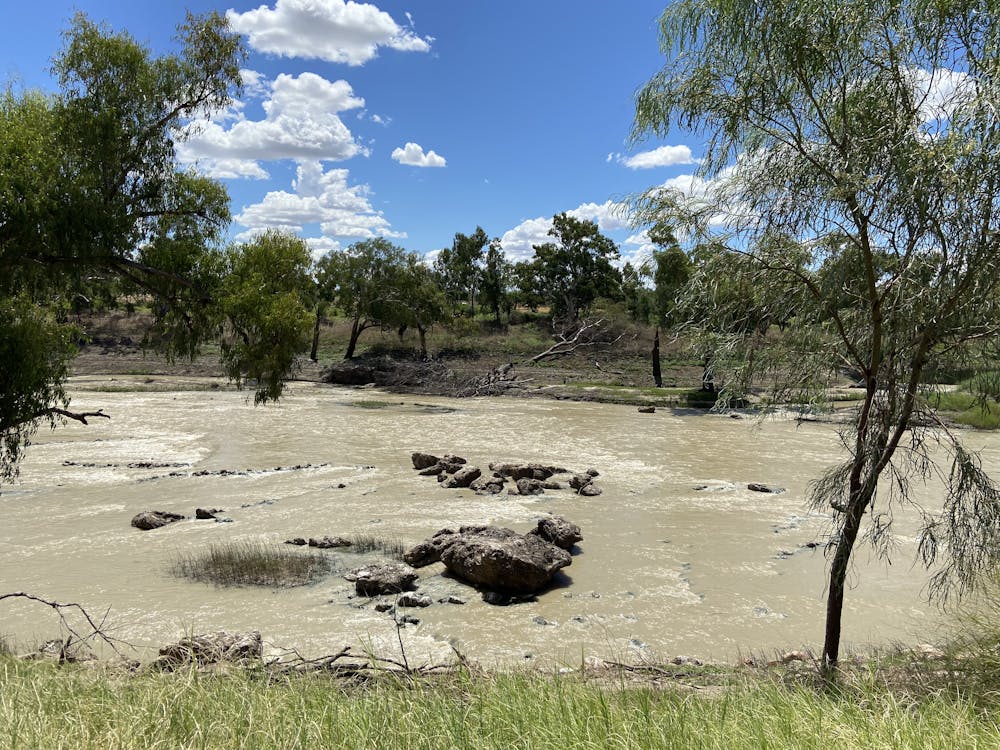
Water plays a significant role in Aboriginal culture. The Fish Traps in Brewarrina, Baiame’s Ngunnhu, for example, were built by eight clan groups and continue to sustainably fish the Barwon River.
Respect for and understanding of water has enabled Aboriginal people to thrive for millennia in very hot and remote places. The impacts of colonisation including introduced species of plants and animals, farming and overuse of rivers and ground water, compounded by global warming, has dramatically reduced water access and quality, and in some places threatened the water supply.
Recent coverage of the quality of drinking water in Walgett in New South Wales again highlights that clean, safe drinking water is not a right in Australia. Walgett residents say the water is unsafe to drink and they’re backed by scientists from the George Institute who report an urgent need to address drinking water quality.
Read more: Countless reports show water is undrinkable in many Indigenous communities. Why has nothing changed?
Supply is only half the issue
The reasons for poor or limited water supply vary. They include river flows and environmental health issues, infrastructure, and insufficient skilled, credentialed staff available to conduct water quality checks. But understanding the causes is one thing. Taking active steps to address them is another.
When clean, safe water doesn’t flow to communities, they are more likely to drink sugar-sweetened beverages. Our 2020 study visited three remote schools with high proportions of Aboriginal students. Our initial results, gathered in 2014, found 64% of children regularly drank sugary drinks. Some 5% thought drinking water was “unhealthy”. In some places in Australia that’s true at least some of the time.
The availability of safe drinking water impacts tooth decay, obesity and diseases like diabetes. Australia has drinking water quality guidelines but they are not mandatory.
We installed cold, filtered water fountains through a structured, collaborative process and, as a result, found in 2018 that 84% of children at those same schools drank water every day. The percentage who regularly drank sugary drinks shrank to 33% in the intervening four-year period.
Our follow up study found towns of lower socioeconomic status were less likely to have access to community drinking water and more likely to have a high Aboriginal population. So, Aboriginal people are particularly disadvantaged by this issue. It also found that in many towns the cheapest drink is soft drink.
Making a difference through codesign
We have been working with NSW communities to install refrigerated water fountains in rural and remote places. We collaborate with local Aboriginal land councils, traditional owners, and local government using codesign principles. Together we confirm the need, identify a suitable location and then select the right model of water fountain. We also negotiate local responsibility for ongoing maintenance and provide water bottles, education resources and spare filters.
In most cases we work with schools and preschools to embed positive health messages and reinforce water as the best drink. As Kim Cooke, Director Little Yuin Preschool in Wallaga Lake says,
The water fountain is a wonderful asset to the preschool outdoor learning environment. For us, as educators, it is central to the children’s health to be able to hydrate their bodies ready for learning; and having access to fresh water to drink everyday has led to an increase in their independence and learning about the importance of drinking water throughout the day.
Read more: Travelling around Australia this summer? Here's how to know if the water is safe to drink
Meeting local need
We recently conducted a survey of towns across Australia with a population of fewer than 5,000 people and Aboriginal population greater than 3%. We estimated that 222 places out of 612 small towns nationally do not have community drinking water.
Providing drinking water to every Australian town requires a place-by-place approach so that communities get a say about how and where fountains are installed and they meet local needs. Schools and preschools can participate in health promotion too. A national approach that overcomes the policy “ping pong” of responsibility for water safety, quality and infrastructure between local, state and the federal governments is also required. A national approach would enable:
high quality infrastructure to be purchased at reasonable price
professional and timely installation
local responsibility for maintenance
codesign so that each town gets the infrastructure they need, where it’s needed.
We estimate it would cost A$5 million to solve this problem nationally, based on our installation costs in NSW communities to date – a small investment in the prevention of chronic disease.
Water fountains in every town won’t solve all of our water issues. But they could ensure everyone can access free, cold drinks and reduce sugar consumption.
As community member, Brewarrina and Brewarrina Shire Councillor Aunty Trish says:
Having cold water available after you finish your sports or on our hot days will mean a lot for the community, fresh water helps with the health and wellbeing of the community.
Read more: Drinking water can be a dangerous cocktail for people in flood areas
The authors wish to acknowledge Uncle Boe Rambaldini and Professor Chris Bourke, our project ambassadors. Aboriginal communities and local government authorities that have participated in our research and the implementation of water fountains. Our partners at the Alliance for a Cavity Free Future, Australian Dental Association NSW Branch, NSW Council of Social Service, Public Interest Advocacy Centre and Australian Red Cross.
Authors: John Charles Skinner, Senior Research Fellow, Indigenous Health, Macquarie University


















