

Could wildflowers and bug hotels help avert an insect apocalypse? We just don't know – yet
- Written by: Rob Cruickshank, Lecturer – Teaching & Administration, University of Canterbury
Insects are in rapid decline. One study found the global total is falling by 2.5% a year, with insect species going extinct eight times faster than mammals, birds and reptiles.
While scientists don’t yet know when insect populations could drop to the point of no return, we can’t keep losing species without, ultimately, a catastrophic outcome.
Many people are concerned about insect biodiversity and trying do something about it. One way is to give some habitat back to insects. Wildflower meadows, for example, are being sown in parks and other urban green spaces.
Typically, these are mixtures of mostly non-native species chosen to provide nectar, pollen, and other resources for insects, as well as visual floral appeal. They are often deployed for other reasons, like reducing the need for mowing and its associated costs and carbon footprint.
But before we plant wildflower fields or build “bug hotels”, we need to better understand how these measures help – and when they don’t. The lack of robust research means there is still a lot we don’t know. Our team of researchers at the University of Canterbury is trying to fill some of this knowledge gap.
What we don’t know
The long-term potential of wildflowers is unclear. They seem to attract insects, but there are many unanswered questions.
Do these insects come from elsewhere or is there a genuine bolstering of populations? Which insects benefit most? What is the balance between pests and beneficial species? Can exotic plants support an increase in native insects? Do the effects extend beyond planted areas, and if so, how far?
Read more: Insects: worldwide study reveals widespread decline since 1925
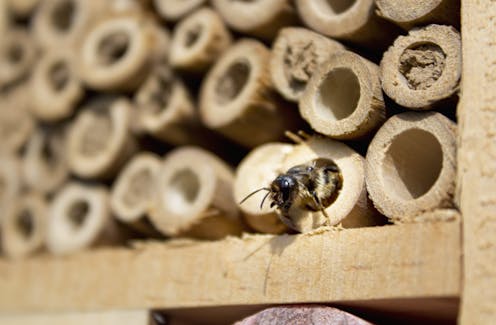
Bug hotels, which generally consist of artificial homes for insects, raise similar questions. As their design, materials, and construction are more variable, it’s even more difficult to assess their efficacy.
This is something we need examine further as some designs may be more effective than others. This will depend on the mix of insects in the vicinity. What works well in one place may be counter-productive in another.
Long-term commitment
Enthusiasm for sowing wildflowers and building bug refuges rarely extends to ongoing upkeep and long-term monitoring. Many studies are short-term, local scale, and rather ad hoc, making it difficult to compare and draw broader conclusions.
The results are often unpublished or difficult to find, hidden in reports about other things. This means, if we are to use these insect ecosystem revival approaches effectively, we need to draw this evidence together and implement more long-term studies across a wide variety of contexts.
Fortunately, studies like this are relatively easy to do. They just require a commitment to keeping them going. We also need to be sharing the results in ways that allow meaningful comparisons.
Read more: Insects are vanishing worldwide – now it's making it harder to grow food
The research methods used by scientists to study insect populations don’t require expensive equipment and can easily be replicated by volunteers, community groups and school students of all ages. For example, pitfall traps, which measure insect activity on the ground, can be yoghurt pots sunk into the soil.
The educational possibilities are many, from science fair projects to basic numeracy skills. Similar to birdwatching, volunteers could do five-minute bug counts to see what insects visit flowers and “hotels”.
Other entomological methods such as “beating” (shaking a low-hanging branch over a white sheet to see what falls out) are just as easy. The important point is to choose methods and a sampling frequency that are sustainable, and stick to it.
Understanding bug populations
Baseline studies before establishing a meadow or bug hotel would make research like this even more effective, but this is rarely done. This is why we have been doing baseline studies of areas where wildflower meadows are planned at the University of Canterbury. We want to understand the environment, and insect populations, before the introduction of the wildflowers.
Although all the available evidence suggests these meadows will significantly increase the number and diversity of insects in the area, it’s surprising how many insects we’ve found in our baseline studies, including lots of tiny parasitic wasps, which tell us the insects they live off must also be around, even though we have not seen so many of them.
Read more: What happens to the natural world if all the insects disappear?
These baseline studies will allow us to see how the composition of the insect community changes after meadows are sown. We may even find some kinds of insects decrease in numbers while others flourish. These details are important for assessing the overall impacts of the meadow.
In the process, we may also counter the trend towards disconnection from nature, particularly among young people. Wildflower meadows, bug hotels and other interventions could be a wonderful way to “rewild” our urban spaces, and bring some nature back into people’s lives.
If we want to know the best way to use such measures, however, we need to monitor their impacts. This can be an interesting, fun way to engage with and learn about nature, and to add value to community gardens and replanting projects.
It can also provide important scientific data to help us more effectively provide the space insects need to thrive alongside us.
Authors: Rob Cruickshank, Lecturer – Teaching & Administration, University of Canterbury


















