

how did these curious plants end up in Australia?
- Written by: Gregory Moore, Senior Research Associate, School of Ecosystem and Forest Sciences, The University of Melbourne
While plants can’t walk, they can certainly travel. Some species have travelled vast distances over millennia, moving by different and varied modes.
Some found new habitats when the continent they were riding on slowly crashed into another. Others went on perilous ocean going journeys – think of coconuts washing up on new island shores. Others still have been carried as seeds by birds or other animals – including us.
Many have now become local, endemic to their region of Australia. Some may surprise you.
Native nuts – how macadamia trees began
Early in the age of jet aeroplanes, flying to America meant a stop-over in Hawaii to refuel. Here, many Australians tasted macadamia nuts for the first time and probably assumed they were a local delicacy. Imagine their surprise at discovering the truth. Hawaii’s macadamia industry began when a few nuts were sent from Australia in the 1880s.
Of course, this was not news to Australia’s First Nations people, many of whom had enjoyed macadamia nuts for millennia.

There are four species of Macadamia, of which two are the most important nut producers, namely Macadamia integrifolia and M . tetraphylla. All species belong to the Proteaceae family, meaning they are related to banksias, grevilleas and proteas.
This family connection reveals the genus has a long evolutionary history, dating back about 100 million years. Macadamias travelled with the continent of Australia as it split off from Antarctica and South America.
In their natural habitat across northern New South Wales and southern Queensland, these subtropical trees can reach heights of 25 metres. But even though they are now widely farmed, they’re actually threatened in the wild – and may be further threatened by climate change.
Oranges, lemons – and native citrus?
Many of us are fond of tart and tasty citrus – oranges from southern China, lemons probably from northern India. All the world’s citrus trees stem from an ancestor species which grew in the foothills of the Himalayas, according to DNA evidence. Over time, these trees spread out and new species split off. Eventually, about 8–10 million years ago, they arrived in Australia.
Read more: Food, tools and medicine: 5 native plants that illuminate deep Aboriginal knowledge
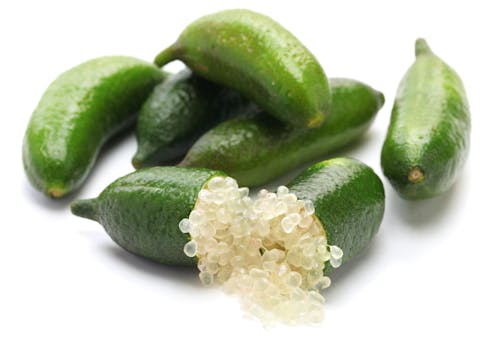
The most well known is the finger lime, C. australasica, with tiny globes spilling out of the fruit like citrus caviar. But there are others, like the Australian lime, Citrus australis and the desert lime C. glauca. Like many citrus, they can be prickly customers with long painful spines. While most are shrubs and small trees, the Australian lime can reach heights of 20 metres.
Native raspberries
In recent years, the native raspberry, Rubus probus, has achieved celebrity status as a prickly, quick growing bramble with a good fruit.
But like its relative, the blackberry, Rubus fruticosus, you have to work hard to get fruit and rarely come away unscathed.
That’s why it was big news when a thornless specimen was found and propagated. This will make a big difference to the cultivation of our native raspberry.
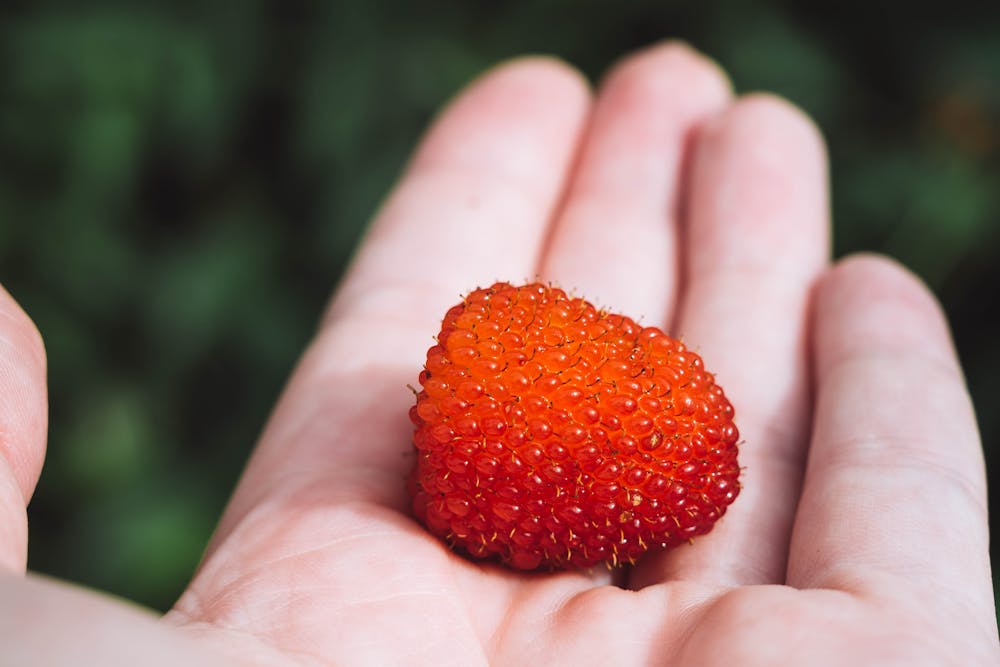 Our native raspberry is becoming popular.
Shutterstock
Our native raspberry is becoming popular.
Shutterstock
So how did Australia come to have raspberries? It seems likely their ancestors migrated from North America towards Europe and Asia between 10 and 15 million years ago and eventually made it to Oceania.
Exactly how the genus Rubus made it to Australia is unknown, but the most likely pathway is a few seeds stuck to the feathers of a migrating bird. It could have happened as recently as a few hundred thousand years ago.
Native geraniums? It’s true
I associate geraniums with my maternal grandmother, who had the most magnificent red geraniums along her back fence. Family folklore had it they were cuttings from a prize winner at a major horticultural exhibition – and I believe it.
While we associate garden geraniums with Europe, they’re actually African and only arrived in Europe in the 17th century.
But while we all know these geraniums, Australia has its own species. That fact still amazes me after decades of studying plants.
But first, let’s clear up the debate over names. In the 17th century, geraniums and closely-related pelargoniums were grouped together in a single genus. But early in the 18th century, Charles LeHeritier – the botanist who first described eucalypts – divided them and there has been confusion ever since.
The easiest way of telling them apart is that geraniums have five petals of the same size and shape but pelargoniums have two larger petals and three smaller ones.
Most of the Australian native plants commonly called geraniums are in fact pelargoniums. You may have stumbled across Pelargonium australe, the most common of our seven species, which is spread across much of southern Australia.
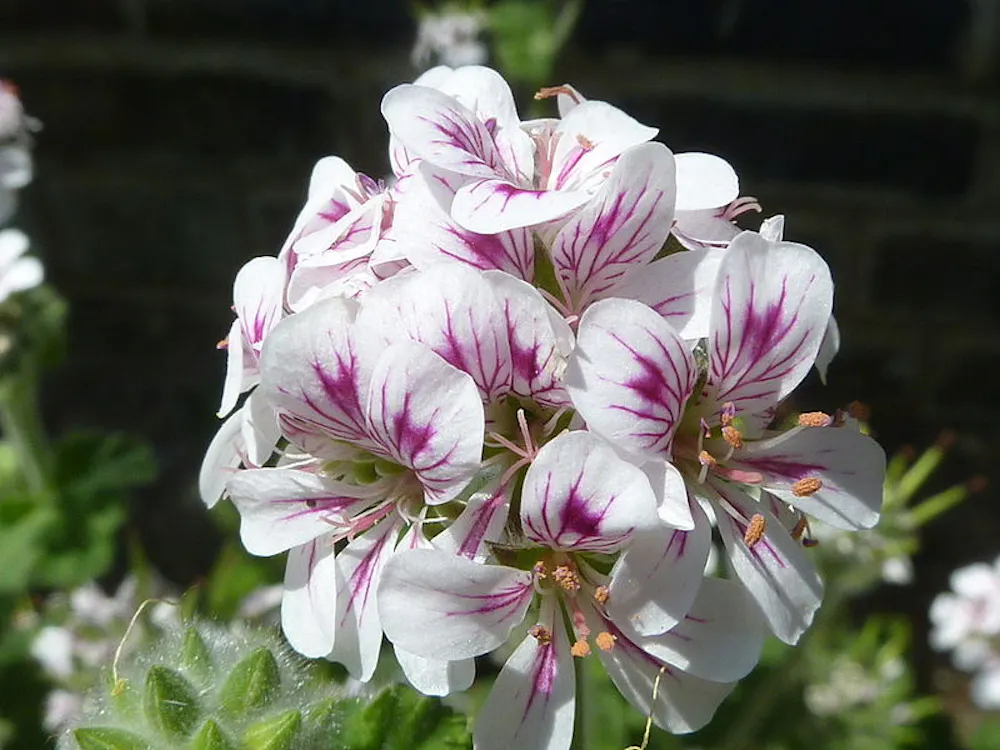 Native geranium? The pelargonium australe is the native plant most commonly thought of as a geranium.
Wikimedia, CC BY
Native geranium? The pelargonium australe is the native plant most commonly thought of as a geranium.
Wikimedia, CC BY
Native orchids: from flying ducks to the Queen of Sheba
There’s something about orchids. In the 19th century, so many Europeans went mad for their flowers that the name “orchidelirium” was coined.
We have some of the most iconic orchids as natives, such as the remarkable flying duck orchid and the stunning Queen of Sheba. Our 1800 species mostly grow in our tropical and subtropical areas.
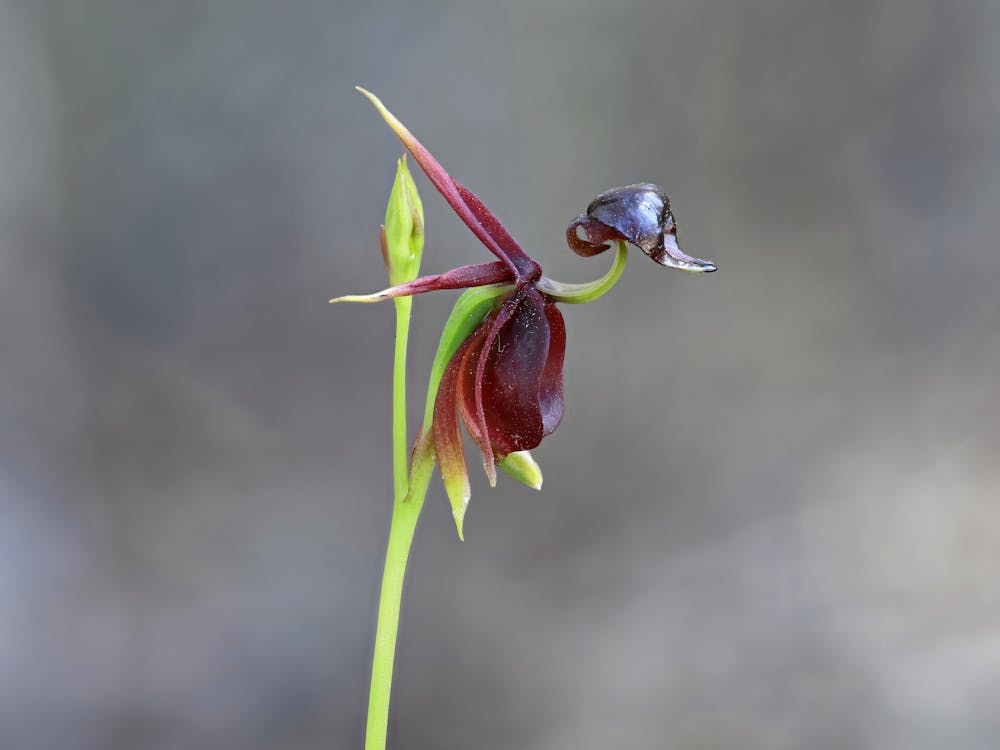 Australia’s flying duck orchid (Caleana major) is world-famous for its resemblance.
Shutterstock
Australia’s flying duck orchid (Caleana major) is world-famous for its resemblance.
Shutterstock
Some orchids can be traced back to the last years of Gondwana. But curiously, we also have tropical species which must have island hopped from Papua New Guinea and Indonesia more recently.
That’s only the start of our surprising plants. We have native tamarinds, native rivermint, and a native rhododendron.
And did you know that cloves come from an Indonesian species of lilly pilly? This species is related to Australian lilly pillies, a genus which evolved as the final fragmentation of Gondwana occurred about 65 million years ago. They rapidly diversified and there are now over 1000 species.
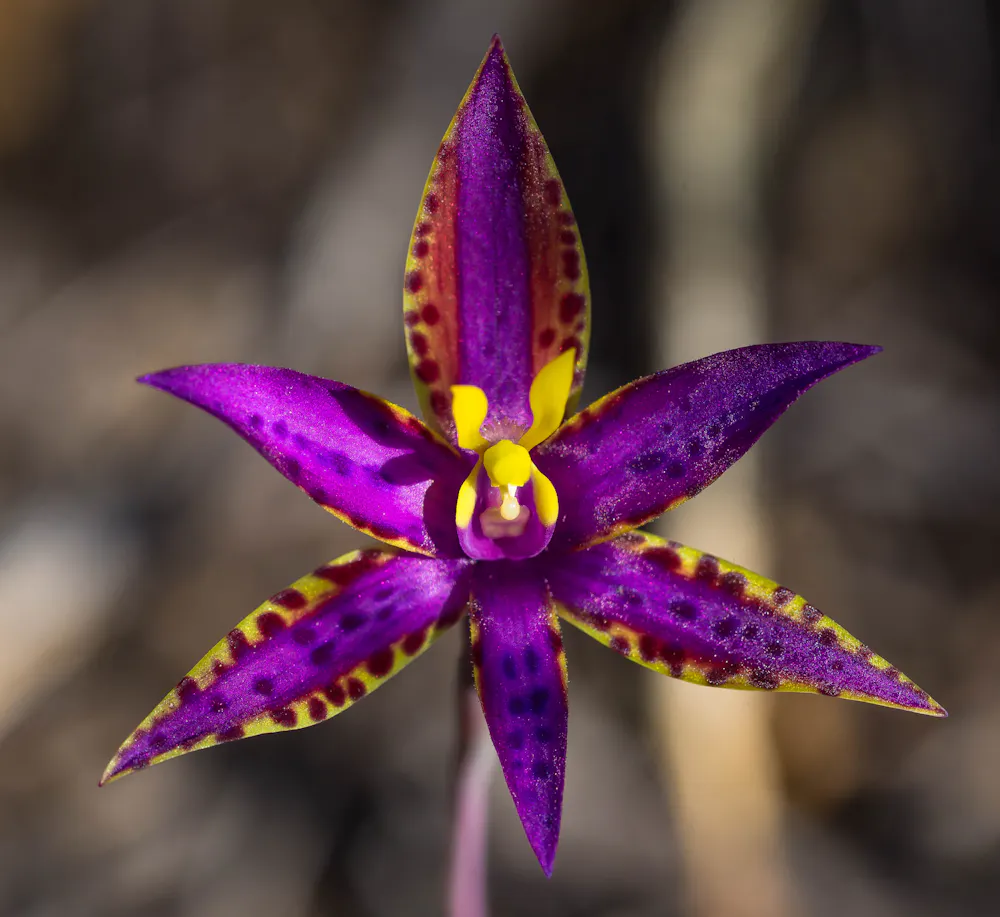 The Eastern Queen of Sheba orchid is rightly famous.
Shutterstock
The Eastern Queen of Sheba orchid is rightly famous.
Shutterstock
Plants move slowly. But they move much more than you’d expect. Their success has enriched the biodiversity and novelty of our ecosystems in surprising ways. As for me, I love an Australian macadamia nut – and I’ll always love those imported red geraniums.
Authors: Gregory Moore, Senior Research Associate, School of Ecosystem and Forest Sciences, The University of Melbourne



















