

Nature religions are growing in Australia – though witchcraft was illegal in some territories just 10 years ago
- Written by: Brendan C. Walsh, Sessional Academic, The University of Queensland
Nature religions, commonly described as Paganism (or neo-Paganism), are growing in Australia. In the last Census, 33,148 people claimed affiliation with a nature religion: including Animism, Druidism, and the many traditions of Wicca, the most practised Pagan pathway.
Thirty years earlier, just 4,353 Australians put down Paganism as their religion. Affiliation with Christianity has decreased over that 30-year period.
Australian laws against practising witchcraft have only been repealed as recently as this century in some states and territories. In the Northern Territory, it was just 10 years ago: 2013. The laws were repealed in 2005 in Victoria, 2000 in Queensland and 1991 in South Australia. New South Wales was the first state to repeal them, in 1969.
The British Witchcraft Act of 1735, which Australia’s laws stemmed from, was repealed in 1951; the last conviction of a witch was in 1944.
There’s never been a recorded conviction for witchcraft in Australia. But many Pagans remain cautious about practising their faith openly, due to perceptions of believers as Satan worshippers. So, Australia’s Pagan population may be much higher than the figures show: declaring a religion on the Census is optional.
The Satanic panics of the 1980s in the UK and America didn’t help. Nor does the appropriation of Pagan symbols by far-right movements, which has a particularly dark history in Germanic and Scandinavian countries.
But Paganism grew rapidly during the 1990s, with the popularity of Pagan-friendly movies and television like The Craft, Sabrina The Teenage Witch, Buffy the Vampire Slayer and Charmed. And in the early 2000s, the wild success of the Harry Potter franchise normalised magic for an entire generation.
Buffy’s practising witch Willow helped popularise Paganism in the 1990s.Paganism’s emphasis on nature worship resonates in our increasingly climate conscious society. It also offers an alternative to traditional patriarchal church hierarchies, with its predominately female support base: 66% of Pagans in the 2021 Census identified as women. Significantly, Paganism is inclusive of people from any background or sexual orientation.
Read more: Hello magic and witchcraft, goodbye Enlightenment
What is Paganism?
Paganism is an umbrella term for people who follow any number of nature-based spiritual pathways. Pagans share a reverence for, and spiritual connection with, the natural world. But they don’t share one single set of beliefs, practices or sacred texts.
The Latin root word “paganus” was used by the Romans to denote civilians (non-soldiers), outsiders and country-dwellers. Later, the term was applied to any non-Christian and inferred the worship of false gods.
But Christian civilisation has continually been fascinated by the art and literature of the ancient Pagan world, especially Greece and Rome. This kept the old deities imaginatively alive, preserving a different set of attitudes to the natural world and the divine.
Paganism draws its traditions from the ceremonial magic of the ancient world, the group organisation of Freemasonry and earlier Pagan cultures. Many Pagans believe individuals persecuted for witchcraft throughout European history were adherents of a surviving Pagan religion.
The modern Pagan movement began in Britain during the 1940s. Influenced by Romanticism and Victorian-era spiritualism, these early practitioners perceived contemporary society as a corrupting influence and recognised nature as a repository of ancient wisdom.
They found receptive audiences in the US and Scandinavia – which, in turn, introduced the faith to other countries.
What do Pagans do and believe?
The type of Paganism practised today is a revival or reformation of European and northern African traditions.
Some Australian Pagans also incorporate the practices of First Nations peoples. Each culture has its own conception of Paganism. Northern Europe’s Heathenry is inspired by the pre-Christian religions of Germanic language nations. Kemetism is a revival of ancient Egyptian religion.
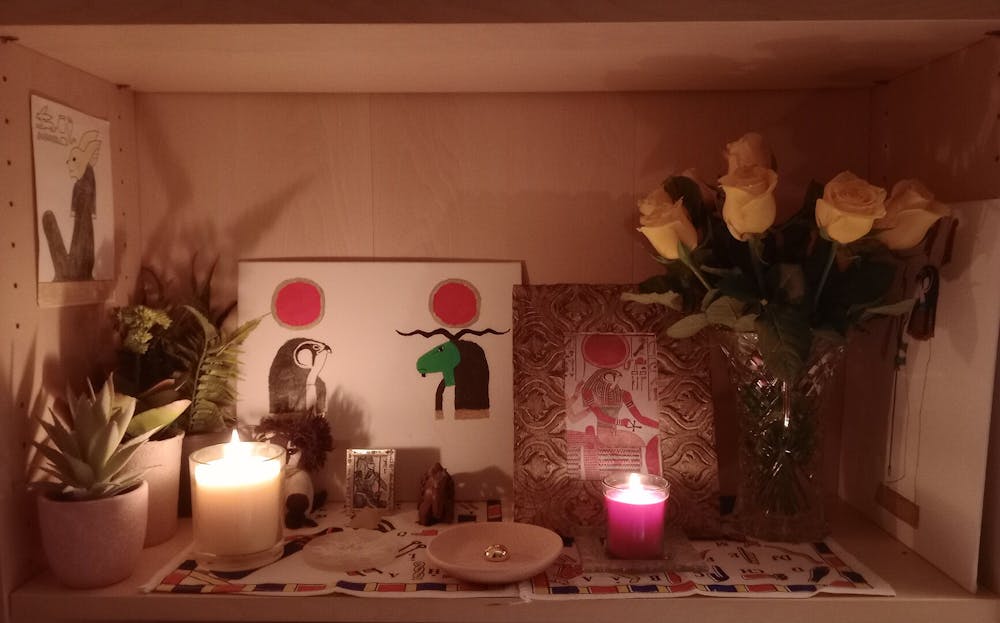
Many Pagans are solitary practitioners, though others join covens or similar groupings. Female Pagans tend to gravitate more towards group worship than men.
There’s also a thriving online community of Pagans: the hashtag #WitchTok has exploded in popularity over the last few years. The top Witch TikTokkers stream rituals and spell tutorials to an audience of millions.
Pagans generally worship multiple gods, or identify god with the universe. Ritual magic is central. Celestial events like full moons, solstices and equinoxes are times of celebration.
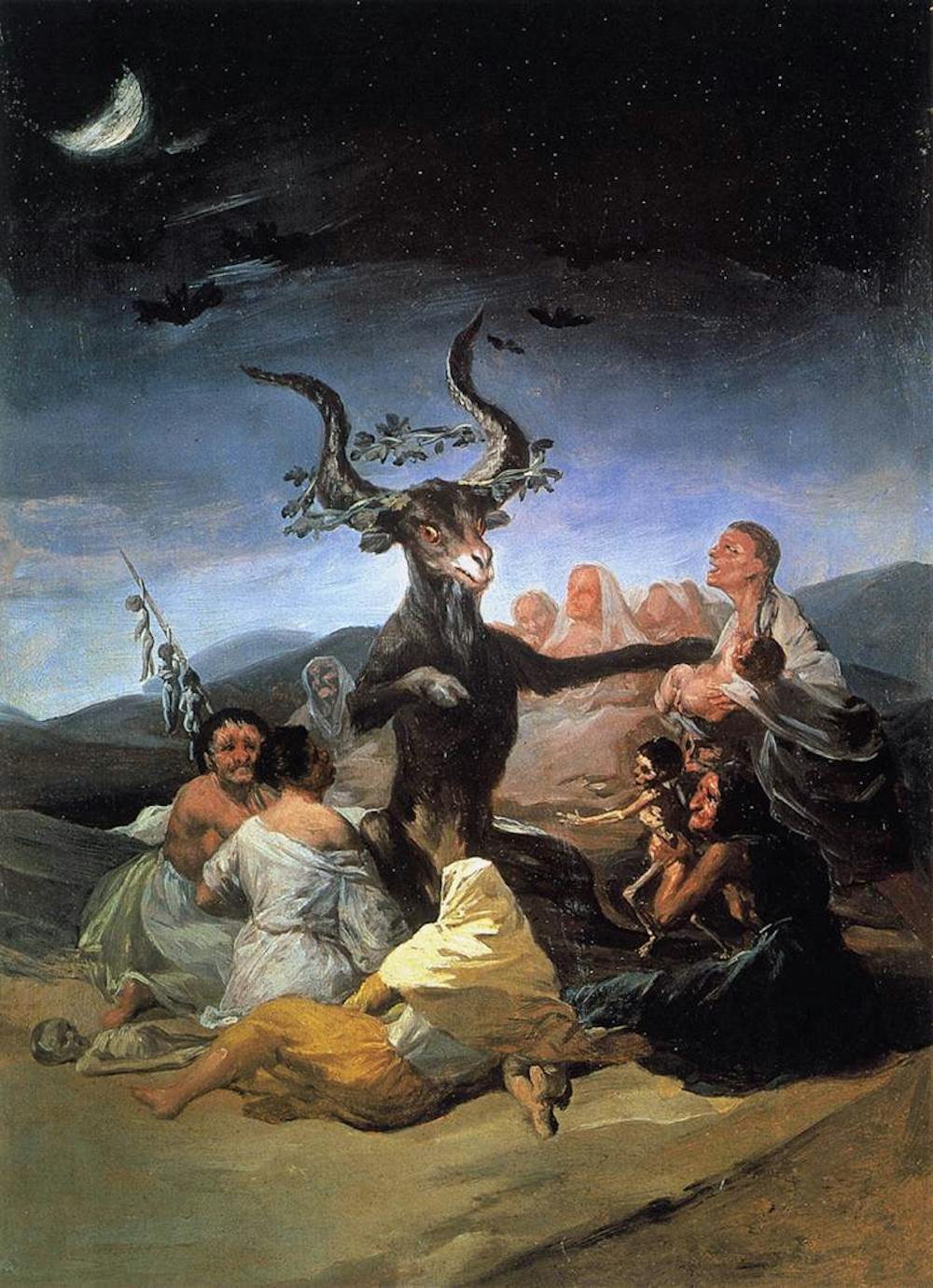 Francisco de Goya’s 1798 painting, Witches Sabbath.
A horned nature god, such as Pan, is central across Pagan traditions. “With his goat legs, pointed ears, and lascivious face, Pan most likely inspired early Christian images of Satan,” observes classics professor Marguerite Johnson, noting the resemblance.
Diana, a Roman goddess of the hunt, fertility, chastity and the moon, is another primary figure of worship. So is Hecate: a Greek goddess of sorcery now associated with witchcraft and Wicca.
Most Wiccan pathways place equal reverence on a goddess and god pairing, though some place particular emphasis on the former. Some Wiccans exclusively follow the feminine divine.
Shamanism, a religious phenomenon centred on the shaman, “a person believed to achieve various powers through trance or ecstatic religious experience”, is also undergoing a revival. Shamanism is not yet listed as a separate category in the Census.
Read more: How modern witches are enchanting TikTok
Australian pagans
Queensland recorded the largest number of Pagans in the last two Census, followed by New South Wales and Victoria. But the biggest population of Pagans per capita is in Tasmania.
Paganism in Australia was preceded by a significant occult and esoteric subculture, the first of which – the Freemasons – arrived with colonisation. The United Ancient Order of the Druids established its first lodge in 1851, and the first Australian branch of the Theosophical Society opened in 1895.
In the 20th century, the mystical Rosicrucians established their first study group in Australia (1930). They were followed by the Ordo Templi Orientis, originally modelled on Freemasonry, then made infamous through Aleister Crowley. Under Crowley’s leadership, initiates were no longer Masons, but Magicians.
And then there were the Pagans.
Early adopters like Rosaleen Norton, known as the “Witch of Kings Cross” or “Thorn”, were influential in introducing Pagan beliefs to a wider audience.
Norton, a self-proclaimed witch, practised trance magic and, later, sex magic in various flats and squats across inner-city Sydney. She was often accused of being a Satanist: she wasn’t, but was famously photographed with an altar beneath a portrait of Pan resembling Satan.
Rosaleen Norton, worshipping Pan.Since 1997, Australia’s Pagan Awareness Network has worked to correct misinformation and educate others about the faith. They have lobbied government to grant religious exemptions, such as the use of ceremonial knives in rituals.
Read more: Friday essay: why Rosaleen Norton, 'the witch of Kings Cross', was a groundbreaking bohemian
The PAGANdash campaign was started in 2006, to identify fellow Pagan practitioners. It ran in the lead-ups to the 2011 and 2016 Census. The campaign encouraged believers to write Pagan as their prefix on their Census forms, followed by their individual belief (for example, Pagan-Druid). An immediate success, it was soon adopted by UK groups.
The first Census conducted primarily online, in 2016, recorded a substantial decrease in Pagans: 27,194, down from 32,083 in 2011. This may have been due to privacy concerns – though of course, numbers were up again, to 33,148, in 2021.
As recognition of Paganism as a genuine faith continues to grow, more practitioners are expected to begin worshipping openly. In this era of rapid technological advancement, increasingly urbanisation, and declining social cohesion, many people are returning to the “old ways”.
NOTE: The data in this article has been compiled using the Australian Bureau of Statistics’ Census data tools.
Authors: Brendan C. Walsh, Sessional Academic, The University of Queensland


















