

could a solution to the climate challenge be buried in the depths of fiords?
- Written by: Rebecca J McLeod, Senior Research Fellow in Marine Ecology, University of Otago
Cyclone Gabrielle has highlighted forestry slash as a problematic aspect of relying on plantation forests to draw down carbon dioxide (CO₂) from the atmosphere.
While we no doubt must prioritise reducing emissions, we will have to find other effective methods of CO₂ removal. This includes protecting and restoring natural carbon sinks.
Aotearoa New Zealand is a maritime nation with 94% of the continent of Zealandia under water. Marine sediments provide the largest store of organic carbon on Earth, so why aren’t we looking to the sea as we plan our way out of the climate crisis?
The concept of blue carbon (carbon captured by the marine environment) was coined around 15 years ago. But it is only this week, as the UN Framework Convention on Climate Change (UNFCCC) meets in Germany in preparation for the next climate summit in November, that blue carbon is emerging as a mainstream global option for carbon sequestration and accounting.
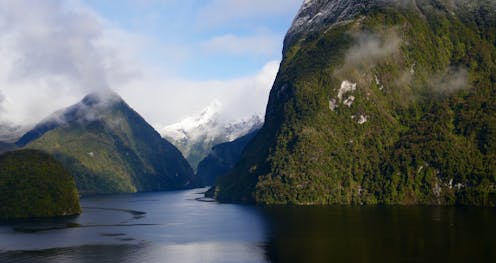
Blue carbon opportunities are varied, but it makes sense to focus first on the most productive marine carbon sinks. Research shows that fiords in temperate areas such as New Zealand’s Fiordland and in Scotland have some of the highest potential for carbon storage.
The emergence of blue carbon solutions
New Zealand’s Climate Change Commission recently released its draft advice to inform the strategic direction of the government’s second emissions reduction plan, covering the 2026–2030 emissions budget.
In terms of carbon removals, we see heavy reliance on exotic pine forestry, despite the limitation that carbon held in production forests is only stored for as long as the trees remain standing or the products made from them endure. Forestry planting is also limited by availability of land.
Blue carbon opportunities range from the restoration of wetlands to seaweed farming. They differ markedly in the scientific understanding of the rate and permanence of carbon sequestration – and how ready they are to be developed into climate change policy. The challenge lies in reliably measuring where and how fast carbon is being stored long term.
This can prove particularly challenging in scenarios where the place of carbon deposition (such as deep ocean sediments) is far removed from the place of carbon capture (the surface waters where photosynthesis occurs).
While there is growing international recognition that natural carbon stores should be protected, governments are particularly interested in management actions that lead to increased carbon capture and long-term storage.
Read more: Climate change: why we can't rely on regrowing coastal habitats to offset carbon emissions
Such efforts, including the planting of mangrove forests in the tropics, need to reliably demonstrate “additionality” (more carbon being sequestered) and “permanence”. These verification requirements have slowed large-scale investment.
Fiords are hotspots for carbon burial
The first blue carbon initiatives included coastal wetlands like mangrove forests and salt marshes. They were incorporated into carbon accounting under the UNFCCC in 2013. But the coastal and deeper ocean also offer carbon sequestration opportunities.
It is well established that organic carbon that settles to the seafloor and is quickly buried can result in long-term storage. Some aquatic environments are hotspots for carbon burial. Fiords in temperate areas, such as in Fiordland, are among the hottest of hotspots, burying the largest amount of organic carbon per area in the world.
Fiords occupy less than 0.1% of Earth’s surface, but researchers estimate they account for 11% of global marine organic carbon burial. In Fiordland, this process is amplified because additional organic material from the rainforest is deposited into the fiords and quickly sinks to deep low-oxygen environments where it is preserved.
A recent estimate of New Zealand’s carbon budget derived from atmospheric measurements and modelling found Fiordland’s carbon sink is larger than previously thought. It could potentially offset 10-20% of New Zealand’s annual greenhouse gas emissions.
Although Fiordland has a high level of protection, we don’t yet know whether there are human actions (for example, freshwater input from electricity generation) that have altered the capacity of this massive carbon sink.
We also suspect the remarkable capacity of fiords to lock away carbon could be at risk in the future as the climate continues to change. Parts of Fiordland could lock away less carbon, or worse, switch from being carbon stores to carbon sources.
Looking to Scotland for leadership
Scotland is leading the way in the blue carbon space, having established a blue carbon forum in 2018 that facilitates science and policy development.
The growing global awareness of fiords as important blue carbon systems points to a new “fiord nations” partnership that could encourage stock assessments.
The Scottish government’s Bute House Agreement (2021) includes a commitment to protect 10% of Scotland’s seas under Highly Protected Marine Area (HPMA) designations. In a radical step, blue carbon potential is part of the selection of these HPMA sites.
Scottish sea lochs (or fiords) meet many of the criteria for HPMA designation, including their unique marine ecosystems and organic-rich sediments. This highlights a global leadership opportunity, where the protection of blue carbon hotspots might help change our appreciation of the growing pressures these forgotten seascapes are facing.
Under the Paris Agreement, countries regularly make climate pledges, known as Nationally Determined Contributions (NDCs). They give a good sense of how ambitious each country is.
The UK’s latest NDC (2022) paints a comprehensive picture of aspirations for improving marine management in accordance with their marine strategy to improve carbon sequestration and biodiversity. Indeed, Scotland published its own “indicative” NDC in 2021, in which it highlighted the potential for blue carbon.
New Zealand’s NDC, updated in 2021, dedicates just one sentence to the ocean, stating it “looks forward to considering” new methodologies regarding wetlands over time.
New Zealand does not yet have a marine policy. But the enormous potential of our seas and, specifically fiords, to sequester carbon is becoming apparent. We could be doing so much more to understand, protect and restore parts of our coastline and seafloor that sequester carbon, potentially delivering benefits for climate, a sustainable blue economy and marine life.
Authors: Rebecca J McLeod, Senior Research Fellow in Marine Ecology, University of Otago


















