

Is leaving dog poo in the street really so bad? The science says it’s even worse than you think
- Written by: Melissa Starling, Postdoctoral researcher, University of Sydney
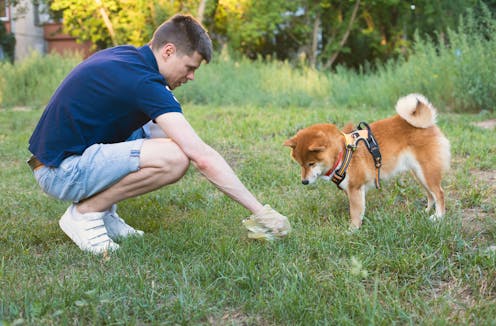
What’s that smell? Is that what you think it is? You check your shoes and, sure enough, one is adorned with a sticky, foul-smelling patty of fresh wrongness. You have stepped in a landmine of the canine variety.
We’ve all been there, and we all know footpaths, nature strips, parks, playing fields and front lawns are not good places for dog poo to sit.
Yet, our streets and parks continue to be littered with dog poo. And with the pandemic driving a surge in dog ownership, anecdotal reports suggest the dog poo problem has grown only worse in recent years.
Beyond the obvious unsightliness and the likelihood of making unwanted contact with dog poo, there are some other important reasons to pick up after dogs.
Here’s what you need to know and what the science says about common efforts to deter dogs from pooping on your yard.
Read more: Is my dog too cold? How cold is too cold for a walk? Here's how to tell
Dog poo is linked to illness, pollution and antibiotic resistance
Dog faeces may contain microorganisms that cause illness in humans such as Salmonella, E. coli, Giardia and internal parasites.
Dog poo can also be a potential reservoir for antibiotic-resistant bacteria, meaning humans could develop bacterial infections that are difficult to treat through contact with dog faeces.
A recent Sydney study also identified dog faeces washed into storm water as a significant contributor to water pollution.
This topic, in spite of its relevance and impact, has received little attention from scientists. Thankfully, however, we have a few brave souls who can say they have studied dog crap for the betterment of humanity.
This research has revealed some patterns in where dog faeces is found in public.
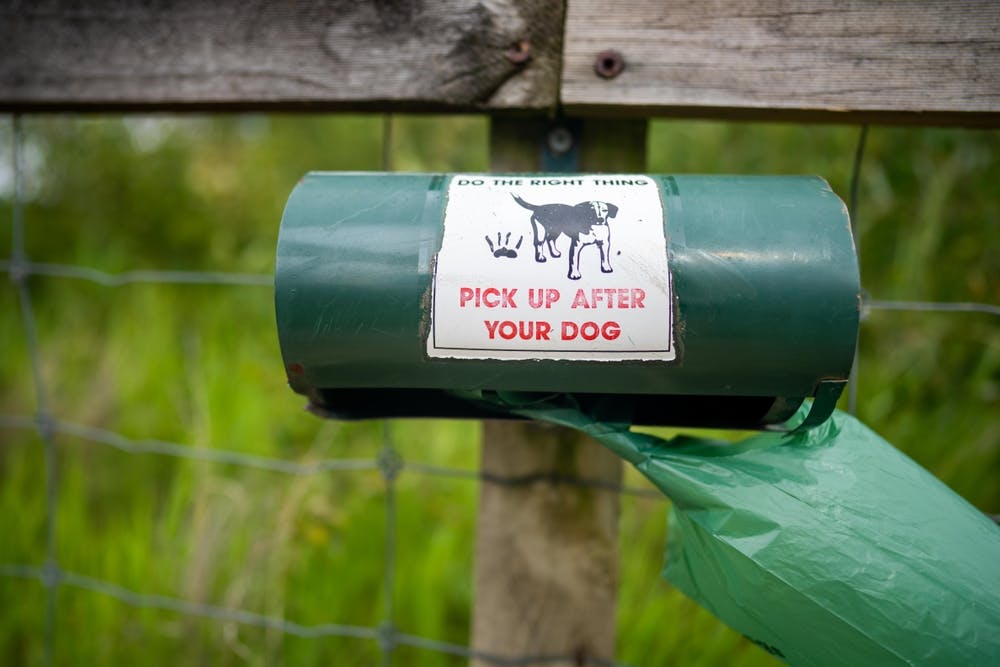 Dog poo can be a potential reservoir for antibiotic-resistant bacteria.
Shutterstock
Dog poo can be a potential reservoir for antibiotic-resistant bacteria.
Shutterstock
Where is the dog poo problem more common?
Dog fouling is significantly more common in parks where dogs are allowed off-leash, and areas close to car parks.
The way dog walkers have traditionally used an area may also be an important factor, with one UK study noting:
availability of bins, path morphology, visibility, and path location are key factors in determining the occurrence of dog faeces.
The same study noted that while most dog walkers do the right thing, some are too “proud to pick up”, while others make contextual judgements about where and when it could be permissible to leave dog waste. Yet others are “disengaged” dog walkers, who “will not pick up even if they are aware of the health and environmental consequences”.
Other research has suggested targeting keeping dogs on-leash between car parks and off-leash areas and providing waste disposal stations on popular dog-walking routes.
This doesn’t help if you have a neighbour who lets their dog out to relieve themselves on the nature strip (or your yard), or people who walk their dogs without carrying waste disposal bags.
And we all love the ones who bag the poop but leave the bag tied to a fence or by a gate.
What about the old water-bottles-on-the grass trick?
Dog owners who don’t pick up after their dog can be fined, but it can be hard to catch them in the act, and reporting a neighbour to authorities can often lead to ongoing hostility.
Bottles of water on the grass is a time-honoured strategy to deter dogs, but there is no evidence this is effective and no clear reason why it would be.
Dogs sometimes like to circle and find just the right spot to go, so they may prefer an area that has fewer obstacles to negotiate. Perhaps a yard bristling with lawn ornaments would enjoy some protection. (Interestingly, science suggests dogs may circle around like this to align their body to face north.)
There are commercially available dog deterrents, but little evidence they are effective and under what conditions.
Some believe any strong scent may deter an animal with a very strong sense of smell from lingering long enough to take a dump. But scent travels, so heavy and repeated applications would likely be needed (and this strategy could have unintended side effects on native urban ecosystems).
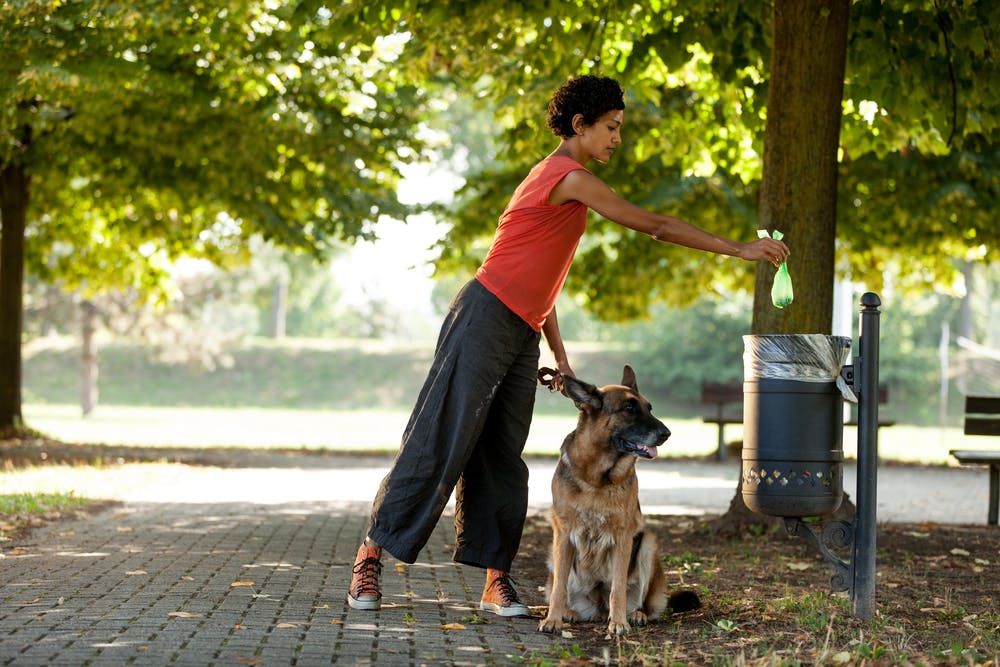 Most dog walkers do the right thing.
Shutterstock
Most dog walkers do the right thing.
Shutterstock
Educating dog walkers is key
Aside from providing bags and a bin and enforcing leash laws particularly around carparks close to off-leash areas, research suggests education does help.
Messages emphasising that good neighbours and members of the community diligently pick up after their dogs may be most effective, as people are responsive to social messages.
If you have tried to appeal to your neighbour’s sense of community to no avail, and you’re not keen on a front yard bristling with garden gnomes and flamingos or drenched in possible dog-deterring chemicals, you could try providing bags and a sign promising surveillance.
For all the dog owners out there that do pick up after their dogs, your community thanks you.
The best way to dispose of dog faeces is in the bin. Composting requires high temperatures to neutralise the nasties in dog poop, and home composts are unlikely to get hot enough. And burying it simply allows these microorganisms to build up in the soil.
Read more: Is your dog happy? Ten common misconceptions about dog behaviour
Authors: Melissa Starling, Postdoctoral researcher, University of Sydney


















