

Tara Calaby imagines herself into a 19th-century asylum
- Written by: Catharine Coleborne, Professor of History, School Humanities, Creative Industries and Social Sciences, University of Newcastle
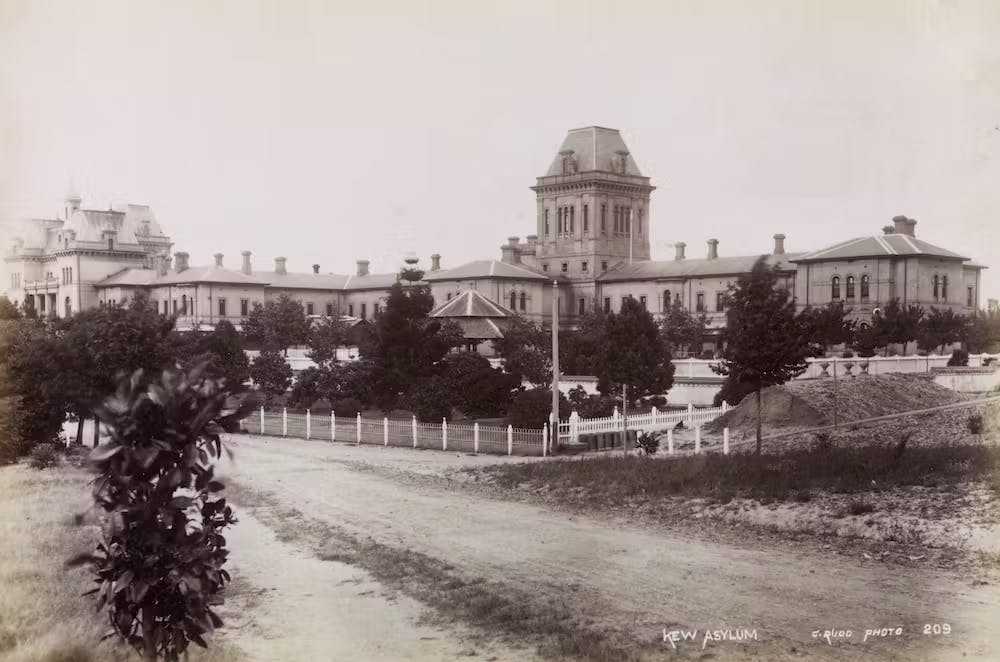
Kew Asylum, when it opened in 1872, was the larger of two public institutions in wider Melbourne that housed people with mental illness. Grand and imposing, it opened a few years after the overcrowded Yarra Bend Asylum.
A new historical novel, set at Kew Asylum in 1890s Melbourne, prises open this world – inviting contemporary readers into the taboo subjects of women’s mental breakdown and institutional confinement, through a same-sex romantic love story.
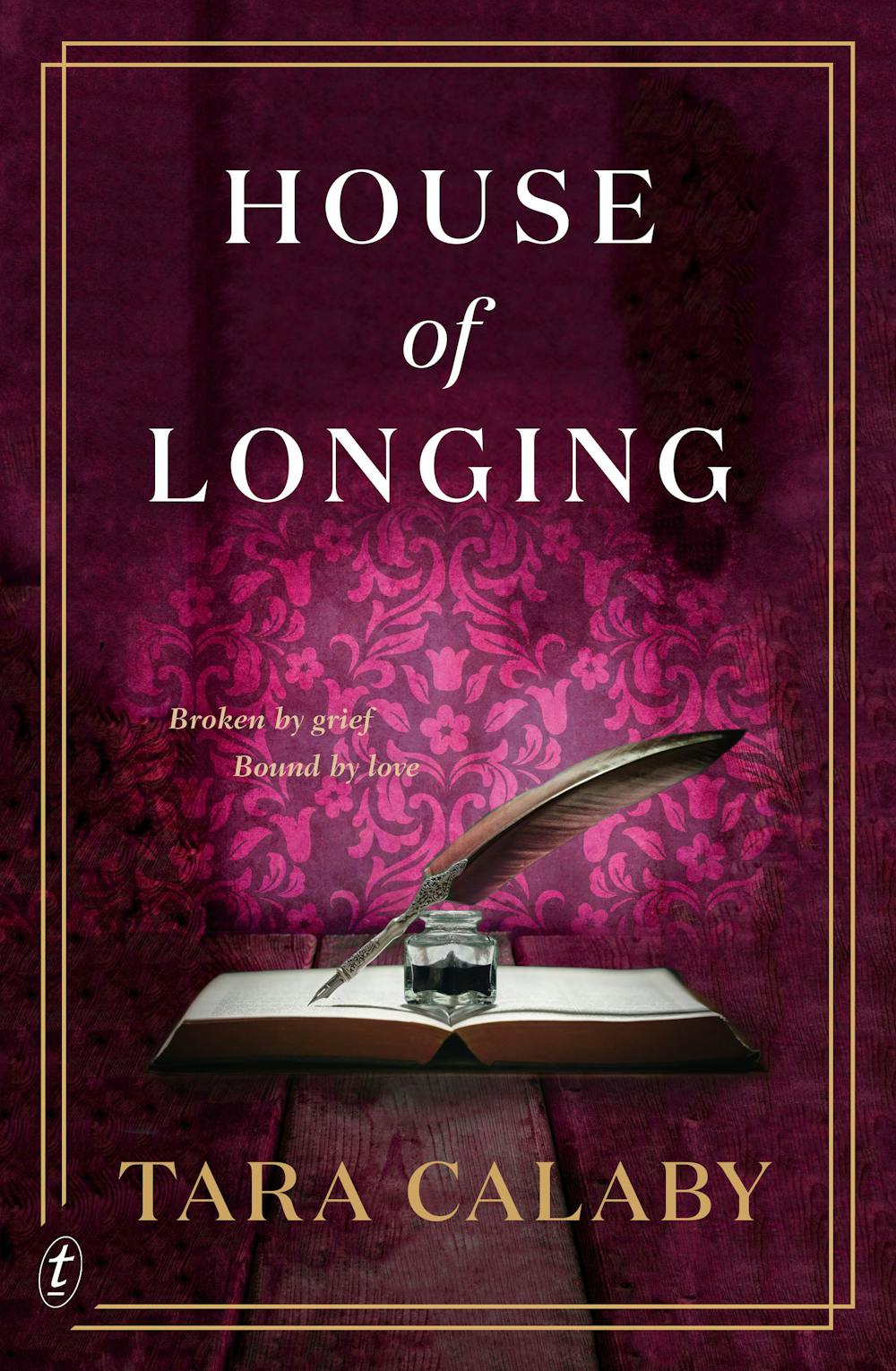
Review: House of Longing – Tara Calaby (Text Publishing)
As a researcher of psychiatric institutions, I’ve often wondered about the potential and power of fiction to bring this hidden history of hospitalisation to life. People in the historical record have often struck me as remarkable, full of personality.
We can hear their words – scribbled in the margins of the clinical case notes, or in patient and family letters – as if they were spoken aloud. Far from being invisible or forgotten, decades of historical research using patient records has brought these experiences to light, but mostly inside academic studies.
Tara Calaby, whose novel is based on research, draws on these voices and writes in between the gaps, or at the interstices, of historical evidence. Her imagination fleshes out experiences that are hard for historians to access; she enters the interior lives of people from the past.
Her protagonist, Charlotte, becomes a cipher for the reader.
Charlotte had once read a newspaper report that had compared madwomen to wild animals. She knew, now, that lunatics were no more bestial than the men and women who gathered in Melbourne tea rooms to gossip and be seen. Madness stripped away the niceties, that was all: the base drives of fear and hunger and wrath and lust were simply more visible here.
Women’s secrets
Charlotte Ross lives with her father George. Together they supply Melbourne’s professional middle class and elites with stationery: inks, paper, pens and ledgers. George is a widower who has grown a respectable and specialist business that allows Charlotte to maintain her role as an unmarried daughter in gainful employment, thus encountering people and the public world through the shop. The book opens with reference to the “noise and bustle of Elizabeth Street”.
 While she possibly considers herself “plain” when judged alongside Melbourne’s society women and their fashionable dresses, Charlotte is a strong character with considerable presence. Her capacity for deep thought and ability to attune to the emotional states of other people are both strengths and weaknesses as the events of her life unfold; some tragic, others with vibrant potential and possibility.
When Charlotte encounters Flora Dalton, a doctor’s daughter, an instant attraction sparks something in her. The book’s title, House of Longing, refers to a hidden desire both women slowly begin to acknowledge openly – but also to the many lives and desires of the women Charlotte later meets in the psychiatric institution.
Nineteenth-century Melbourne, with its much-rehearsed preoccupations with class, gender and social reputation, proves the perfect setting for Calaby to explore women’s secret emotional and sexual experiences in a world constrained by gender conventions. Calaby centres questions of women’s independence from men in this society.
Alert to the narrative of psychiatric illness and the language used in this book, I was interested in the way Charlotte and Flora use the word “mad” early in their friendship. As two women who possess a keen and wry sense of the world around them, they initially make light of the notion of losing reason, of the way “losing one’s senses” might be a “a freedom”.
Charlotte and Flora experience freedom by spending time together dressed as young men, camping in the bush east of Melbourne.
As soon as they thought it safe to do so, Charlotte and Flora ventured into the trees – deep enough to ensure privacy but not so far from the road as to risk getting lost – and exchanged their dresses for shirts and trousers.
At first Charlotte finds the trousers “strangely confining compared to skirts” but later, when she changes back into her dress, she finds that clothing newly “constraining”, suggesting a gentle shift in her identity has taken place.
Here, too, Calaby seems to draw on the historical record: it wasn’t unheard of for women to escape their stifling lives by dressing as men in the 1890s. Accounts of women “passing” as men in the colonial era were reported in newspapers and documented in medical and institutional records, as recorded by historians Lucy Chesser, Ruth Ford and Robin Eames.
Charlotte and Flora’s time in the bush gifts them a sense of physical freedom, where they can express bodily difference and sexual desire away from the scrutiny of men. They are literally clothed as gender-neutral, unfettered by the terrible stiffness of women’s dress fabrics and cuts. Flora neither resembles a “boy” nor a “woman”, but is “vulnerable, waiflike” in this experiment with her gender.
On her return to the city, Charlotte experiences a personal tragedy – and chooses a more dramatic escape from her oppressive clothing, stifling social expectations and somewhat lonely life as a solo woman.
Yet instead of liberation, she finds herself in an institutional setting purposefully designed to constrain, confine and sequester women: the lunatic asylum at Kew. Here, the novel’s action begins to revolve around the worlds of women and their keepers.
Read more:
Trans people aren’t new, and neither is their oppression: a history of gender crossing in 19th-century Australia
Darkest moments and recovery
In the late 19th century, police were the “first responders” to trauma and mental distress, responsible for taking individuals to the institutions. Physicians were then required to certify a person as needing hospitalisation. Charlotte is arrested by police, then hospitalised, where she is observed by doctors.
Readers less well-acquainted than I am with the processes of 19th-century asylum admissions will likely be horrified by Charlotte’s experience: stripped of clothing, talked about (rather than to); made subject to the medical men.
Notes are taken about her body, clothes, deportment and speech. She is noted as “stubborn”.
While she possibly considers herself “plain” when judged alongside Melbourne’s society women and their fashionable dresses, Charlotte is a strong character with considerable presence. Her capacity for deep thought and ability to attune to the emotional states of other people are both strengths and weaknesses as the events of her life unfold; some tragic, others with vibrant potential and possibility.
When Charlotte encounters Flora Dalton, a doctor’s daughter, an instant attraction sparks something in her. The book’s title, House of Longing, refers to a hidden desire both women slowly begin to acknowledge openly – but also to the many lives and desires of the women Charlotte later meets in the psychiatric institution.
Nineteenth-century Melbourne, with its much-rehearsed preoccupations with class, gender and social reputation, proves the perfect setting for Calaby to explore women’s secret emotional and sexual experiences in a world constrained by gender conventions. Calaby centres questions of women’s independence from men in this society.
Alert to the narrative of psychiatric illness and the language used in this book, I was interested in the way Charlotte and Flora use the word “mad” early in their friendship. As two women who possess a keen and wry sense of the world around them, they initially make light of the notion of losing reason, of the way “losing one’s senses” might be a “a freedom”.
Charlotte and Flora experience freedom by spending time together dressed as young men, camping in the bush east of Melbourne.
As soon as they thought it safe to do so, Charlotte and Flora ventured into the trees – deep enough to ensure privacy but not so far from the road as to risk getting lost – and exchanged their dresses for shirts and trousers.
At first Charlotte finds the trousers “strangely confining compared to skirts” but later, when she changes back into her dress, she finds that clothing newly “constraining”, suggesting a gentle shift in her identity has taken place.
Here, too, Calaby seems to draw on the historical record: it wasn’t unheard of for women to escape their stifling lives by dressing as men in the 1890s. Accounts of women “passing” as men in the colonial era were reported in newspapers and documented in medical and institutional records, as recorded by historians Lucy Chesser, Ruth Ford and Robin Eames.
Charlotte and Flora’s time in the bush gifts them a sense of physical freedom, where they can express bodily difference and sexual desire away from the scrutiny of men. They are literally clothed as gender-neutral, unfettered by the terrible stiffness of women’s dress fabrics and cuts. Flora neither resembles a “boy” nor a “woman”, but is “vulnerable, waiflike” in this experiment with her gender.
On her return to the city, Charlotte experiences a personal tragedy – and chooses a more dramatic escape from her oppressive clothing, stifling social expectations and somewhat lonely life as a solo woman.
Yet instead of liberation, she finds herself in an institutional setting purposefully designed to constrain, confine and sequester women: the lunatic asylum at Kew. Here, the novel’s action begins to revolve around the worlds of women and their keepers.
Read more:
Trans people aren’t new, and neither is their oppression: a history of gender crossing in 19th-century Australia
Darkest moments and recovery
In the late 19th century, police were the “first responders” to trauma and mental distress, responsible for taking individuals to the institutions. Physicians were then required to certify a person as needing hospitalisation. Charlotte is arrested by police, then hospitalised, where she is observed by doctors.
Readers less well-acquainted than I am with the processes of 19th-century asylum admissions will likely be horrified by Charlotte’s experience: stripped of clothing, talked about (rather than to); made subject to the medical men.
Notes are taken about her body, clothes, deportment and speech. She is noted as “stubborn”.
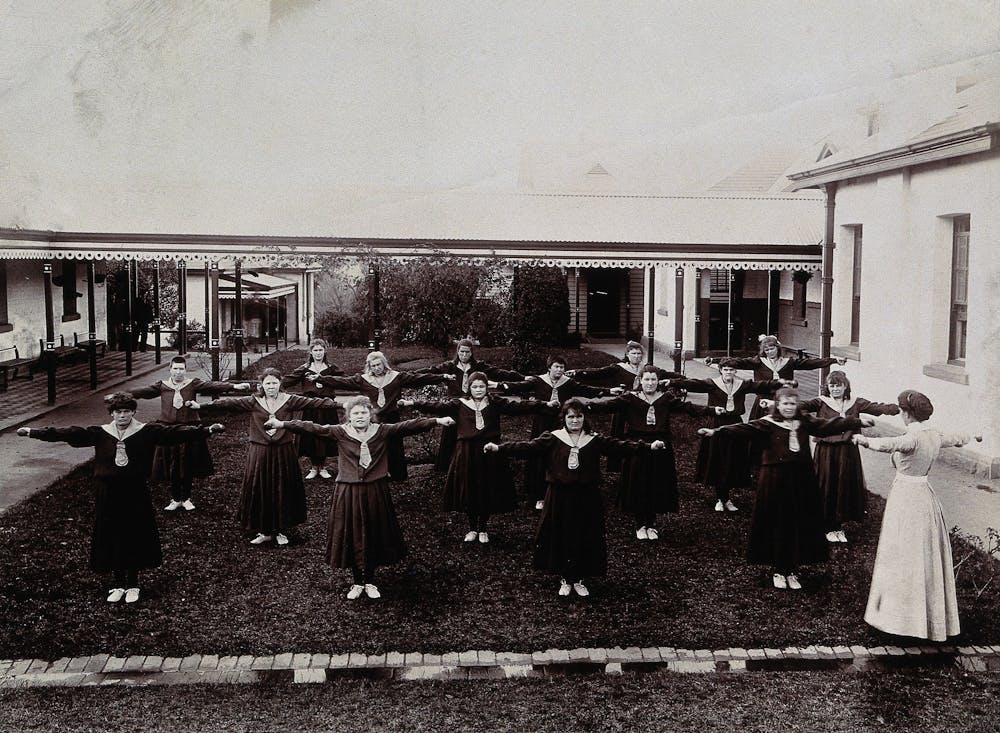 Women patients exercising at Kew Asylum.
Wellcome Library, London https://wellcomecollection.org/search/works, CC BY
Charlotte becomes increasingly aware of the dynamics of the wards and the personalities of doctors and attendant nursing staff. She forms friendships and alliances with other women who represent the range of “types” of patients in the period: the elderly and feeble women; the very young and vulnerable; the tough and scrappy women like Mary, whose life outside was marked by policing and arrests, rape and violence, and ultimately survival; young Eliza, whose baby has died; and the immigrant women like Inge, whose time in the institution was possibly safer for her than her home and marriage.
Calaby describes the asylum’s daily routine, such as menus, the gendered work regime for patients, and the hopeful intercession of visitors and advocates. Her characters are well-drawn portraits of women inmates, but also of the nuances in their care.
Some doctors were sympathetic figures who worked for the recovery of patients. Some nursing staff physically harmed patients. In Attending the Mad, an important, well-regarded history of labour in the asylum, Lee-Ann Monk examines another side of the silenced experiences of both the “mad” and those who worked to manage and care for the confined. Miss Simmons, a controlling nurse who handles the women roughly, reflects the various kind and mean attendant identities in the historical record. The novel’s inmates experience her “care” as “punishment”.
Simmons slaps patients, and makes one young patient, Eliza, empty the “domestics” each morning: “It shouldn’t be her duty, but Simmons says it’s a punishment. For what, I don’t know. Eliza does everything she’s told to”, Inge tells Charlotte.
As it evolved, psychiatric practice became more reliant on the language of diagnosis. Charlotte – a witness to this professionalisation of mental health treatment – notices the way “classes” of patient are given roles or privileges, or deprived, within the institution.
My own research has examined the blurred line between the asylum, families and the outside world. Patients could leave on trial, as Charlotte is able to do. “Recovery” was possible, though often assessed through the performance of appropriate gendered behaviour such as letter-writing, tasks such as needlework, mixing at social events like the asylum ball, or attending church services. All these practices formed part of the “moral therapy” of the day.
Read more:
Hidden women of history: Catherine Hay Thomson, the Australian undercover journalist who went inside asylums and hospitals
Constraint and resistance
From the start of the book, where Charlotte is forcibly fed through a tube, we understand that submission to the institution is not a choice. She is pinned down by two female attendants and a rubber tube is forced through her nostril by a doctor:
She tried to struggle, but the women held her tightly: she could move only her head. […] this was an assault she never could have imagined. Her sinuses stung, her eyes watered; it felt like the tube must surely pass into her brain.
Women patients exercising at Kew Asylum.
Wellcome Library, London https://wellcomecollection.org/search/works, CC BY
Charlotte becomes increasingly aware of the dynamics of the wards and the personalities of doctors and attendant nursing staff. She forms friendships and alliances with other women who represent the range of “types” of patients in the period: the elderly and feeble women; the very young and vulnerable; the tough and scrappy women like Mary, whose life outside was marked by policing and arrests, rape and violence, and ultimately survival; young Eliza, whose baby has died; and the immigrant women like Inge, whose time in the institution was possibly safer for her than her home and marriage.
Calaby describes the asylum’s daily routine, such as menus, the gendered work regime for patients, and the hopeful intercession of visitors and advocates. Her characters are well-drawn portraits of women inmates, but also of the nuances in their care.
Some doctors were sympathetic figures who worked for the recovery of patients. Some nursing staff physically harmed patients. In Attending the Mad, an important, well-regarded history of labour in the asylum, Lee-Ann Monk examines another side of the silenced experiences of both the “mad” and those who worked to manage and care for the confined. Miss Simmons, a controlling nurse who handles the women roughly, reflects the various kind and mean attendant identities in the historical record. The novel’s inmates experience her “care” as “punishment”.
Simmons slaps patients, and makes one young patient, Eliza, empty the “domestics” each morning: “It shouldn’t be her duty, but Simmons says it’s a punishment. For what, I don’t know. Eliza does everything she’s told to”, Inge tells Charlotte.
As it evolved, psychiatric practice became more reliant on the language of diagnosis. Charlotte – a witness to this professionalisation of mental health treatment – notices the way “classes” of patient are given roles or privileges, or deprived, within the institution.
My own research has examined the blurred line between the asylum, families and the outside world. Patients could leave on trial, as Charlotte is able to do. “Recovery” was possible, though often assessed through the performance of appropriate gendered behaviour such as letter-writing, tasks such as needlework, mixing at social events like the asylum ball, or attending church services. All these practices formed part of the “moral therapy” of the day.
Read more:
Hidden women of history: Catherine Hay Thomson, the Australian undercover journalist who went inside asylums and hospitals
Constraint and resistance
From the start of the book, where Charlotte is forcibly fed through a tube, we understand that submission to the institution is not a choice. She is pinned down by two female attendants and a rubber tube is forced through her nostril by a doctor:
She tried to struggle, but the women held her tightly: she could move only her head. […] this was an assault she never could have imagined. Her sinuses stung, her eyes watered; it felt like the tube must surely pass into her brain.
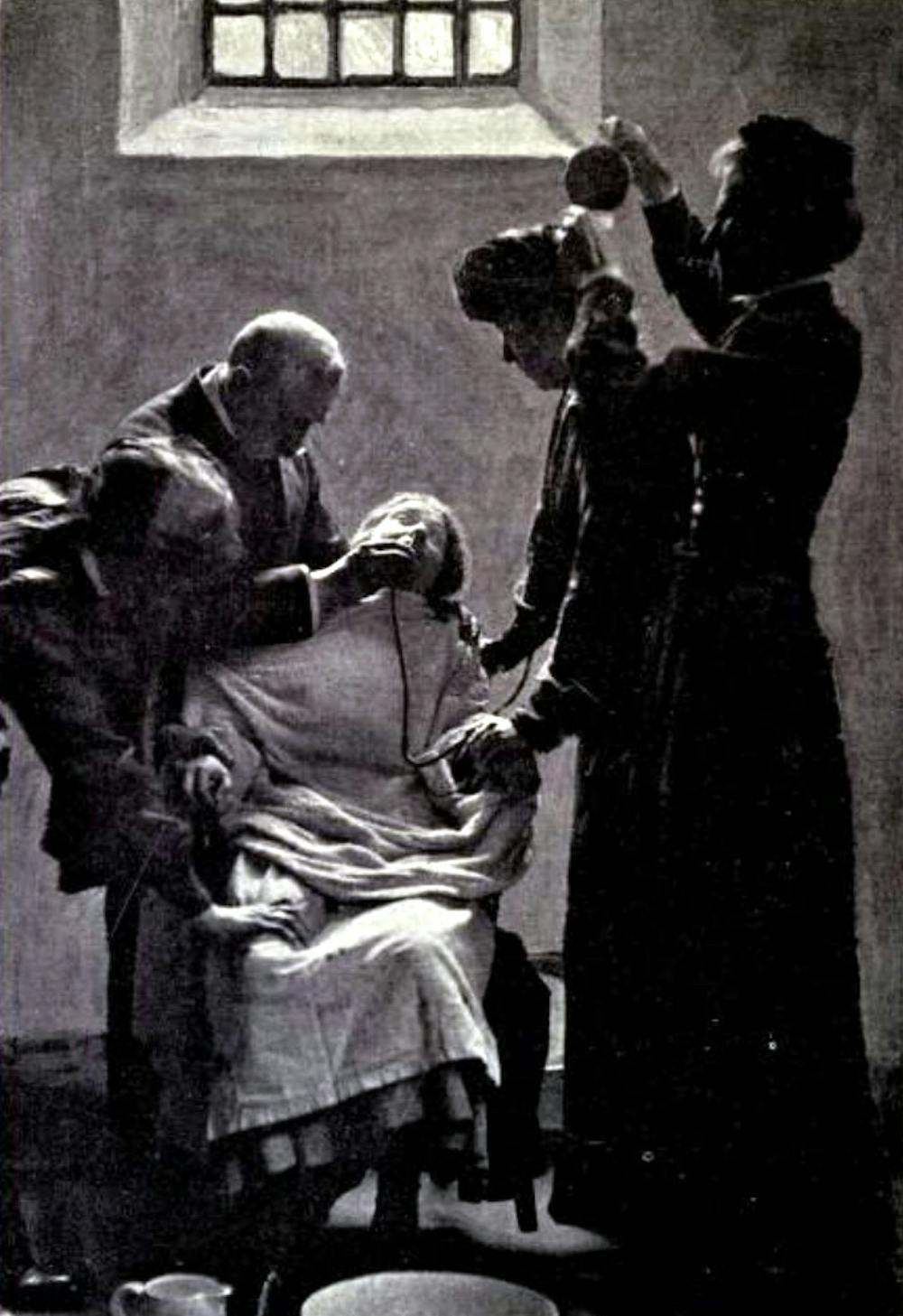 Force feeding.
Wikimedia Commons
Inquiries into Kew Asylum in 1876 and the Royal Commission into asylums in Victoria in the late 1880s both took evidence from many people, including inmates.
We have access to their voices of protest and reflection, and to their understanding of the violent treatment they sometimes received – as well as the carelessness that allowed accidents to happen, such as the novel’s horrific one in the asylum’s laundry, where a young inmate has her hand crushed in the mangle, leaving it “like a piece of butcher’s meat, misshapen and pulverised”. These voices of protest and complaint are reflected in Calaby’s novel, and also underscore the agency some women patients had in the space of the official inquiry.
In the 1876 Kew Inquiry, I found the recorded words of women to be loud, full of purpose, and self aware. One patient, Margaret Henderson, gave formal evidence about being treated with “plunge baths” by attendants who held her under water:
I may have been dong something objectionable to them before I would be put into a bath, and I would look to be punished by it […] they said it was a thing belonging to the asylum, and I was to submit to it.
Patients emerged in the inquiry as powerful advocates for others who were weaker than themselves, just as we see in Calaby’s novel. Laid bare in the evidence of investigations carried out about the state of asylums during the 19th century, “madness” or mental breakdown was exposed as complex, troubling and unknowable. But the inquiry also reflected a changing understanding of mental illness and its treatment, leading to greater scrutiny of medical men, asylum practices and the quality of care provided.
Kew Asylum and its population was a microcosm of the wider world of deprivation, control, violence, poverty and class that shaped the colonial world.
House of Longing examines the well-documented need for support for inmates from outside the asylum’s walls to achieve “recovery” and release. It also hints at the stumbling efforts of the medical fraternity to understand how to care for the mentally ill, who were women and men from all walks of life.
And it’s a hopeful story about love and courage – which suggests alternative futures for women seeking independence from marriage and social norms.
Authors: Catharine Coleborne, Professor of History, School Humanities, Creative Industries and Social Sciences, University of Newcastle
Force feeding.
Wikimedia Commons
Inquiries into Kew Asylum in 1876 and the Royal Commission into asylums in Victoria in the late 1880s both took evidence from many people, including inmates.
We have access to their voices of protest and reflection, and to their understanding of the violent treatment they sometimes received – as well as the carelessness that allowed accidents to happen, such as the novel’s horrific one in the asylum’s laundry, where a young inmate has her hand crushed in the mangle, leaving it “like a piece of butcher’s meat, misshapen and pulverised”. These voices of protest and complaint are reflected in Calaby’s novel, and also underscore the agency some women patients had in the space of the official inquiry.
In the 1876 Kew Inquiry, I found the recorded words of women to be loud, full of purpose, and self aware. One patient, Margaret Henderson, gave formal evidence about being treated with “plunge baths” by attendants who held her under water:
I may have been dong something objectionable to them before I would be put into a bath, and I would look to be punished by it […] they said it was a thing belonging to the asylum, and I was to submit to it.
Patients emerged in the inquiry as powerful advocates for others who were weaker than themselves, just as we see in Calaby’s novel. Laid bare in the evidence of investigations carried out about the state of asylums during the 19th century, “madness” or mental breakdown was exposed as complex, troubling and unknowable. But the inquiry also reflected a changing understanding of mental illness and its treatment, leading to greater scrutiny of medical men, asylum practices and the quality of care provided.
Kew Asylum and its population was a microcosm of the wider world of deprivation, control, violence, poverty and class that shaped the colonial world.
House of Longing examines the well-documented need for support for inmates from outside the asylum’s walls to achieve “recovery” and release. It also hints at the stumbling efforts of the medical fraternity to understand how to care for the mentally ill, who were women and men from all walks of life.
And it’s a hopeful story about love and courage – which suggests alternative futures for women seeking independence from marriage and social norms.
Authors: Catharine Coleborne, Professor of History, School Humanities, Creative Industries and Social Sciences, University of Newcastle 

















