

What is ‘heteroactivism’? How sports became a battleground for opposing LGBTIQ+ progress
- Written by: Ryan Storr, Research fellow, Swinburne University of Technology
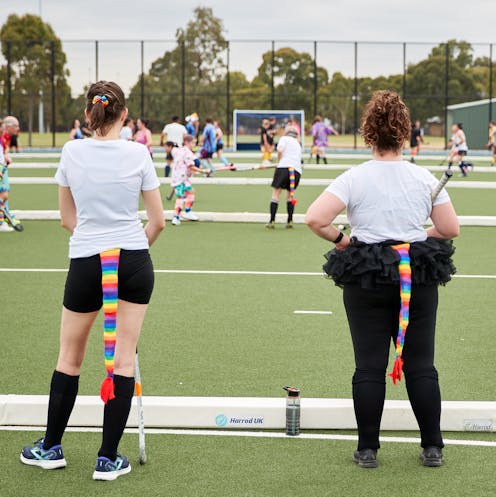
There has been a sharp increase in public resistance and backlash to the advancement of LGBTIQ+ inclusion and equality recently. The UK charity Stonewall reports that LGBTIQ+ recorded hate crimes in the UK have increased in recent years, and in Australia, there has been a large uptick in anti-LGBTIQ+ related events.
Sports have become a flashpoint for these issues, too. Globally, international sports federations have introduced bans to exclude trans and gender diverse athletes from sporting competitions.
FIFA even banned teams and players from wearing the “one love” armband. The armbands were to be worn by players in the men’s World Cup in 2022 to protest against the treatment of LGBTIQ+ people in Qatar, where it is illegal to be gay.

A history of LGBTIQ+ people in sport
Sports have a long history of exclusion and discrimination towards LGBTIQ+ people. In Australia, around 75% of LGBTIQ+ people have experienced or witnessed homophobia in sport.
Professional athletes such as Megan Schutt and Moana Hope have spoken out against discrimination of LGBTIQ+ athletes.
However, efforts have been made to address problems within the sporting world around homophobia, biphobia and transphobia. Organisations like Proud2Play, of which the author of this piece is a co-founder, and Pride Cup aim to increase the visibility of LGBTIQ+ athletes. Celebrations such as pride rounds and games across sporting codes show targeted diversity work.
LGBTIQ+ representation and diversity across sports is important because research shows that young people, in particular, need role models and to see themselves both represented and celebrated.
There is still a lot of work to do across the Australian sporting world, though, and this work must be prioritised through appropriate funding and targeted action.
With increased activity and visibility of LGBTIQ+ inclusion efforts, however, comes increased resistance from people and organisations who believe that LGBTIQ+ people are a threat to modern society. This resistance and activism against the advancement of LGBTIQ+ equality has been termed “heteroactivism”.
Read more: Israel Folau's comments remind us homophobia and transphobia are ever present in Australian sport
What is ‘heteroactivism’?
Heteroactivism was coined by queer scholars Kath Browne and Catherine J. Nash. It is defined as “a term to conceptualise oppositions to LGBTIQ+ equalities, in ways that seek to assert a particular form of heteronormative sexual and gender order”.
It is a framework which positions heterosexuality and gender normativity (being cisgender) as superior, and the foundation of functioning western civilisation. Christianity is central to heteroactivism, with roots in the US Christian right.
In Australian sport, heteroactivism has been bubbling away for many years.
Sports seen as a key arena for heteroactivism
Sports have become a key platform to mobilise and advance resistance to LGBTIQ+ equality. Some Australian sports organisations have banned transgender women from participating in elite competitions.
Bills have also been drafted in parliament to “save women’s sport”, seeking to limit and exclude trans and gender diverse people from participating in both elite and community competitions.
Heteroactivism has a history in Australian sports. Both NRL player Israel Folau and tennis star Margaret Court are high-profile heteroactivists, using their platforms in sports to vilify LGBTIQ+ people.
More recently, players from a variety of sporting codes have refused to participate in pride rounds and wear pride jerseys.
Often, arguments against supporting LGBTIQ+ inclusion efforts centre around LGBTIQ+ identities being at odds or going against a player’s religion. Court even once stated that transgender children were the work of the devil.
The impact of ongoing heteroactivism in sport is profound, and has been very successful in halting progress for LGBTIQ+ people in that world.
Ongoing efforts to resist advances in LGBTIQ+ equality in sports have included:
trolling on social media and abusive messages when sports organisations support LGBTIQ+ inclusion
allegations and abuse towards out lesbian athletes
abuse towards out gay male athletes
targeted campaigns and complaints towards sports that engage with LGBTIQ+ inclusive practices.
For example, one group, Binary Australia, sent over 2,700 emails to Football Australia, protesting the inclusion of transgender football players in NSW.
The targeted and coordinated activism directed at sports organisations stops administrators from enacting LGBTIQ+ inclusive policies and practices. It silences them in speaking out in support of LGBTIQ+ people. It makes LGBTIQ+ inclusion too difficult to engage with in comparison with other areas. It becomes too political or “not worth the pushback”.
The mental health implications for LGBTIQ+ people are significant, too. Research shows that ongoing discrimination can lead to poor mental health, increased anxiety and depression and dropping out of sports.
Sports for good or bad?
Administrators in sports have an opportunity to stand up to and address growing resistance to LGBTIQ+ equality. This can happen through policy development, anti-vilification efforts and, more importantly, demonstrating support for LGBTIQ+ achievements and contributions in sport.
By allowing heteroactivism to be mobilised through the medium of sports, administrators continue to alienate LGBTIQ+ players, fans and employees.
There are both opportunities and challenges for the Australian sporting world and how it responds to heteroactivism. Australia can be a world leader in efforts to improve outcomes for LGBTIQ+ people and make meaningful steps forward in the fight against homophobia, biphobia and transphobia, ensuring LGBTIQ+ people are represented and included across all levels of sports.
Authors: Ryan Storr, Research fellow, Swinburne University of Technology


















