

Google AI


Modern Australian

Bees are astonishingly good at making decisions – and our computer model explains how that's possible

  • Written by: Andrew Barron, Professor, Macquarie University
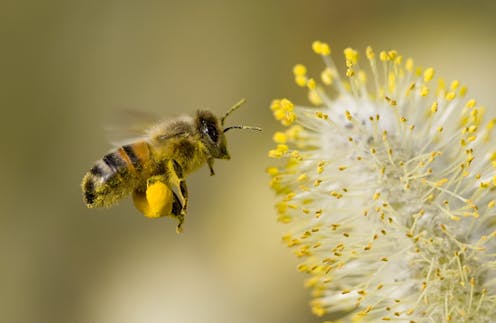
Bees are astonishingly good at making decisions – and our computer model explains how that's possible

A honey bee’s life depends on it successfully harvesting nectar from flowers to make honey. Deciding which flower is most likely to offer nectar is incredibly difficult.

Getting it right demands correctly weighing up subtle cues on flower type, age and history – the best indicators a flower might contain a tiny drop of nectar. Getting it wrong is at best a waste of time, and at worst means exposure to a lethal predator hiding in the flowers.

In new research published today in eLife our team reports how bees make these complex decisions.

Read more: Bees can do so much more than you think – from dancing to being little art critics

A field of artificial flowers

We challenged bees with a field of artificial flowers made from coloured disks of card, each of which offered a tiny drop of sugar syrup. Different-coloured “flowers” varied in their likelihood of offering sugar, and also differed in how well bees could judge whether or not the fake flower offered a reward.

We put tiny, harmless paint marks on the back of each bee, and filmed every visit a bee made to the flower array. We then used computer vision and machine learning to automatically extract the position and flight path of the bee. From this information, we could assess and precisely time every single decision the bees made.

We found bees very quickly learned to identify the most rewarding flowers. They quickly assessed whether to accept or reject a flower, but perplexingly their correct choices were on average faster (0.6 seconds) than their incorrect choices (1.2 seconds).

This is the opposite of what we expected.

Usually in animals – and even in artificial systems – an accurate decision takes longer than an inaccurate decision. This is called the speed-accuracy tradeoff.

This tradeoff happens because determining whether a decision is right or wrong usually depends on how much evidence we have to make that decision. More evidence means we can make a more accurate decision – but gathering evidence takes time. So accurate decisions are usually slow and inaccurate decisions are faster.

The speed-accuracy tradeoff occurs so often in engineering, psychology and biology, you could almost call it a “law of psychophysics”. And yet bees seemed to be breaking this law.

The only other animals known to beat the speed-accuracy tradeoff are humans and primates.

How then can a bee, with its tiny yet remarkable brain, be performing on a par with primates?
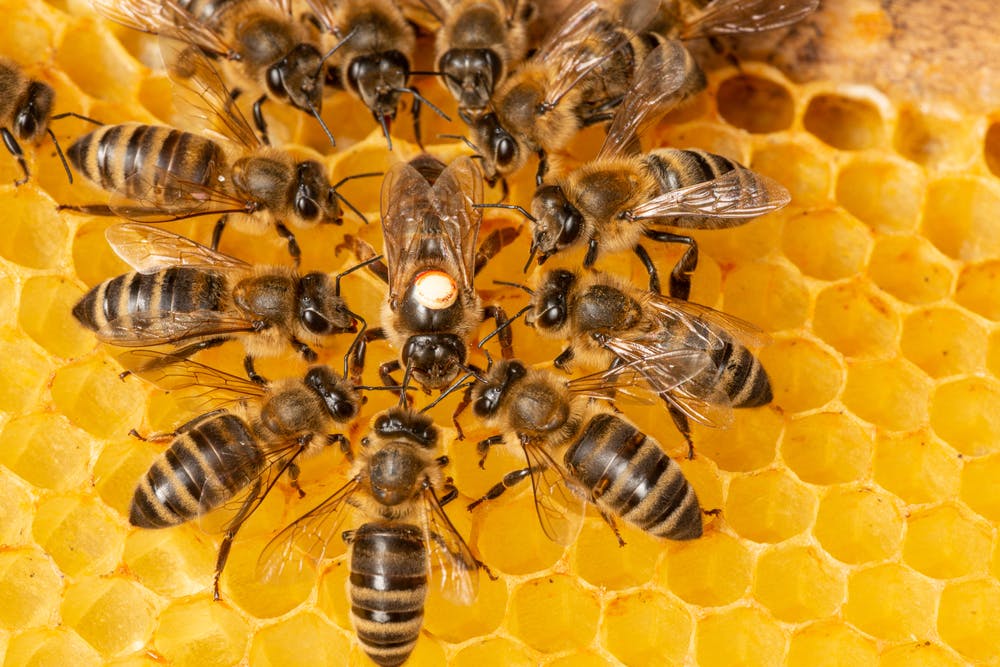
Several bees in a circular pattern on a honeycomb background, larger bee in the middle
Bees surrounding a queen bee marked with a dot on its back. Shutterstock

Bees avoid risk

To take apart this question we turned to a computational model, asking what properties a system would need to have to beat the speed-accuracy tradeoff.

We built artificial neural networks capable of processing sensory input, learning and making decisions. We compared the performance of these artificial decision systems to the real bees. From this we could identify what a system had to have if it were to beat the tradeoff.

The answer lay in giving “accept” and “reject” responses different time-bound evidence thresholds. Here’s what that means – bees only accepted a flower if, at a glance, they were sure it was rewarding. If they had any uncertainty, they rejected it.

This was a risk-averse strategy and meant bees might have missed some rewarding flowers, but it successfully focused their efforts only on the flowers with the best chance and best evidence of providing them with sugar.

Our computer model of how bees were making fast, accurate decisions mapped well to both their behaviour and the known pathways of the bee brain.

Our model is plausible for how bees are such effective and fast decision makers. What’s more, it gives us a template for how we might build systems – such as autonomous robots for exploration or mining – with these features.

Read more: It's bee season. To avoid getting stung, just stay calm and don't swat

Authors: Andrew Barron, Professor, Macquarie University

Read more https://theconversation.com/bees-are-astonishingly-good-at-making-decisions-and-our-computer-model-explains-how-thats-possible-208189

Pool and Deck Design: How to Plan the Perfect Outdoor Living Space for Your Sydney Home

For many Australians, the backyard is where life happens. Summer barbecues, weekend swims and long evenings outdoors are all part of the lifestyle, ...

Is Solar Pool Heating Worth It? What Sydney Homeowners Should Know

There's nothing quite like a backyard pool on a hot Sydney day. But once autumn rolls in, many pools sit unused for months because the water is simp...

Planning a Luxury House Move: A Week-by-Week Timeline for Prestige Sydney Homes

Selling or buying a prestige home is a major milestone. Whether it's a waterfront residence in Birchgrove, a grand Federation home in Haberfield or ...

Downsizing or Upgrading Your Caravan? Here's How to Sell It Without the Hassle

Selling a caravan can feel like a major task, especially when you are unsure about its value, paperwork, or how to find a buyer. Whether you are dow...

The Best Overseas Adventure Holidays for Australians Who Love the Outdoors

Australia offers no shortage of incredible outdoor experiences, but sometimes the best way to satisfy your sense of adventure is to head overseas. A...

Cape Town Wine Shuttle: Winelands Tasting & Tours

Embark on an unforgettable journey through the picturesque Cape Winelands, where world-class wines and breathtaking scenery await. Our Cape Town Win...

Why Giant Rats Tail Grass Keeps Coming Back After Spraying

Giant Rats Tail Grass (GRT) is one of the most frustrating pasture weeds for farmers and lifestyle property owners. You spray an infested area, see th...

When Custom Cardboard Boxes Make Sense for Your Business

Custom cardboard boxes can be useful when a standard carton does not fit a product, packing method or presentation requirement particularly well. A ...

Virtual Livestock Fencing and GPS Tracking: Improving Visibility Across Cattle Properties

What Virtual Livestock Fencing Means for Modern Cattle Management Managing cattle across extensive properties requires more than knowing where anim...

Sydney Pawnbrokers Explained: How Hocking Your Car Actually Works

Sometimes you need cash, and you need it soon. If you own a car, you may already have a way to get it. That's what people mean when they say they've...

Moving Interstate from the Gold Coast to Brisbane (or Back)? What Removalists Wish You Knew First

Have you talked to anyone who’s done the move? They say the same thing: the drive up the M1 is the easy part. It's everything around it that catches...

Why the Spring School Holidays Are a Great Time to Visit Coffs Harbour

The spring school holidays are a good time to spend a few days on the Coffs Coast. The weather is starting to warm up, there is plenty to do outdoor...

What to Do When an Older Car Is No Longer Worth Keeping in Melbourne

Ever looked at another repair quote and wondered whether your old car is still worth the trouble? It is a common turning point for Melbourne motoris...

Your Baby's First Year: A Local Guide to Feeding, Sleep, and When to Get Extra Support

Ask ten parents in a Brisbane mothers' group how their baby is feeding or sleeping, and expect ten different answers.  Someone's baby sleeps throug...

Kitchen and Laundry Makeover Ideas That Don't Require a Full Renovation

Full kitchen renos are expensive — and most people don't actually need one.  They need the kitchen to stop looking like it's stuck in 2009, or they...

How Technology Is Reshaping the Modern Australian Commercial Kitchen

The commercial kitchen has always been shaped by technology. Refrigeration changed how ingredients could be stored, modern ventilation transformed k...

The Number on a Roller Blind Fabric That Nobody Explains

Somewhere in the fabric book, next to the colour name, there is a percentage. Three per cent. Five per cent. Ten per cent. Nobody explains it, most c...

What’s Trending in Men’s Jewellery This Father’s Day!

Finding a Father’s Day gift that feels personal, stylish and genuinely wearable is not always easy. While socks and novelty mugs have traditionally ...
















