

much of what we're told about gym exercises and resistance training is from studies of males, by men
- Written by: Mandy Hagstrom, Senior Lecturer, Exercise Physiology. School of Health Sciences, UNSW Sydney
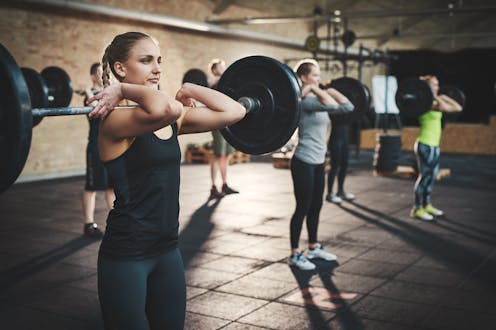
When you lift weights, why are you doing what you are doing? Who told you to train that way – coach, a personal trainer, an online exercise guru? And where did they learn how to prescribe exercise?
In fact, much of what we (and our trainers) think of as typical resistance training routines is heavily influenced by “governing body” fitness industry organisations you’ve likely never heard of: groups like the American College of Sports Medicine, the United Kingdom Strength and Conditioning Association, and the Australian Strength and Conditioning Association.
These peak bodies often release “consensus statements” on what works when it comes to resistance training. These statements influence TAFE and university courses, and help shape the education of personal trainers and coaches. The findings in these statements trickle down into what you and I see happen in the gym every week.
My colleagues and I wanted to take a closer look at these statements, and the studies on which they’re based. We were interested to know how many of those studies looked at both males and females, and the gender of the people who authored these statements.
Our paper, published today in the journal Sports Medicine, found most of what you are being told to do in the gym is likely primarily based upon male data, written by men.
It’s worth noting research hasn’t served sex and gender diverse people well and has tended to use a binary.

Read more: Lift heavy or smaller weights with high reps? It all depends on your goal
What we did
Sex is a biological construct, whereas gender refers to the roles and traits society often assigns to men and women. It is important to note neither sex nor gender are binary.
However, data are typically presented in research in a binary manner. As our research was looking at the literature from a biological perspective, we used the terms female and male to describe the participants included in these studies. We used the terms woman and man to describe the gender of the authors and looked at all consensus statements published after the year 2000. As my colleagues and I noted in our paper, we acknowledge that our chosen methods of classifying sex and gender based on the above terminology may have resulted in misclassification of some people.
We then went through the list of studies referenced in these statements. We analysed the number of males and females who participated in these studies.
We also collected information about the gender of the authors of these statements. In other words, we collated the sex of over 100 million participants cited in the reference lists of 11 consensus statements from around the world.
What we found
We found:
91% of the first authors of these statements were men
women made up only 13% of authors overall
female participants only accounted for approximately 30% of all people in the studies on which adult and youth consensus statements were based
guidelines relating to older adults were a bit more balanced, with 54% female participants.
Some may argue 30% female participant data is probably fine, because women don’t lift weights so much. In the 1980s and before, weight training was seen as a masculine pursuit.
Not any more.
In fact, a recent survey in Australia found women are more likely to report adequate muscle strengthening activities over the previous 12 months when compared to men.
All this matters because a growing body of evidence suggests physiological differences between sexes in response to exercise.
Research suggests differences in skeletal muscle structure, the way muscle fibres work, and in the time taken to recover following intense exercise.
Work from our team has also shown men gain more absolute muscle size and strength following participation in resistance training but that relative gains tend to be similar or greater in women.
And recent research has shown strength differences appear to still be present, even when muscle size is matched between sexes.
Could there be benefit in prescribing exercise differently between sexes?
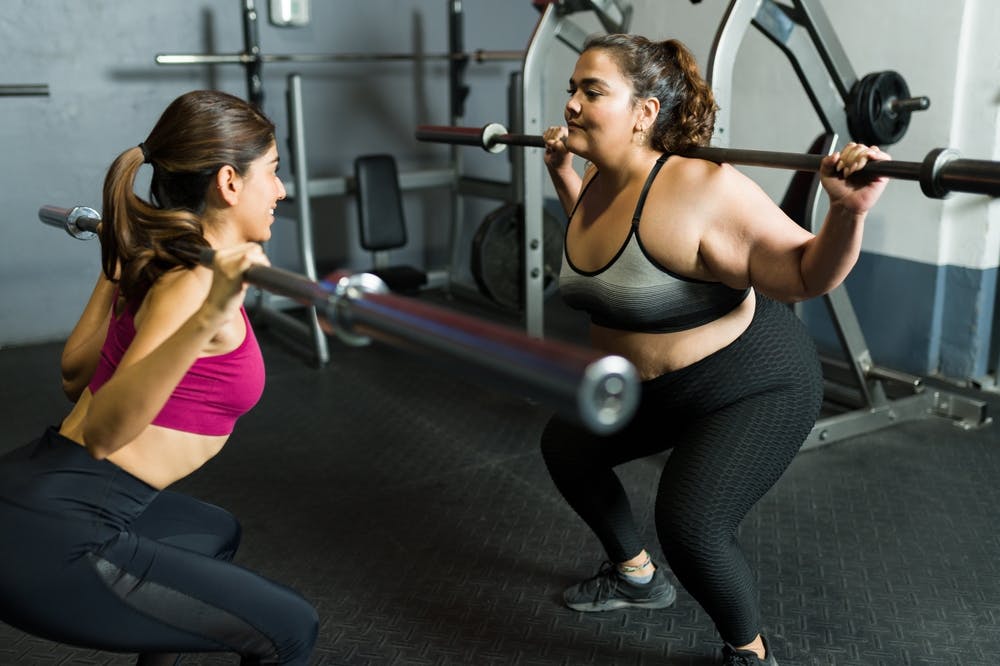 We know resistance training is good for our physical and mental health.
Shutterstock
We know resistance training is good for our physical and mental health.
Shutterstock
We don’t know what we don’t know
We know resistance training is good for our physical and mental health.
At the moment, however, we don’t know if we are disadvantaging half the population by knowing too little about how best they should do it.
Due to the longer time course for recovery mentioned above, should females have more rest days between high intensity sessions?
Given females appear to be more fatigue-resistant, should they actually be doing more training than males per session?
Unfortunately, we don’t yet know. A lot of the research needed to answer these questions conclusively hasn’t been done yet. And the research that we do have does not seem to be making its way to the papers informing the guidelines.
What now?
We need more women researchers authoring studies that feature female participants.
In other fields of medical research, the proportion of women authors is linked to greater enrolment of female participants in research studies.
Women authors are also more likely to present data by sex or gender, making this data more useful for real world interpretation.
The bottom line? What you are being told to do in the gym is likely primarily based on studies that include more males than females. And we can’t yet be sure if that is delivering the best results for females and girls who work out.
We need more research evidence examining sex differences during exercise, and methodologically rigorous studies focused solely on female cohorts.
This will bridge the data gap, and help us understand how to get the best out of exercise for all.
Read more: How often should you change up your exercise routine?
Authors: Mandy Hagstrom, Senior Lecturer, Exercise Physiology. School of Health Sciences, UNSW Sydney


















