

Why are there hopping mice in Australia but no kangaroos in Asia? It's a long story
- Written by: Alexander Skeels, Postdoctoral Researcher, Macroevolution and Macroecology Group, Australian National University
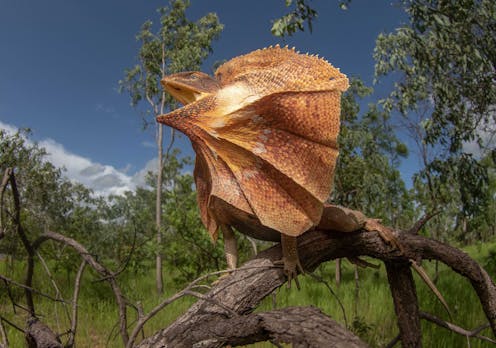
The animals in Australia are super-different to those in Asia. This goes without saying; we know Australia is full of weird and wonderful creatures found nowhere else on Earth, such as the platypus and the koala.
But it may surprise you to know that many of our most iconic critters came from Asia and arrived only recently (in geological terms, at least).
These most recent members of Australia’s characteristic fauna include many lizards, such as goannas and thorny devils, and other animals including hopping mice, flying foxes and the kookaburra. Yet the traffic was largely one way – there are far fewer representatives of Australian fauna in Asia than there are Asian fauna in Australia.
Why is the situation so asymmetrical? In a study published today in the journal Science, my colleagues and I analysed information about the distribution and habitat of 20,433 species of land-dwelling vertebrates – as well as climate and plate tectonics over the past 30 million years – to find out.
Drifting continents on a cooling planet
The story begins more than 200 million years ago.
Dinosaurs were still a fairly new group walking the Earth, and Australia was part of a supercontinent called Gondwana. This giant landmass included modern Antarctica, South America, Africa, Australia and India.
Gondwana had just broken off from another supercontinent, called Laurasia, which was smooshed together from modern North America, Europe and Asia. The separation of Gondwana and Laurasia removed the last land connection between Australia and Asia.
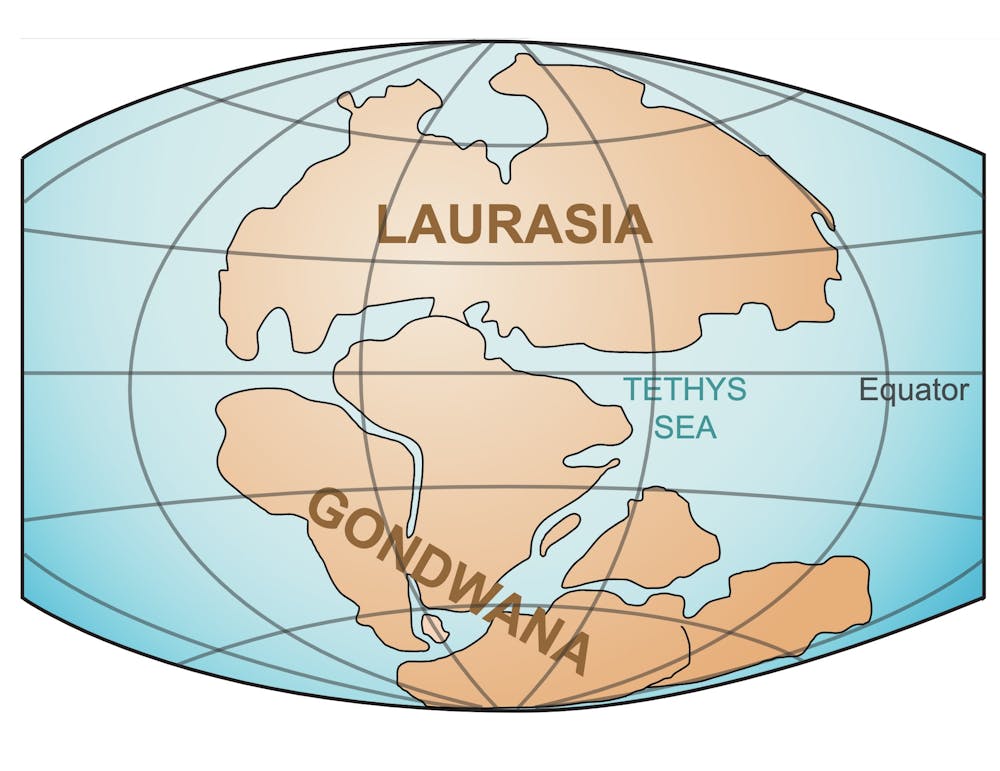
Now, Gondwana itself began to fall part pretty shortly after separating from Laurasia. Each piece of Gondwana gradually became isolated and began its own independent journey. Many of these journeys led them back to Laurasia.
Read more: Breaking new ground – the rise of plate tectonics
India collided with Eurasia and formed the mighty Himalaya; South America crashed into North America, forming the snaking land bridge of Panama; Africa bumped into Eurasia, forming the Mediterranean Sea; and Australia began on a collision course with Asia.
Australia untethered its final Gondwanan connections between 45 and 35 million years ago, when it broke off from Antarctica.
At that time, Australia was much further south than it is today. As it drifted northwards, the increasing space between Australia and Antarctica kick-started the Antarctic circumpolar current, which cooled the planet dramatically.
Read more: Explainer: how the Antarctic Circumpolar Current helps keep Antarctica frozen
Australia was isolated, cooling down and drying out. A unique set of animals and plants began to evolve.
Intercontinental stepping stones
Meanwhile, the Australian and Eurasian tectonic plates began to collide, forming thousands of islands in the Indonesian archipelago, including today’s Lombok, Sulawesi, Timor, and Lesser Sunda Isles.
These islands don’t belong to either the Australian continental shelf (also known as Sahul), which includes Australia and New Guinea, or to the Asian continental shelf (known as Sunda), which includes Thailand, Malaysia, Singapore, Sumatra, Java, Borneo, and Bali.
This in-between zone is known as Wallacea, after the 19th century British naturalist Alfred Russell Wallace. He first observed a difference in the types of animals found on either side of what is now called Wallace’s line.
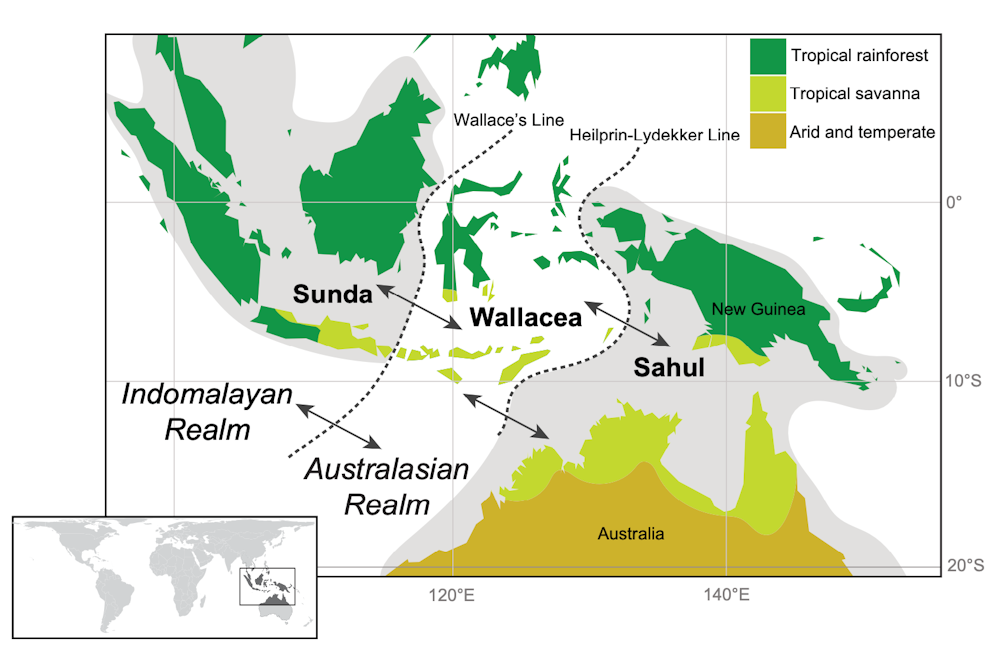 More animal species successfully made the crossing from Sunda to Sahul than the other way around.
Skeels et al. / Science, Author provided
More animal species successfully made the crossing from Sunda to Sahul than the other way around.
Skeels et al. / Science, Author provided
The islands became stepping stones between two continents whose groups of species hadn’t seen each other in a very, very long time. But, as our new research shows, only particular kinds of animals were able to make the crossing and establish themselves on the other side.
Wet and dry
The first factor determining which animals spread between continents was their ability to cross the ocean.
Of all the groups of animals that moved between Asia and Australia, we found the staggering majority were birds.
But this wasn’t the only key to success.
Animals also needed to be able to thrive in their new location, where the environment may have been quite different. We found animals that could tolerate a broad range of wetter and drier environments were more likely to make the move successfully.
This makes sense. Sunda is wet and Sahul is dry, and if you can tolerate more of that wet–dry spectrum, you are better equipped to move between these regions.
But we still have a big question. Why did more animals move from Sunda to Sahul than in the other direction?
A lot can change in 30 million years
The final piece of the puzzle is considering how these crucial factors – the ability for species to disperse and establish themselves in new environments – have changed over time.
We know Sunda has been dominated by lush tropical rainforest since before Australia broke away from Antarctica. Later, when the stepping-stone islands began to pop up, they also had the kind of humid equatorial climate favoured by the rainforest vegetation, and later animals, from Sunda.
In Australia, however, similar rainforests were shrinking and being replaced by grasslands and woodlands in most areas.
What this means is that as animals move from Sunda, through the stepping-stone islands, to New Guinea and the northern tips of Australia in Sahul, they experience a band of similar humid tropical climate.
However, most animals in Sahul evolved on the Australian mainland, most of which was much drier. So moving from mainland Australia, through New Guinea and the stepping stones, to Sunda, requires adaptations to a very different environment.
And Australian animals that did manage to make their way onto the stepping-stone islands would have likely met competition from Sunda groups already happily existing in their preferred tropical climate.
Answers are a long time in the making
Climate and geography are some of the most important things that shape evolution and the distributions of different species. Taking the long view, deep into the past, helps us understand the world around us.
Simple questions – like “why are there no kangaroos in Asia but hopping mice in Australia?” – have answers that are hundreds of millions of years in the making.
Authors: Alexander Skeels, Postdoctoral Researcher, Macroevolution and Macroecology Group, Australian National University



















