

What happens when doctors don’t act as they should? And what's the ruling against neurosurgeon Charlie Teo?
- Written by Christopher Rudge, Law lecturer, University of Sydney
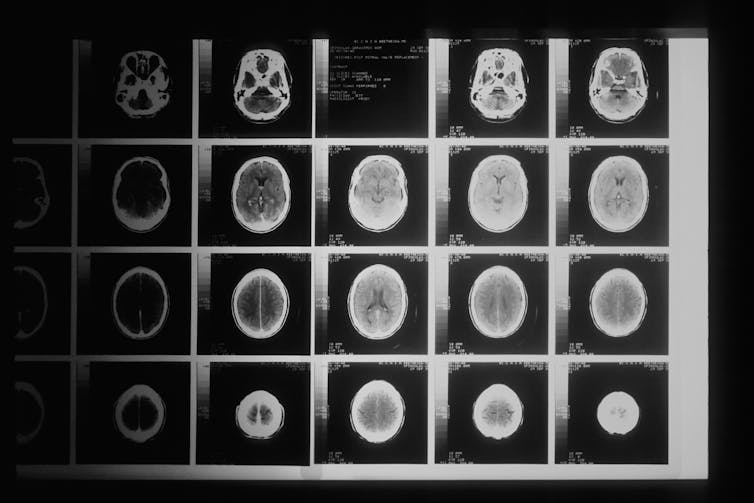
After several years of controversy, and both praise and blame for his willingness to perform high-risk surgeries, neurosurgeon Charlie Teo has been subject to practice restrictions by a special committee established under health practitioner law.
So how does the process of restricting doctors’ medical practice work? And what did this mean for Teo?
How are health practitioners regulated in Australia?
Health practitioner regulators in Australia aren’t generally empowered to make punitive decisions about health professionals’ conduct.
Instead, Australia’s health practitioner regulations (the so-called “national law”) require decision-makers to exercise their powers to protect patients. They operate in what is often called a “protective jurisdiction”.
And though the regulator may sometimes impose fines, it is rare. That’s because it may do so only when it is “satisfied there is no other order, or combination of orders, that is appropriate in the public interest”.
In all state versions of the national law, regulators may restrict doctors’ medical practices only if it’s “necessary to ensure health services are provided safely and of an appropriate quality”.
But the NSW national law includes additional wording. In all its decisions, the regulator must regard the “health and safety of the public” as the “paramount consideration.”
This can have unusual effects. As the Australian Health Practitioners Regulation Agency (AHPRA) acknowledges, requirements to protect the public may sometimes result in “a determination that is harsher on the practitioner than if punishment were the sole purpose”.
Read more: Who is our health regulator, AHPRA, and does it operate effectively?
What happened in the Teo case?
In late 2022, proceedings commenced against Teo via two complaints by the New South Wales Health Care Complaints Commission (HCCC).
The complaints concerned two brain surgeries on two patients. Both involved “radical resections” (“en bloc” removals) of these patients’ brain tumours. Tragically, neither patient regained consciousness after the operations and both patients died – one just ten days after.
In legal terms, the complaints were based on a provision of the national law that defines certain categories of wrongdoing as unsatisfactory professional conduct.
The HCCC alleged Teo had engaged in two categories of this wrongdoing: conduct below the standard reasonably expected of a doctor of his training and experience, and unethical conduct.
The HCCC alleged Teo’s decisions to operate were inappropriate and substandard because the risks of “neurological morbidity” (so-called brain death) outweighed the (potential) benefits of the interventions. There was no allegation that Teo’s surgical skills were substandard.
The surgeries were also unethical, it was alleged, as informed consent had not been obtained from the patients and one patient was required to pay an expensive upfront fee in circumstances of clear vulnerability.
What were the findings and consequences for Teo?
The Professional Standards Committee, made up of an experienced judge, two expert neurosurgeons and a lay member, applied the civil standard of proof – the balance of probabilities – to the evidence. Though the committee is not legally bound to apply the rules of evidence applied in criminal courts, it decided, broadly for procedural fairness reasons, to receive and consider all of Teo’s unchallenged evidence.
In a decision of more than 100 pages, the committee found Teo guilty of unsatisfactory professional conduct. It determined to “reprimand” Teo (this means a record of “reprimand” is noted on the public copy of his practitioner licence) and to impose four conditions on his practice.
Three conditions involve increased oversight of his practice records. But a more restrictive condition will require Teo to obtain written support from a neurosurgeon approved by the Medical Council of New South Wales for any neurosurgery involving “recurring malignant tumours in the brain or brain stem”.
While this order was hotly contested in the proceedings, the committee determined that, for reasons including Teo’s evidenced “isolation from his peers”, the condition was “necessary to protect the health and safety of the public”.
What about patient autonomy or clinical freedom?
Difficult ethical questions arise in medical regulation. Here, the committee had to balance the practitioner’s right to practise medicine against the paramount consideration of patient health and safety and against the patient’s right to exercise autonomy.
This last right is sometimes seen as a patient’s moral right to be wrong. On these considerations, the committee relied on accepted evidence from ethical experts that proposed that, as a matter of ethics,
a surgeon does not have a licence to undertake any conceivable procedure even with the agreement or acquiescence of the patient.
Is medical regulation strict in Australia and NSW?
Many reviews and academic studies find the national law to be fair and appropriate, or not strict enough.
However, some scholars and representative groups including the Australian Medical Association (AMA) find some aspects are too strict and unsympathetic to practitioners.
But a potted history of NSW medical history showcases how successive medical scandals have tended to drive strong regulatory reform. In 1984, when the tragic impacts of the shocking and unethical treatment at Chelmsford psychiatric hospital were coming to light, NSW was the first jurisdiction globally to establish a complaints body for health consumers. Known as the Complaints Unit, this body is now the HCCC.
Another milestone occurred in the early 2000s following several scandals, including the so-called “Butcher of Bega” episode. An inquiry into these events prompted the NSW government to introduce laws permitting medical practitioners to be immediately suspended if the regulator considered it was in the “public interest”.
This was the first power of its kind in Australia and was only adopted into the broader national law of other states in 2018.
What next for Teo?
Teo may appeal the orders of the committee to the NSW Civil and Administrative Tribunal or seek a review of the conditions. But as the conditions are not subject to an end date, it appears they will otherwise continue indefinitely.
Read more: How can the health regulator better protect patients from sexual misconduct?
Authors: Christopher Rudge, Law lecturer, University of Sydney

















