

Yes, Oppenheimer isn't opening in Japan this week – but the country has a long history of cinema about the war
- Written by Peter C. Pugsley, Associate professor, Department of English, Creative Writing and Film, University of Adelaide
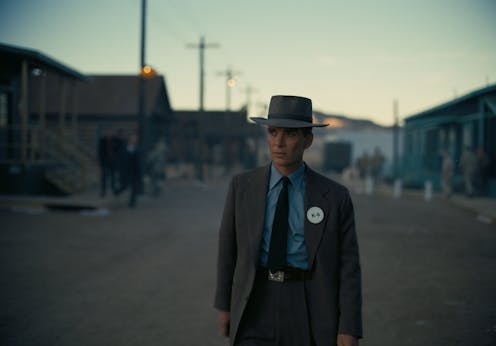
While Christopher Nolan’s new film Oppenheimer is opening in much of the world this week, a Japanese release date has not yet been announced.
A delay in naming a release date is nothing new for Japan, where Hollywood releases often take place weeks or months later than other national markets.
Japan’s cinema industry is savvy enough to take a wait-and-see approach to blockbuster films. If Oppenheimer fails at the box office in other markets, then Japan may decide on a quick opening in a smaller number of cinemas. If it is the global hit the producers hope, it may open across the country.
Some have speculated the tragic history of events in Hiroshima and Nagasaki make the film too sensitive for Japanese audiences. But concerns that the film contains sensitivities to Japan’s past can be easily discarded by a quick glance through Japan’s cinematic history.
Read more: 'Now I am become Death, the destroyer of worlds': who was atom bomb pioneer Robert Oppenheimer?
The Japanese film industry
The Japanese film industry began in 1897, developing quickly through studios such as Nikkatsu and Shochiku. In the 1930s, the industry gained international attention with emerging filmmakers such as Yasujiro Ozu.
By the late 1930s, studios and filmmakers were drafted into the war effort, making propaganda films.
Until the end of the second world war, the Japanese government had been strictly censoring all films in line with efforts to produce this state-sanctioned propaganda. From 1945 to 1949, the US-Occupation forces set up procedures to ensure films avoided intensely nationalist or militaristic themes.
Japan’s film classification body was created in 1949 following the withdrawal of the Production Code. This gave Japanese authorities the chance to determine their own rules around film content based on themes of language, sex, nudity, violence and cruelty, horror and menace, drug use and criminal behaviour.
Japanese film was always quite progressive in terms of artistic licence, escaping the type of strictly enforced limitations found in America’s Hays Code, which put restrictions on content including nudity, profanity and depictions of crime.
Read more: Tokyo Olympiad, Kon Ichikawa’s documentary of the 1964 Games, is still a masterpiece
Filmmakers in Japan had freedom to practice their art, so the pinku (soft pornography) films of the 1960s and 70s were the products of the major studios rather than underground independents.
These freedoms saw Japanese filmmakers absorb influences from Europe (particularly through French and Italian cinema), but saw significant content differences between Japanese and Hollywood cinema until the close of the Hays era.
Since the 1950s, censorship in the form of suggested edits or very rarely, “disallowed films”, has mostly been in response to violent or overly-explicit sexual imagery, rather than concerns over political or militaristic issues.
Japan is the third biggest box office market in the world, behind only China and North America, and cinema is dominated by local films.
While it can appear that Japanese cinema is dominated by anime and live-action remakes of manga and anime, it includes a rich array of genres and styles. The late 1990s saw a global appetite for horror films, under the mantle of J-horror. Films like Battle Royale (2000) and Ichi: The Killer (2001) created a new level of violence combining the horror genre with comic moments. Meanwhile samurai and yakuza films continue to find audiences, as do high-school themed dramas.
Internationally, the arthouse stylistics of films by Hirokazu Kore-eda, Kiyoshi Kurosawa and Naomi Kawase are feted at Cannes and Venice.
The war on screen
Many Japanese filmmakers have explored the second world war.
As early as 1952, Kaneto Shindo’s Children of Hiroshima directly addressed the aftermath of the war through confronting imagery then with a gentle, humanist touch.
A year later, Hideo Sekigawa’s Hiroshima upped the political ante with a docudrama critical of the United States’ actions in a film that included real survivors from the nuclear blast acting as victims.
The obvious metaphorical imagery of successive Godzilla films reflect fears of the potential horrors nuclear activities could unleash.
The title of Shōhei Imamura’s Black Rain (1989, not to be confused with Ridley Scott’s yakuza film of the same name and same year) referenced the colour of the acid rain following the nuclear blast in Hiroshima, and was recognised with some of Japan’s highest film honours.
Anime has also directly shown the damage wrought by Oppenheimer’s device, most notably with Barefoot Gen in 1983, and its sequel in 1986.
In the style of Astro Boy and Kimba the White Lion, a young wide-eyed boy, Gen, is caught in the horrors of the conflict, watching as his mother literally melts in front of him.
Summer with Kuro (1990) and In This Corner of the World (2016) each gave their own, less graphic, anime versions of lives touched by the conflict.
Foreign films
Foreign films about the second world war have also found an audience in Japan.
Alain Resnais’ intensely serious French New Wave drama, the French/Japanese co-production Hiroshima Mon Amour (1959), exposed the international implications of personal relations after the bomb.
Japan warmly welcomed Clint Eastwood’s 2006 twin-release of Letters from Iwo Jima and Flags of Our Fathers, which showed the battle from the views of Japanese and US soldiers, respectively.
Both films would go on to win Outstanding Foreign Language Film at the prestigious Japan Academy Awards.
Stories of the bombings of Hiroshima and Nagasaki are not a taboo topic in Japan. Of all the nations in the world to be banning films, Japan must surely be near the bottom of the list.
Whether there’s a release date or not, Oppenheimer must have the appeal to be a box office hit to determine its suitability for release in Japan.
Read more: What Vietnam's ban of the Barbie movie tells us about China's politics of persuasion
Authors: Peter C. Pugsley, Associate professor, Department of English, Creative Writing and Film, University of Adelaide

















