

The Northern Territory does not have a crocodile problem – and 'salties' do not need culling
- Written by: Brandon Michael Sideleau, PhD student studying human-saltwater crocodile conflict, Charles Darwin University
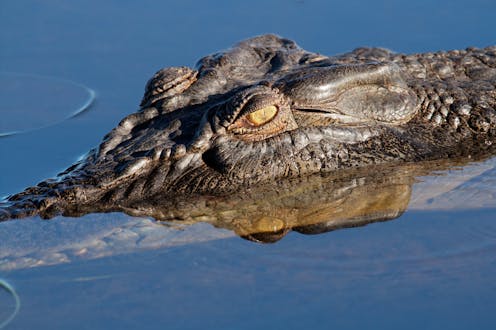
Last week, a 67-year-old man was bitten on the arm by a saltwater crocodile at a waterhole in the Northern Territory’s Top End. Predictably, the incident has prompted debate over whether a crocodile cull is needed.
The incident occurred in Litchfield National Park at Wangi Falls, a popular tourist spot. The man was hospitalised with non-life threatening injuries. Authorities later removed and killed the 2.4 metre crocodile responsible for the attack.
Fatal crocodile attacks in the NT peaked in 2014 when four people died. The last fatal incident in the territory occurred in 2018 when an Indigenous ranger was killed while fishing with her family.
Despite the low number of fatal attacks in recent years, NT Chief Minister Natasha Fyles said last week the territory’s crocodile population had risen dramatically in recent decades and “it’s time for us to consider” if culling should be reintroduced.
This is an over-reaction to a fairly isolated incident. Data suggest the saltwater crocodile population in the NT does not need to be culled and their management does not need changing.
Getting to grips with ‘salties’
Saltwater crocodiles, fondly known in Australia as “salties”, are the largest in the crocodilian order of reptiles and can grow to six metres.
Hundreds of saltwater crocodile attacks on humans are reported globally each year. This, as well as demand for crocodile skins, has resulted in the species being eradicated from much of its former range.
The saltwater crocodile was once found widely across the Indo-Pacific region. Now, there are no saltwater crocodiles in several countries including Cambodia, China, Seychelles, Thailand and Vietnam.
Elsewhere, saltwater crocodile populations declined dramatically last century. In the Northern Territory, crocodile numbers dropped to about 5,000 before a culling ban was introduced in 1971. The species’ numbers have since rebounded to more than 100,000.
In some areas, recovering crocodile populations come into conflict with humans. This can occur when, for example, humans destroy the species’ habitat or their prey becomes scarce due human activity such as overfishing and poaching. This can force the species to relocate, bringing them closer to people.
Saltwater crocodiles have long been known to enter Wangi Falls during the wet season, when the location is closed to the public. In fact, a 3.4 metre crocodile was captured there in January this year.
It’s never 100% safe to swim at locations within the natural range of saltwater crocodiles. However, Wangi Falls is considered reasonably safe for swimming during the dry season (May to October) because park officials survey and remove crocodiles before it opens to the public each year.
So what went wrong in this case? We don’t know for sure. The crocodile in question was relatively small: perhaps it wasn’t spotted during surveys. Or it could have just arrived after surveys were conducted.
The current approach works
Following last week’s crocodile attack, Fyles said culling may be needed, telling the media:
I think it’s time for us to consider: do we need to go back to culling considering the significant increase in the crocodile population, and the impact it’s happening, not just on our tourists and visitors, but also locals?
These comments are surprising. Recent data for the Top End suggests crocodile populations are stabilising. And the rarity of fatal attacks on humans indicates the territory’s crocodile management plan is effective.
The plan involves, among other measures, removing problem crocodiles, raising public awareness around safely co-existing with the animals, and monitoring their impact.
Since 2018, the NT has experienced one fatal saltwater crocodile attack while Queensland has experienced two. That’s despite an average saltwater crocodile density in the territory of 5.3 individuals per kilometre – three times more than in Queensland.
This, coupled with data from outside Australia, suggests the frequency of crocodile attacks depends more on human behaviour and population density than how many crocodiles are in a given area.
In Indonesia, crocodiles killed at least 71 people last year alone. Yet the crocodile population there is likely small and recovering, based on the limited number of surveys conducted.
In the Indonesian province of East Nusa Tenggara, for example, crocodiles killed at least 60 people between 2009 and 2018. Yet surveys suggest their average density is only 0.4 per kilometre. The situation is similar on the island of Sumatra, as well as parts of Malaysia.
Read more: Curious Kids: how did crocodiles survive the asteroid that killed the dinosaurs?
The downsides of culling crocs
Culling saltwater crocodiles isn’t just bad for the species. It can also have negative consequences for humans.
The public could be lulled into a false sense of security and think a location is safe for swimming, even though crocodiles remain.
And seeing saltwater crocodiles in the wild is important to the NT’s economy. Culling them could damage the NT’s reputation as an ecotourism destination.
Lastly, culling dominant male crocodiles can be dangerous. Saltwater crocodiles are the most territorial of all crocodilians. When one is removed, other large crocodiles begin to compete for the newly available territory. This can present a threat to public safety.
The crocodile population in the NT does not need to be culled. Indeed, the territory’s current crocodile management plan is an example of large predator conservation done right.
Read more: What living alongside crocodiles can teach us about coexisting with wildlife
Authors: Brandon Michael Sideleau, PhD student studying human-saltwater crocodile conflict, Charles Darwin University


















