

Modern Australian
The Times

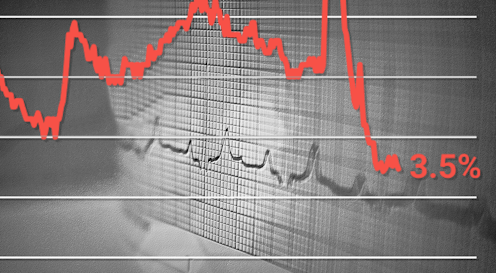
Unemployment is staying low at 3.5%. But for those out of work, here's why it's become harder to get a job

  • Written by Jeff Borland, Professor of Economics, The University of Melbourne
Unemployment is staying low at 3.5%. But for those out of work, here's why it's become harder to get a job

Slower employment growth, faster population growth and a steady rate of unemployment are the main stories from the Bureau of Statistics’ labour force update, released on Thursday.

Employment climbed by 32,600 between May and June, while the population grew 49,900. The rate of unemployment (happily) remains fixed at 3.5 per cent, although to two decimal places, it fell from 3.55% to 3.47%.

This story isn’t new. The waning of the Delta wave of COVID-19 from late 2021 brought a strong recovery in the demand for workers. Even after the immediate bounce-back from lockdowns, employment grew impressively.

Read more: Australia is on the brink of ending interest rate hikes and an economic first – beating inflation without a recession

In the nine months from November 2021, total employment increased by an average of 55,000 per month – double the 20,000 to 30,000 common before COVID.

Thereafter, employment growth has grown more slowly, by an average of 35,600 per month since August 2022.

Population growth has climbed as employment growth has slowed. During the nine months to August 2022, in which major restrictions on immigration remained, it averaged 37,200 per month.

After that time, with those restrictions removed, population growth averaged 50,300 per month.

Who is getting work has been changing

Mid-2022 didn’t just mark a change in the pace of employment growth. It also marked a shift in the sources of employment growth.

Up to August 2022, extra workers had been drawn from unemployment and from new entrants joining the labour force, as well as from population growth.

But since August 2022, employment growth has come almost entirely from population growth. The rates of unemployment and of labour force participation have remained largely constant.

Why unemployment didn’t jump

A combination of slowing job growth and faster population growth ought to have pushed up the unemployment rate. But so far that hasn’t happened.

Having hit a low of 3.5% in August 2022, unemployment has stayed there pretty much the whole time since.

The reason is our record level of job vacancies. Fewer new jobs are being created, but an unusually high number of vacancies is keeping demand for workers high.

New entrants to the labour force have been able to take up those vacancies, rather than becoming unemployed.

Where population growth coming from

The higher rate of population growth is coming from increased immigration, a term that encompasses international students and working holidaymakers.

Net overseas migration (the extent to which arrivals exceed departures) averaged 23,270 per month in the first half of 2022, and then 35,200 in the second half.

A big part of the growth is from the return of international students and working holidaymakers.

Unsurprisingly, the biggest reductions in job vacancies came in the occupations where these temporary visa holders make up the largest shares of the workforce.

Since mid-2022, the vacancy rate for food trades workers has fallen from 4.4% to 3.0%, the largest fall by far of any occupation group.

Vacancy rates for hospitality and food preparation workers have each fallen by about three quarters of a percentage point.

Where to from here

Continued (now modest) growth in new job creation, together with the huge backlog of vacancies, might well allow the rate of unemployment to remain around its current level – even with a high rate of population growth.

Whether that does indeed happen depends on how future growth in new jobs is affected by actions of the Reserve Bank aimed at dampening economic growth.

So far, these actions have slowed the jobs market, but haven’t sent it into a tailspin.

Whether that remains the case will be the story to watch in the coming months.

Authors: Jeff Borland, Professor of Economics, The University of Melbourne

Read more https://theconversation.com/unemployment-is-staying-low-at-3-5-but-for-those-out-of-work-heres-why-its-become-harder-to-get-a-job-209835

Your Baby's First Year: A Local Guide to Feeding, Sleep, and When to Get Extra Support

Ask ten parents in a Brisbane mothers' group how their baby is feeding or sleeping, and expect ten different answers.  Someone's baby sleeps throu...

Kitchen and Laundry Makeover Ideas That Don't Require a Full Renovation

Full kitchen renos are expensive — and most people don't actually need one.  They need the kitchen to stop looking like it's stuck in 2009, or t...

How Technology Is Reshaping the Modern Australian Commercial Kitchen

The commercial kitchen has always been shaped by technology. Refrigeration changed how ingredients could be stored, modern ventilation transformed k...

The Number on a Roller Blind Fabric That Nobody Explains

Somewhere in the fabric book, next to the colour name, there is a percentage. Three per cent. Five per cent. Ten per cent. Nobody explains it, most c...

What’s Trending in Men’s Jewellery This Father’s Day!

Finding a Father’s Day gift that feels personal, stylish and genuinely wearable is not always easy. While socks and novelty mugs have traditionall...

Road Signs: Understanding Their Role in Clear and Effective Signage

Effective signage and display hardware can help businesses communicate information, promote products and organise customer or visitor movement. Road...

Bottle Label Printing: Key Factors to Consider Before Your Next Packaging Run

Effective packaging begins with understanding the product, bottle material, artwork and production requirements when planning bottle label printing. H...

Planning a Long-Distance Move With Interstate Movers Melbourne

Moving between states involves more planning than a typical local relocation. Along with packing and transporting household belongings, you need to...

Understanding the Role of an I/O Controller in Industrial Automation

Modern industrial systems depend on accurate communication between sensors, machines and control systems. An I/O controller can help manage this commu...

How the Right Mining Hose Supports Demanding Operations

Mining environments place considerable demands on equipment used for material transfer, water management and processing. Hoses operating in these co...

Simple Ideas for Making Social Gatherings More Memorable

We have all been to those parties where everyone just stands around the kitchen island, staring at their phones, waiting for someone else to make a mo...

Outdoor Wall Lights: Improving Exterior Lighting Around Your Home

Lighting can influence how a room looks, feels and functions, so the right fitting should be selected according to both appearance and practical req...

Commercial Office Cleaning: Combining Routine Office Cleaning With Melbourne Service

Keeping a workplace clean requires a service that can accommodate everyday tasks as well as the particular needs of the business. Professional comme...

Caravan Sales in Queensland: How to Find the Right Caravan for Sale QLD

Caravan ownership is about more than having somewhere to sleep while travelling. For many Queenslanders, it is one of the best ways to explore regio...

What Sir Walter Buffalo Turf Actually Costs in 2026 (And Why Quotes Vary So Much)

Two quotes landed on a Hills District homeowner's kitchen table last spring for the exact same 80-square-metre backyard. One said $12 a metre. The o...

Nearly 1,300 NSW Hospital Beds Are Occupied By People Who Are Ready To Go Home

1,276 people in NSW hospitals have been medically cleared for discharge but remain in hospital because they're still waiting for NDIS or aged care sup...

National Survey Launched to Measure Operational Impacts of Federal NDIS Policy Reforms

The effects of recent NDIS reforms are beginning to move beyond policy papers and into day to day service delivery. A new national survey is asking ...

Beyond the Nappy Cake: Baby Shower Gifts That Get Used

What new Australian parents unwrap, keep, and quietly thank you for months later. Six weeks after my daughter was born, I did an audit of the baby sh...















