

Virginia Woolf's copy of her first novel was found in a University of Sydney library. What do her newly digitised notes reveal?
- Written by Mark Byron, Professor, University of Sydney
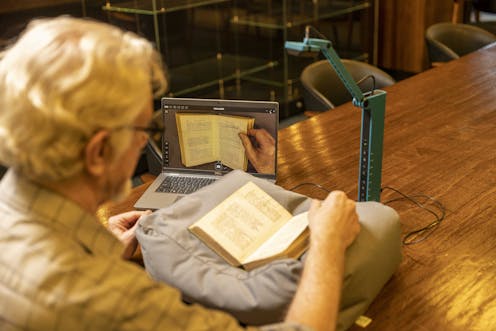
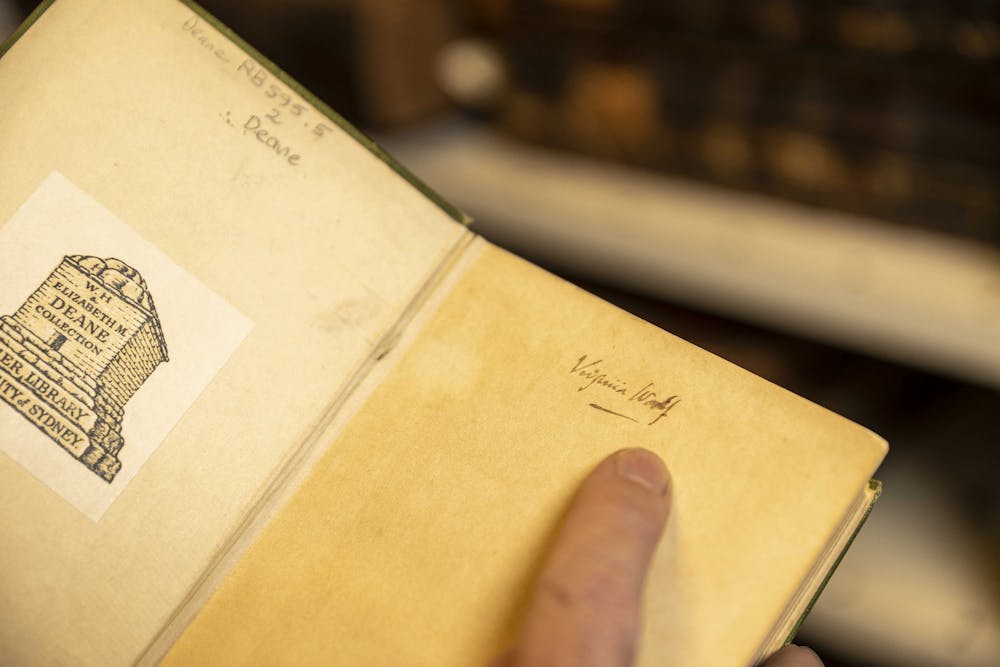
One of just two copies of Virginia Woolf’s first novel, The Voyage Out (1915), annotated with her handwriting and preparations to revise it for a US edition, was recently rediscovered in the Fisher Library Rare Books Collection at the University of Sydney.
Purchased in the late 1970s, it had been misfiled with the science books in the Rare Books collection. Simon Cooper, a metadata services officer, found it in 2021 and immediately understood the value of his discovery.
The Sydney copy, which is the only one available for the public to view, has now been digitised. It’s available online – allowing scholars and readers to study and consider Woolf’s editorial interventions.
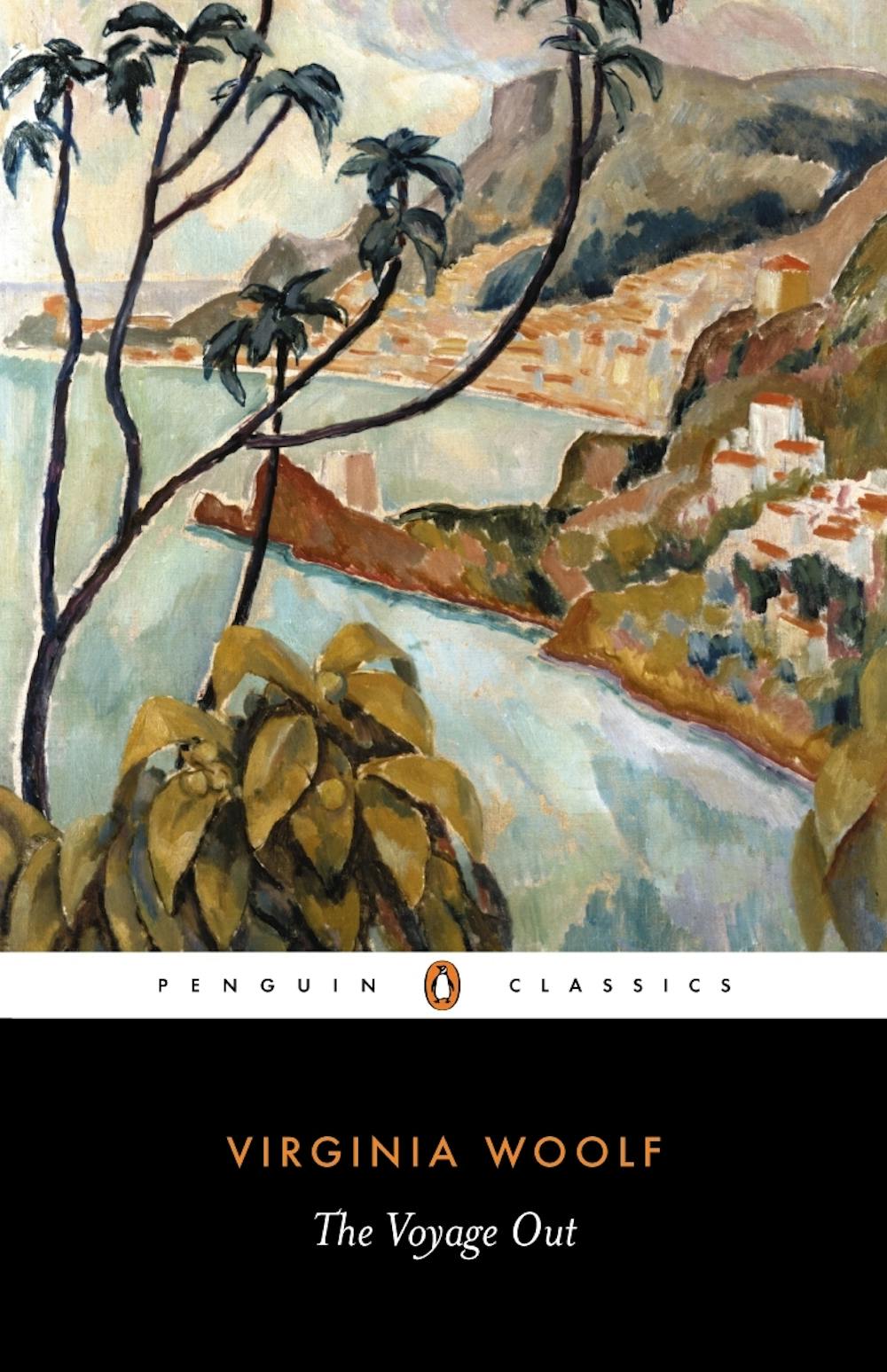
The Voyage Out follows Rachel Vinrace and a mismatched collection of characters embarking on her father’s ship to South America. Woolf’s story grapples with self-discovery and satirises Edwardian life.
It almost finished her writing career. She struggled through years of drafts, eventually abandoning the first version in 1912: it was titled Melymbrosia, named after the food of the Greek gods. Woolf’s ideas on colonialism, women’s suffrage and gender relations were considered too dangerous for a first-time novelist.
Over the next three years, she composed the (retitled) novel we have today, published by her half-brother Gerald Duckworth in London in 1915. At this pivotal moment, she began her diary and suffered a significant mental breakdown, losing the rest of the year to illness.
In preparation for the novel’s first US edition, published by George H. Doran in New York in 1920, Woolf carried out a series of revisions to her text. Two copies of the first UK edition of the novel contain the evidence of this process, with Woolf’s handwritten annotations and typed page fragments pasted into each book.
Read more: Guide to the classics: A Room of One's Own, Virginia Woolf's feminist call to arms
Why revise?
What motivated Woolf to revise her text? She made revisions in the aftermath of her breakdown, and after her literary career was revived with her second novel, Night and Day, published in 1919.
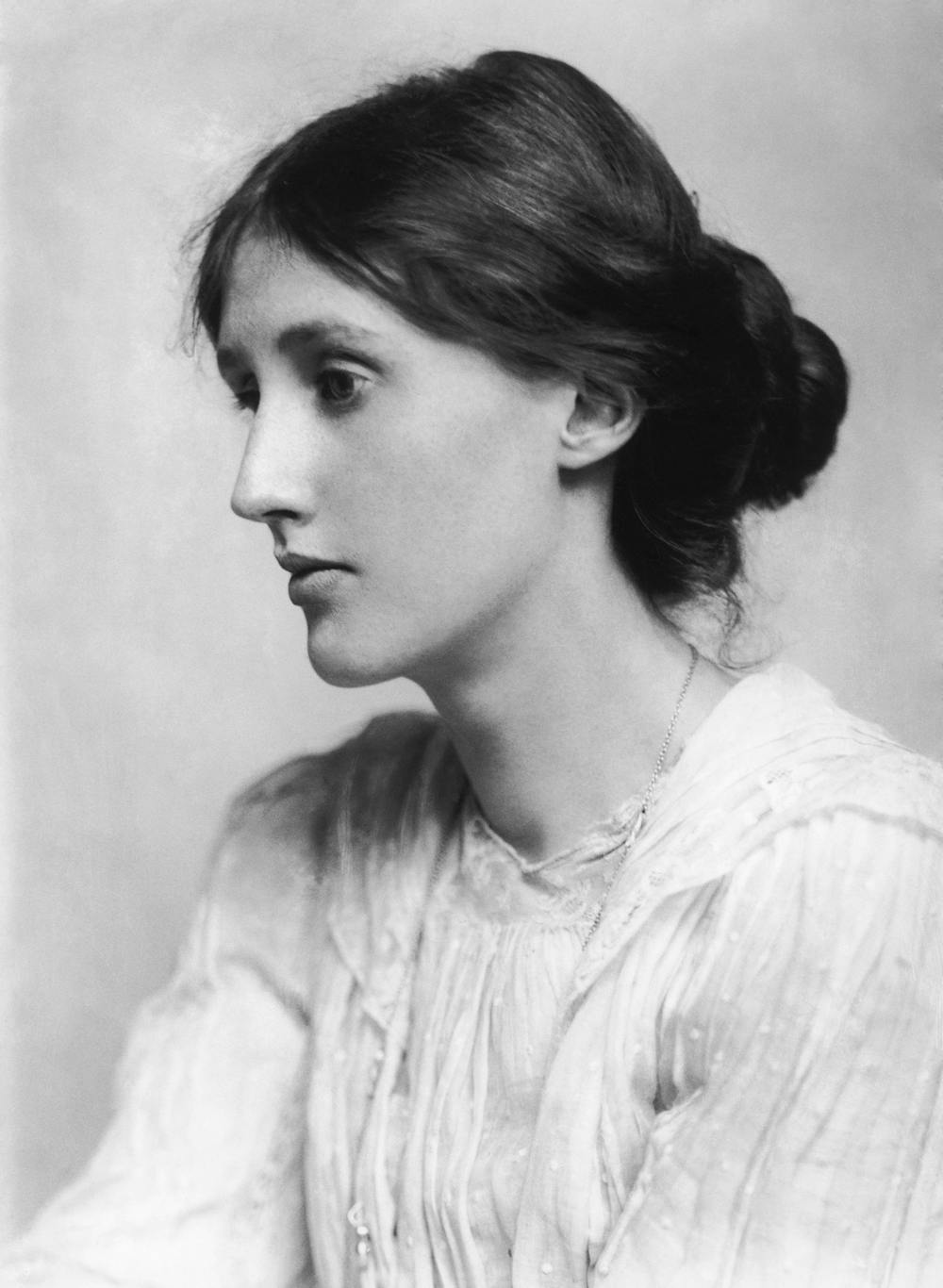 Virginia Woolf(Picture: George Charles Beresford)/Wikimedia Commons
Scholars have suggested she wished to place some distance between her own psychological stresses and the anguish of her primary character, Rachel Vinrace. Both Woolf and her chief protagonist had domineering father figures, had lost their mothers at a relatively young age, and were denied a formal education – instead being schooled at home. Laying out her character’s mental life so starkly caused Woolf some discomfort. A new edition may have provided an opportunity to reconsider.
This is a plausible theory. But does the evidence in Woolf’s corrections bear it out? There are two main places in the text where the majority of changes are indicated: both are pivotal moments in the narrative.
The first set of changes occurs in Chapter XVI, where the conversation between Vinrace and Terence Hewet – the pair occupying the romantic plotline of the novel – is altered to reduce access to Rachel’s inner thoughts. Entire paragraphs are replaced by typed text pasted directly onto the page, where the narrator studies Rachel without the guarantee of understanding her.
This has the effect of diluting some uncomfortable autobiographical elements in the text, but also marks a significant shift in the way narration accesses the minds of characters.
The narrator is bounded by the limits of character itself: the depths of Rachel’s subjectivity are unknown even to her. This bears the mark of modern psychology and Freud’s theory of the unconscious, in the years before and during the composition of the novel.
Read more:
Sophie Cunningham's pandemic novel admits literature can't save us – but treasures it for trying
A modernist revolution
This innovation signals a profound shift in modernist fiction, which began in the late 19th and early 20th centuries and is characterised by a self-conscious break with traditional ways of writing.
The unknowability of Woolf’s characters begins with the dark regions of the mind. No longer in the realm of realism, where thoughts and actions are knowable (and often transmitted by an omniscient narrator), instead the narrator provides a portrait of the complex modern person, who responds to the world in ways not fully accountable by reason.
Virginia Woolf(Picture: George Charles Beresford)/Wikimedia Commons
Scholars have suggested she wished to place some distance between her own psychological stresses and the anguish of her primary character, Rachel Vinrace. Both Woolf and her chief protagonist had domineering father figures, had lost their mothers at a relatively young age, and were denied a formal education – instead being schooled at home. Laying out her character’s mental life so starkly caused Woolf some discomfort. A new edition may have provided an opportunity to reconsider.
This is a plausible theory. But does the evidence in Woolf’s corrections bear it out? There are two main places in the text where the majority of changes are indicated: both are pivotal moments in the narrative.
The first set of changes occurs in Chapter XVI, where the conversation between Vinrace and Terence Hewet – the pair occupying the romantic plotline of the novel – is altered to reduce access to Rachel’s inner thoughts. Entire paragraphs are replaced by typed text pasted directly onto the page, where the narrator studies Rachel without the guarantee of understanding her.
This has the effect of diluting some uncomfortable autobiographical elements in the text, but also marks a significant shift in the way narration accesses the minds of characters.
The narrator is bounded by the limits of character itself: the depths of Rachel’s subjectivity are unknown even to her. This bears the mark of modern psychology and Freud’s theory of the unconscious, in the years before and during the composition of the novel.
Read more:
Sophie Cunningham's pandemic novel admits literature can't save us – but treasures it for trying
A modernist revolution
This innovation signals a profound shift in modernist fiction, which began in the late 19th and early 20th centuries and is characterised by a self-conscious break with traditional ways of writing.
The unknowability of Woolf’s characters begins with the dark regions of the mind. No longer in the realm of realism, where thoughts and actions are knowable (and often transmitted by an omniscient narrator), instead the narrator provides a portrait of the complex modern person, who responds to the world in ways not fully accountable by reason.
 The other significant set of revisions in the Sydney text arise in Chapter XXV, in which Rachel and Terence attempt to navigate the future of their nascent relationship – which also marks Rachel’s descent into fever and her decline, ending in death.
Long passages are marked for deletion (although none were actually deleted in the first US edition). They are largely concerned with Rachel’s fevered consciousness and Terence’s attitudes towards romantic love and its effects on an artistic life.
Woolf again may have wished to put distance between the narrator and the intimate thoughts of her characters, invoking instead a space of ambiguity, where words and gestures are to be interpreted by readers rather than analysed in full light by a knowing narrative consciousness.
Woolf’s first novel straddles the conventions of realism inherited from the 19th century and the new, experimental fiction of the 20th. The Sydney text tells an important part of this story.
It shines a light on Woolf’s developing technique and its evolution into the free indirect style for which she became famous in later novels such as Mrs Dalloway, To the Lighthouse and The Waves.
Woolf was at the centre of the revolution in the novel form during the time of modernism. The evidence is there in her annotated copy of The Voyage Out.
Authors: Mark Byron, Professor, University of Sydney
The other significant set of revisions in the Sydney text arise in Chapter XXV, in which Rachel and Terence attempt to navigate the future of their nascent relationship – which also marks Rachel’s descent into fever and her decline, ending in death.
Long passages are marked for deletion (although none were actually deleted in the first US edition). They are largely concerned with Rachel’s fevered consciousness and Terence’s attitudes towards romantic love and its effects on an artistic life.
Woolf again may have wished to put distance between the narrator and the intimate thoughts of her characters, invoking instead a space of ambiguity, where words and gestures are to be interpreted by readers rather than analysed in full light by a knowing narrative consciousness.
Woolf’s first novel straddles the conventions of realism inherited from the 19th century and the new, experimental fiction of the 20th. The Sydney text tells an important part of this story.
It shines a light on Woolf’s developing technique and its evolution into the free indirect style for which she became famous in later novels such as Mrs Dalloway, To the Lighthouse and The Waves.
Woolf was at the centre of the revolution in the novel form during the time of modernism. The evidence is there in her annotated copy of The Voyage Out.
Authors: Mark Byron, Professor, University of Sydney 
















