

how visa conditions prevent survivors of modern slavery from getting help
- Written by Nerida Chazal, Lecturer in Criminal Justice and Sociology, University of South Australia
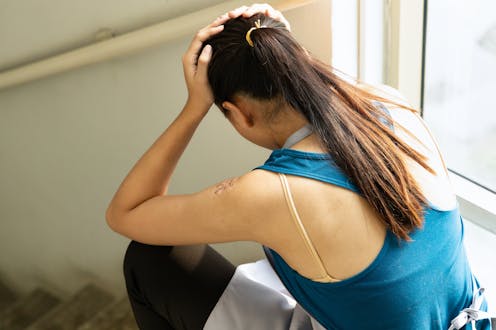
Modern slavery is back in the spotlight, after fresh media reports of migrants allegedly being brought to Australia as students but being forced to work long hours under harsh conditions with minimal pay.
In Australia, more than half of modern slavery survivors are migrants.
Across our research on modern slavery, survivors (and the caseworkers and service providers who support them) consistently say issues with Australia’s visa system prevent people from getting the help they need.
In other words, the current design of the system helps replicate and reproduce the shameful inequalities at the heart of modern slavery in Australia.
The system increases risk of exploitation
Australia’s temporary visa system promotes insecurity for migrants that can cause or contribute to exploitation.
For example, perpetrators can use a person’s insecure visa status to coerce victims to work for low pay or put up with poor conditions.
One survivor told us:
You need to have a visa to be in Australia, so you are going to do whatever is required.
In response to years of advocacy from migrant-led organisations, researchers and human rights experts, the Albanese government recently introduced new measures to protect migrant workers at risk of exploitation.
This is a welcome first step. But our research has found Australia’s visa system continues to harm migrants once they have experienced exploitation.
How visas make it hard to seek help
Visa fears can prevent people from seeking help. One survivor told us:
Sometimes you’re afraid to report, because you might be going to lose the job. You might be going to lose your visa and everything you know.
This situation is exacerbated by requirements for survivors of modern slavery to report to the Australian Federal Police (AFP) to access key services.
One caseworker told us:
People that have faced any type of exploitation may fear of authority and will be reluctant to go to the police to initiate any type of support, or they might be having a lot of fear in terms of the consequences of an insecure or unknown immigration status.
Australia’s modern slavery visa framework
The federal government’s human trafficking visa framework enables migrants assessed by the AFP as victims of slavery to get a visa.
Under this framework, only those willing to give evidence against their alleged perpetrator(s) are granted long-term visas.
However, even these visas are still “temporary”. Survivors remain on them for the duration of a criminal justice process, which can last for years.
More than half the survivors formally identified by the AFP are on temporary visas.
In other words, survivors often remain burdened by the insecurity that comes with temporary visas long after they’ve sought help.
Survivors locked out of mainstream services
Some temporary visa conditions can limit survivors’ access to support services such as Medicare and Centrelink.
One caseworker explained:
[Your] visa in Australia determines access to services. If it’s health, if it’s education, anything, it determines what happens next. The outcomes are not as good for people on temporary visas where they cannot access those payments.
Survivors described being left destitute, desperate and in a state of limbo without any access to services.
Temporary visa status can also make it impossible for survivors to find suitable and secure housing.
The combination of insecure visa status and insecure housing can prevent many survivors from regaining their independence and moving forward with their lives.
Risks of further harm
For survivors on temporary visas, not being able to access vital supports means many face risks of re-exploitation.
Survivors with children are particularly susceptible to experiencing further harm when temporary visas prevent them from supporting their families.
Caseworkers we interviewed told us survivors may
end up thinking, ‘well, I’m just going to have to try and get money anyway anyhow’.
Another caseworker said:
I’ve seen clients engaging with high-risk industries like sex work or fruit picking – where their work rights are not being met – in order to try and send something back to their children.
The human impact
The experience of Grace*, who participated in our research, shows how these elements conspire to produce exploitative conditions, hinder help-seeking and hamper recovery from slavery.
Grace met her former partner while in Australia and applied for a temporary partner visa when her existing visa expired. She was granted a bridging visa while her application was being processed.
Shortly after giving birth to their child, Grace and her child were trafficked out of Australia, allegedly by her partner.
Grace’s bridging visa was immediately cancelled, leaving her unable to return to Australia to support her child, who is an Australian citizen.
While overseas, Grace tried many times to seek support from Australian authorities but was constantly hindered by her lack of visa or residency.
When her case eventually came to the attention of the AFP, they facilitated her return to Australia, and she was granted a temporary visa through the government’s human trafficking visa framework.
Throughout her recovery from exploitation, Grace has constantly faced barriers to supporting herself and her child due to the temporary status of this visa, saying:
With the bridging visa, you can stay, you can work, but you can’t do much around it. You can’t go to school. I want to study, but I can’t afford it. And I’m really stuck with that. Even when I look for job, there’s some jobs that required to be a permanent resident or citizen. Every job I applied for asked about residency status. I felt uneasy to explain my case and the reason why I had that visa. Same issue regarding applying for rental. I can’t get over it. So, it’s just hard for the visa.
Protecting the system rather than the people
As modern slavery survivor and advocate Sophie Otiende puts it:
Care cannot exist when we focus on protecting the system rather than the people at all costs.
Australia’s visa system is entrenched within the problem of modern slavery, and future changes to it must refocus on caring for those who are most vulnerable to exploitation.
Migrant workers need further protections from exploitation caused by temporary visas, such as those recently proposed by government.
To support their recovery from exploitation, migrant survivors of modern slavery need:
guaranteed access to mainstream supports
swifter access to permanent visas and
clearer pathways to residency.
*Names have been changed to protect identities. If you or someone you know needs help, contact the Australian Red Cross Support for Trafficked People Program on 03 9345 1800 or email national_stpp@redcross.org.au
Authors: Nerida Chazal, Lecturer in Criminal Justice and Sociology, University of South Australia

















