

RSV is everywhere right now. What parents need to know about respiratory syncytial virus
- Written by Jane Tuckerman, Senior Research Officer, Murdoch Children's Research Institute
This winter, we’re having to get our heads around another respiratory virus – RSV.
It’s less well known than COVID or flu, but it’s also responsible for unplanned visits to the GP or emergency department, and days off school, childcare and work.
It’s the most common cause of hospitalisation in infants. Most children have at least one RSV infection by the age of three years and yet, many Australians have not heard of RSV or know little about this potentially serious winter virus.
Read more: Monday's medical myth: you can catch a cold by getting cold
What is RSV?
RSV stands for respiratory syncytial (pronounced sin-CITY-al) virus. This common respiratory virus usually causes a mild cold with symptoms such as a fever, runny nose, coughing, decreased appetite and a wheeze.
Adults can be infected infected with RSV but usually recover in a few days.
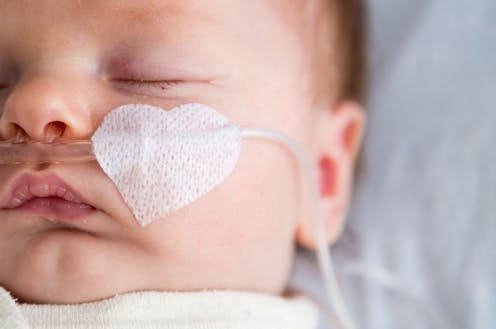
But in young babies RSV can cause more severe respiratory illnesses such as pneumonia or bronchiolitis. These cause babies to breathe rapidly, stop breathing for a few seconds (apnoeas) and/or feed poorly. RSV in infancy can also potentially affect a child’s long-term health, increasing their risk of asthma, wheezing and allergies.
In Australia, a wave of RSV infections typically begins in late autumn (April-May) and peaks in June-July. Cases are starting to decline in Australia now.
Because health staff have to report cases of RSV, we can keep track of known cases. But we suspect most go unreported as they are mild and/or doctors don’t always test for the virus.
Who’s most at risk?
Both young and old people are most at risk of severe disease.
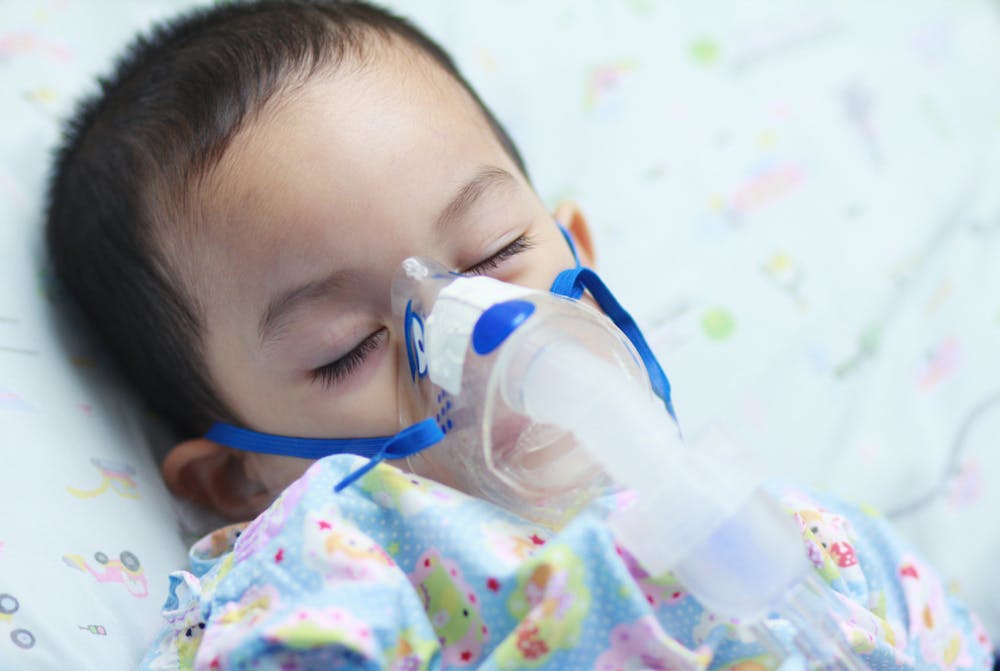
For children, those most at risk of severe disease include babies under two months old, premature infants, those with other medical conditions, or ones infected with another virus at the same time. First Nations children are three to six times more likely to be hospitalised with bronchiolitis caused by RSV than non-First Nations children.
Otherwise healthy children under 12 months old (usually under six months old) are the ones most often admitted to hospital. Of children admitted to hospital, about a quarter (26%) will be admitted to intensive care.
Why are we seeing so many cases now?
RSV is spread via coughing and sneezing so it’s easy to see how the virus can spread among children inside during winter months.
But measures earlier in the COVID pandemic limited the spread of RSV.
There was very little RSV circulating in 2020 during the harshest lockdowns. However, in New South Wales and Western Australia (in late 2020) and in Victoria (early 2021) there was an out-of-season re-emergence of RSV, overwhelming hospitals and health-care facilities.
In 2022, RSV settled back into the usual winter peak. However, many states are experiencing a winter surge in cases and hospitalisations attributed to it this year – bigger than before the pandemic.
This may relate to new reporting requirements for RSV and more testing for it.
However, reduced immunity in young infants due to lower maternal and infant exposure may have contributed to the record number of cases.
Is there a vaccine?
There are no vaccines to protect against RSV in Australia.
Australia’s only currently available preventative medicine is palivizumab, which is a long-acting monoclonal antibody given monthly during the RSV season. Due to its cost, it is reserved for infants at highest risk for severe RSV infection and is usually given in hospital.
However, several new preventative agents are in the pipeline.
In May this year, the US Food and Drug Administration approved the RSV vaccine Arexvy for people aged 60 and over. It is being considered for use in Australia.
Results from clinical trials for RSV vaccines given to pregnant women to protect their baby for the first six months are promising. The maternal Pfizer vaccine has demonstrated greater than 80% effectiveness against severe lower respiratory tract illness in their infants for the 90 days after birth.
However, safety data is being closely examined, including a potential risk of premature birth.
The long-acting monoclonal antibody nirsevimab, (given as a single injection at the beginning of the RSV season) has regulatory approval in Europe and the US. It is currently being considered for Australian children.
How can I protect my children in the meantime?
Parents can minimise the risk of RSV by using many of the measures we’ve been using during the COVID pandemic. Encourage children to cover their mouths and noses when coughing or sneezing, and regularly wash their hands.
Ensuring kids stay away from school, childcare or other children when sick helps prevent the spread of many viruses, including RSV.
Viral symptoms to watch out for include difficulty feeding, cough, irritability and/or rapid breathing. If parents notice these signs or are worried about their child they should seek urgent medical assessment and not delay.
Authors: Jane Tuckerman, Senior Research Officer, Murdoch Children's Research Institute

















