

how Aboriginal musicians enhanced and maintained community in 20th century Australia
- Written by Laura Case, PhD Candidate, Sydney Conservatorium of Music, University of Sydney
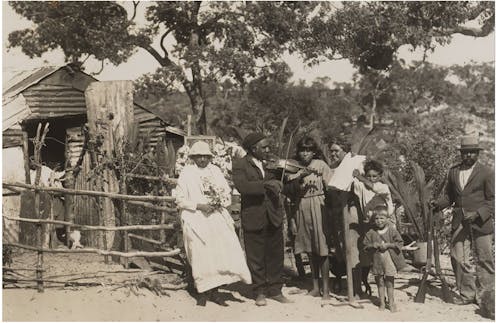
Aboriginal and Torres Strait Islander readers are advised this article contains names and images of deceased people.
The European violin was initially an imposition on Indigenous culture. But Aboriginal engagement with the violin cannot be exclusively seen as a means of cultural loss.
To only report the brutality and destruction of the British empire in Australia is to miss seeing how Indigenous people engaged, influenced, rejected and survived the forces of empire.
As my new research shows, Indigenous violin playing throughout 20th century Australia saw Aboriginal people adapting the European violin to fit within ongoing cultural practices.
As an Aboriginal violinist, I have always been fascinated by the way Western instruments have been adapted to become an expression of culture and Indigenous identity.
By studying the ways Aboriginal people of this era played the violin, we can better understand how Aboriginal people have responded to interventions in their lives with varying degrees of accommodation and resistance.
Cultural continuation
As colonial governments made more concerted efforts to “civilise” Aboriginal people in 20th century Australia, many were segregated from society on missions or reserves.
Missionaries taught European activities and regularly forbade Aboriginal people from practising traditional customs. Western music was often taught to Aboriginal people as a means of demonstrating civility and as preparation for assimilation into white Australian society.
One of the first missions to explicitly use the violin in attempts to “civilise” Aboriginal people was on the New Norcia Mission, north of Perth, in operation from 1848 until 1974.
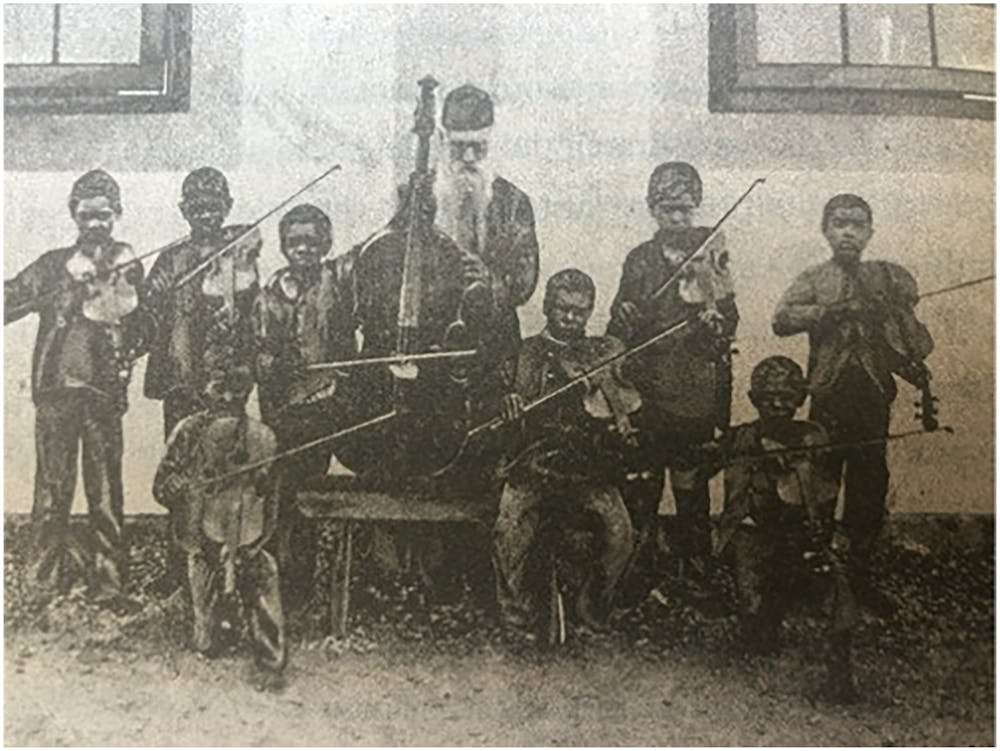
Aboriginal people continued to play the violin even when not prescribed. This does not mean the “civilising” mission was a success. Aboriginal people used music in the creation and preservation of individual, cultural and collective identities.
The violin was used on their own terms.
Peter Jetta was a Nyungar man born around 1872 who lived on the New Norcia Mission. Jetta used the violin as a hybrid expression of his own traditional culture.
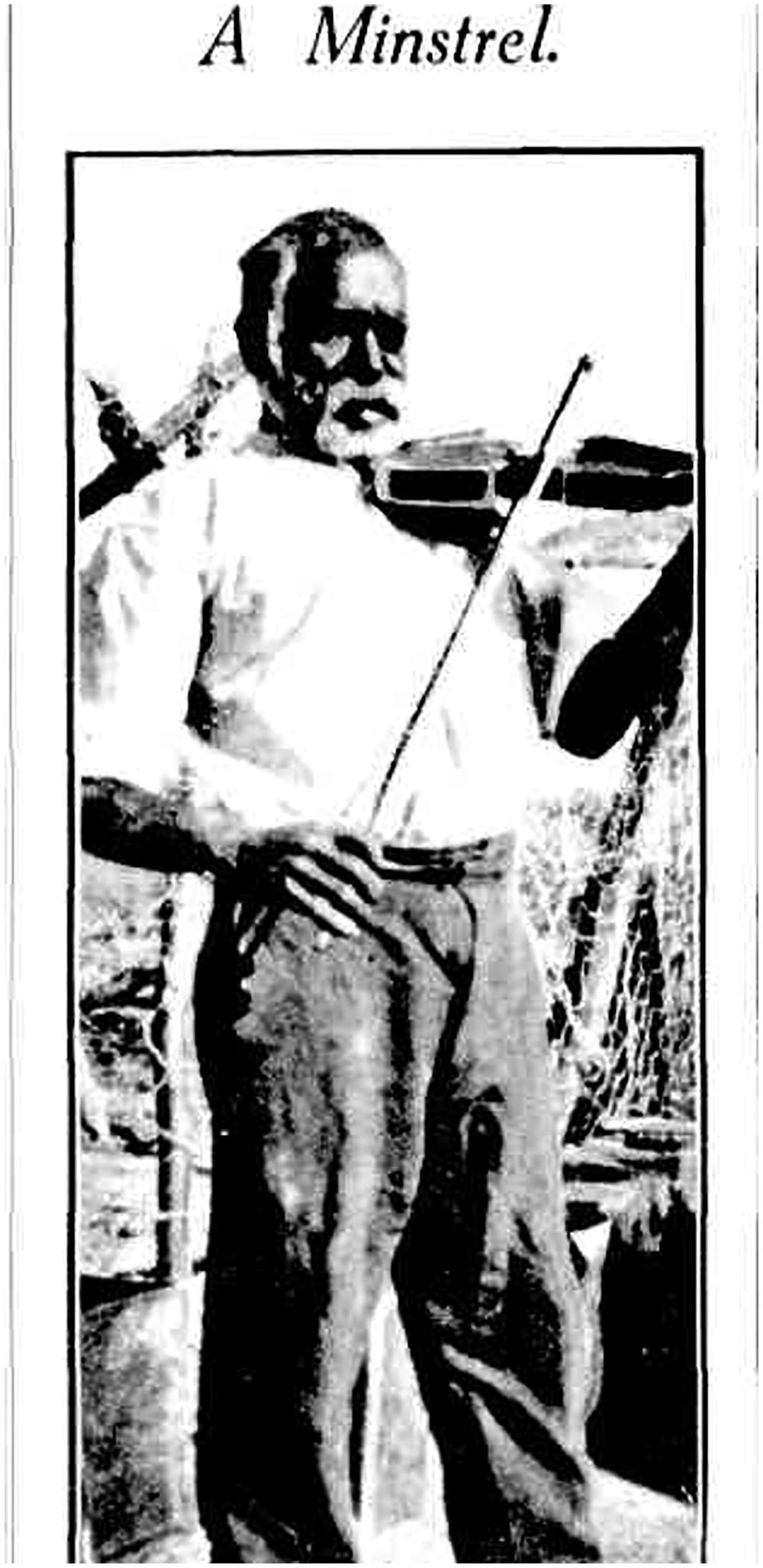 Peter Jetta, photographed for the Western Mail, 1933.
Trove
Peter Jetta, photographed for the Western Mail, 1933.
Trove
As historian Anna Haebich writes, Jetta played the violin for local dances, weddings and Nyungar-only campfire gatherings in the bush.
“Old and new songs and dances mingled together reviving flagging spirits with the healing joy of being together as they had for millennia,” she says.
With this fusion of music, Jetta used the violin to enhance and maintain a sense of community.
The need for community would have been particularly acute on missions where many aspects of traditional life had been removed. Community and connection is an intrinsic element of Indigenous culture and its continuity.
Read more: An Ode To My Grandmother: remaking the past using oral histories, theatre and music
An Aboriginal jazz band
In 1933, the Singleton Argus published a story on the wedding of Robert Silva and Mildred Bartholomew. The couple were living at Yellow Rock, a reserve at the base of the Blue Mountains near Sydney.
Music was provided by an Aboriginal jazz band playing locally made violins, banjos, steel guitars and gum leaves.
This couple walking down the aisle as these musicians played the Wedding March provides a rich evocation of the way western instruments were incorporated into Aboriginal music and events on their own terms.
Violins at a corroboree
An article from the Northern Champion in 1934 recounts a concert and corroboree that occurred in Purfleet, New South Wales, for the local “townspeople”. We can assume many in the audience were white.
The first part of the program was devoted to songs and native dances, followed by a corroboree which illustrated elements of native lore. A gumleaf band and orchestra concluded the program. Each instrument was homemade and included single-string fiddles, violins and ukuleles made from tea chests.
These musicians combined their familiar traditions and cultures with European instruments. They were not only keeping cultural practices alive and carrying traditional knowledge forward, but also educating the broader population.
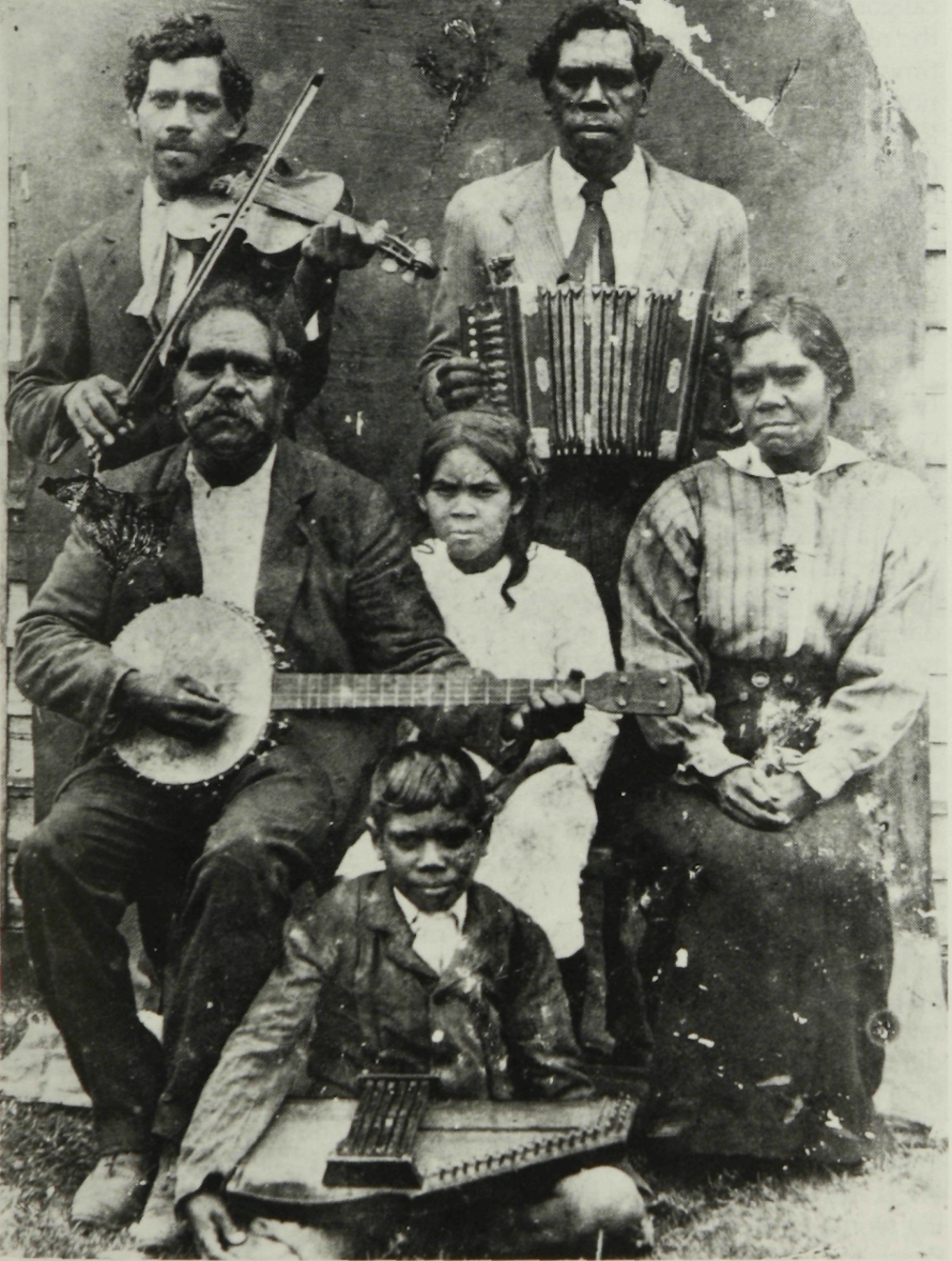 Band from Purfleet, NSW, about 1909. Bert Marr, violin; Fred Dumas , accordion; Bob Bungie, Banjo; Minnie and Hazel Dungie, vocals; Harry Dumas , auto-harp.
Australian Aboriginal Studies
Band from Purfleet, NSW, about 1909. Bert Marr, violin; Fred Dumas , accordion; Bob Bungie, Banjo; Minnie and Hazel Dungie, vocals; Harry Dumas , auto-harp.
Australian Aboriginal Studies
While some performances by Aboriginal people were organised to protest the repressive governmental policies of 20th century Australia, other performances were organised as a willingness to share cultural diversity to both educate and engage non-Indigenous audiences.
These performances acted as a channel for cultural continuation within changing social and political agendas.
Indigenous players today
These historical violinists are the predecessors of creative and innovative Indigenous string players who enrich our contemporary cultural life today.
Noongar violist, composer and conductor Aaron Wyatt made history in 2022 as the first Indigenous conductor of a state orchestra.
Wyatt’s compositions draw on the tone colour of Western string instruments and Didgeridoo to reflect the beauty of Australian landscapes and convey an Indigenous connection to Country.
Ngiyampaa, Yuin, Bandjalang and Gumbangirr violinist Eric Avery creates starkly original pieces for voice and violin that evoke a powerful connection to his ancestors, culture and identity.
Both Wyatt and Avery exceed and surpass the archetype of classical string playing to create immensely original and modern compositions.
Read more: A Tasmanian Requiem is a musical reckoning, and a pathway to reconciliation
Authors: Laura Case, PhD Candidate, Sydney Conservatorium of Music, University of Sydney

















