

What happens in our body when we encounter and fight off a virus like the flu, SARS-CoV-2 or RSV?
- Written by Lara Herrero, Research Leader in Virology and Infectious Disease, Griffith University
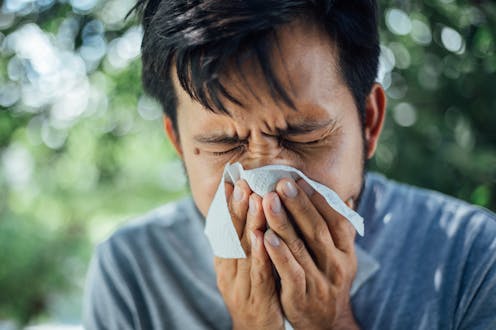
Respiratory viruses like influenza virus (flu), SARS-CoV-2 (which causes COVID) and respiratory syncytial virus (RSV) can make us sick by infecting our respiratory system, including the nose, upper airways and lungs.
They spread from person to person through respiratory droplets when someone coughs, sneezes, or talks and can cause death in serious cases.
But what happens in our body when we first encounter these viruses? Our immune system uses a number of strategies to fight off viral infections. Let’s look at how it does this.
First line of defence
When we encounter respiratory viruses, the first line of defence is the physical and chemical barriers in our nose, upper airways, and lungs. Barriers like the mucus lining and hair-like structures on the surface of cells, work together to trap and remove viruses before they can reach deeper into our respiratory system.
Our defence also includes our behaviours such as coughing or sneezing. When we blow our nose, the mucus, viruses, and any other pathogens that are caught within it are expelled.
But sometimes, viruses manage to evade these initial barriers and sneak into our respiratory system. This activates the cells of our innate immune system.
Patrolling for potential invaders
While our acquired immune system develops over time, our innate immune system is present at birth. It generates “non-specific” immunity by identifying what’s foreign. The cells of innate immunity act like a patrol system, searching for any invaders. These innate cells patrol almost every part of our body, from our skin to our nose, lungs and even internal organs.
Our respiratory system has different type of innate cells such – as macrophages, neutrophils and natural killer cells – which patrol in our body looking for intruders. If they recognise anything foreign, in this case a virus, they will initiate an attack response.
Each cell type plays a slightly different role. Macrophages, for example, will not only engulf and digest viruses (phagocytosis) but also release a cocktail of different molecules (cytokines) that will warn and recruit other cells to fight against the danger.
Read more: Explainer: how does the immune system learn?
In the meantime, natural killer cells, aptly named, attack infected cells, and stop viruses from multiplying and invading our body further.
Natural killer cells also promote inflammation, a crucial part of the immune response. It helps to recruit more immune cells to the site of infection, enhances blood flow, and increases the permeability of blood vessels, allowing immune cells to reach the infected tissues. At this stage, our immune system is fighting a war against viruses and the result can cause inflammation, fevers, coughs and congestion.
Launching a specific attack
As the innate immune response begins, another branch of the immune system called the adaptive immune system is activated.
The adaptive immune system is more specific than the innate immune system, and it decides on the correct tools and strategy to fight off the viral invaders. This system plays a vital role in eliminating the virus and providing long-term protection against future infections.
Specialised cells called T cells and B cells are key players in acquired immunity.
T cells (specifically, helper T cells and cytotoxic T cells) recognise viral proteins on the surface of infected cells:
B cells produce antibodies, which are proteins that can bind to viruses, neutralise them, and mark them for destruction by other immune cells.
B cells are a critical part of memory in our immune system. They will remember what happened and won’t forget for years. When the same virus attacks again, B cells will be ready to fight it off and will neutralise it faster and better.
Thanks to the adaptive immune system, vaccines for respiratory viruses such as the COVID mRNA vaccine keep us protected from being sick or severely ill. However, if the same virus became mutated, our immune system will act as if it was a new virus and will have to fight in a war again.
Neutralising the threat
As the immune response progresses, the combined efforts of the innate and adaptive immune systems helps control the virus. Infected cells are cleared, and the virus is neutralised and eliminated from the body.
As the infection subsides, symptoms gradually improve, and we begin to feel better and to recover.
But recovery varies depending on the specific virus and us as individuals. Some respiratory viruses, like rhinoviruses which cause the common cold, may cause relatively mild symptoms and a quick recovery. Others, like the flu, SARS-CoV-2 or severe cases of RSV, may lead to more severe symptoms and a longer recovery time.
Some viruses are very strong and too fast sometimes so that our immune system does not have the time to develop a proper immune response to fight them off.
Authors: Lara Herrero, Research Leader in Virology and Infectious Disease, Griffith University

















