

Modern Australian
The Times

who were they and what did they do?

  • Written by Alice Neikirk, Lecturer, Criminology, University of Newcastle
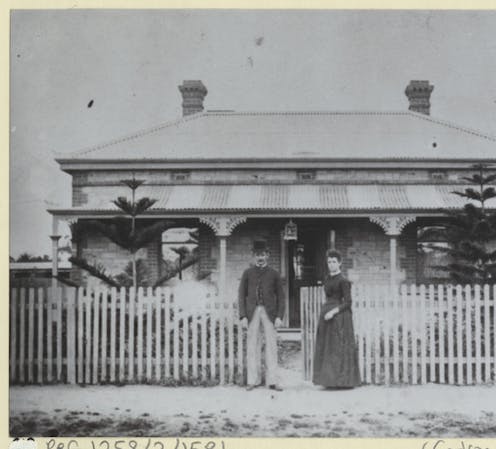
who were they and what did they do?

This year marks a significant milestone for women in policing: the 125th anniversary of the first official recognition of a police matron in Australia.

However, women worked in this role for at least 50 years before receiving official recognition.

Known as “police matrons”, these women opened the door for other women to move into the police force as officers, yet their role is still unrecognised or dismissed as an extension of her husband’s policing duties.

While many Australians will have never heard of them, they were trailblazers for women in law enforcement.

Read more: Hidden women of history: Kate Cocks, the pioneering policewoman who fought crime and ran a home for babies – but was no saint

The female touch in policing

During the Victorian era, it was considered inappropriate for men to touch a woman who was not their wife or an immediate family member. This made men policing women (at least of certain social classes) difficult, particularly if they needed to search a female suspect. To get around this, police began to call on women to search arrestees for them.

Initially, these might have been whoever was nearby – a woman living near the police station, for example. But quickly it was recognised that a “female touch” was also helpful for comforting lost children, talking to female victims of crime, and occasionally soothing an unruly male arrestee. Neighbourhood women were not viewed as entirely suited for these more complex roles, but the wives of police officers were.

In Australia, the United States and the United Kingdom, early police stations had both temporary holding cells (a lock-up) and a residence for a police officer. The officer living on site was frequently married – these women became police matrons.

Police matrons in the Victorian era searched female offenders, were responsible for lost or arrested children, kept watch over mentally unwell inmates, and occasionally allowed families facing violence at home to stay in the station.

They also performed tasks we would not generally associate with the work of a police officer. They cleaned and maintained the cells, mended clothes, and hosted clothing drives for the poor. The police stations sometimes doubled as neighbourhood medical centres. These were all tasks that fell to the police matron. They fit within assumptions of the period regarding the natural, nurturing role of women.

Discrimination leading to innovation Because these tasks were viewed as “naturally” women’s work, questions regarding compensation were skirted. For decades, these were not formal appointments. The matrons were not sworn in, they did not have access to a police pension, and they did not have any authority over male inmates (or male officers). A few received a modest stipend based on the number of searches they conducted or if they performed an extended psychiatric watch. These matrons would be on-call 24 hours a day, and diaries kept by early matrons show the long hours they kept. Yet their activities were viewed as an extension of their husband’s role, not requiring separate pay. These women did not go on patrol or have powers to arrest. But there is evidence that police matrons performed tasks that align with current approaches to policing. For example, a key role of male police in the early Victorian era was to prevent crime by being out in the community: an officer’s presence alone would often deter offending. Police matrons rarely worked outside of the station, but they did get to know the needs of their community and tried to identify causes of crime. They became advocates, trying to address what they saw as the root causes of crime: excessive consumption of alcohol leading to the violent breakdown of families. Matrons advocated for increased regulation of alcohol and for stations to provide sanctuary for domestic violence victims.
Police matrons paved the way for women to become police officers, and eventually achieve the highest ranks. Lukas Coch/AAP

Today, these efforts would be understood as forms of problem-orientated policing: identifying a problem in a community and working with the community to devise solutions for the underlying causes of crime. We cannot go as far as claiming that police matrons started the movement towards problem-orientated policing. But we can recognise that they predated today’s “best practice in policing” model by roughly 150 years.

Read more: Women have made many inroads in policing, but barriers remain to achieving gender equity

Though we know police matrons were working in this field in the mid-1800s, and gained a degree of official recognition in the 1890s, it was not until 1915 that the New South Wales Police Department advertised two positions for women police officers.

These two positions attracted nearly 500 applications. The first two female police officers in NSW were not allowed to wear a uniform and had to sign a waiver releasing the police department of any responsibility for their safety. Their tasks were similar to police matrons – they were responsible for women and children that came in contact with the criminal justice system. It wasn’t until 1979 that female officers in Australia could carry a firearm, though they were required to keep it in their handbag.

Today, women make up over 30% of police in Australia and have reached the highest ranks as police commissioners. Although Australians may not know much about the early police matrons, it was they who, more than 100 years ago, paved the way for all this to happen.

Authors: Alice Neikirk, Lecturer, Criminology, University of Newcastle

Read more https://theconversation.com/long-before-women-police-officers-came-police-matrons-who-were-they-and-what-did-they-do-210188

Organisational Experts Share Their Tips for Achieving a Clutter-Free Kitchen

They say the kitchen is the heart of a house which means a clutter-free kitchen not only makes your home in general look nicer, it also makes cookin...

10 Creative Ways AI Image Extenders Are Transforming Digital Content Creation in 2026

Introduction Artificial intelligence continues to reshape the digital landscape, and one of the most exciting innovations in 2026 is the rise of AI i...

What to Do When You're Arrested in Victoria

Most people have thought about this in the abstract. A knock at the door, a hand on the shoulder, a car pulled over on the Hume. In the abstract, th...

Common Financial Disputes During Separation

Separation hits on many levels, not just emotionally. When a partnership ends, untangling the financial side — assets, debts, and everything built t...

Why Posting More Content is Killing Your Brand

More content. More often. More platforms.Most brands have been running this playbook for three years. Most brands have nothing to show for it.Not be...

Garden Clean-Up vs. Regular Maintenance: Which Do You Really Need?

Most people ring a gardener and ask for a "tidy up." What they mean by that, and what the garden actually needs, are often two completely different ...

Solar Panel Maintenance Tips for Melbourne Homes

Three years in and the panels are still on the roof. The inverter is still blinking. The electricity bills are still lower than they used to be, rou...

Cost Effective Kitchen Renovations – From the Ground Up

Even in times of uncertainty, it seems renovations continue to be on the to-do list for many Australian property owners. As a result, demand on materi...

Why Bathroom Product Selection Matters More Than Most Homeowners Realise

Most homeowners think wrong when it comes to a bathroom renovation. They think hard about the layout. Spend hours choosing tiles. Agonise over pain...

How An Asbestos Removalist Ensures Safe And Compliant Property Environments in Melbourne

Maintaining a safe environment within residential and commercial properties requires careful management of hazardous materials, which is why engaging ...

Why Protein Bars Are A Convenient Option For Daily Nutrition And Energy

Maintaining balanced nutrition throughout the day can be challenging, especially for individuals with busy schedules, which is why protein bars hav...

Property Settlements After Separation: Key Considerations

Dividing assets after a separation is one of the more complex and emotionally charged aspects of the process. Understanding how property settlements...

Why Dust Control Matters During Bathroom Demolition

People usually expect bathroom demolition to be noisy.  No one thinks of dust — but it turns up everywhere. Inside cupboards. On couches. Along...

Why Roller Shutters And Outdoor Blinds Are Popular For Modern Properties

Many homeowners and businesses now install roller shutters to improve security, privacy, insulation, and weather protection across residential and ...

Slushie Machine Hire for Events: What to Check Before Booking

There's a moment at every great event when guests stop what they're doing and just enjoy something. A slushie machine is often that moment. It draws p...

Why AS/NZS Certified Sunglasses Are Essential for Australian Kids

Australia has some of the highest UV radiation levels in the world. That's not a warning label exaggeration; it's a measurable, documented fact that s...

Why People Regain Weight After Weight Loss?

Losing weight is hard; keeping it off is harder; and regaining it after all that effort is something many people go through more than most realise. ...

10 Benefits of Having a Frozen Yoghurt Machine for Your Business

Frozen yoghurt is a commercially viable dessert option for a wide range of food service businesses due to its versatility, efficiency, and consisten...















