

Ali Cobby Eckermann's She is the Earth is unlike any other book in Australian literature
- Written by Aidan Coleman, Senior Lecturer, English and Creative Writing, Southern Cross University
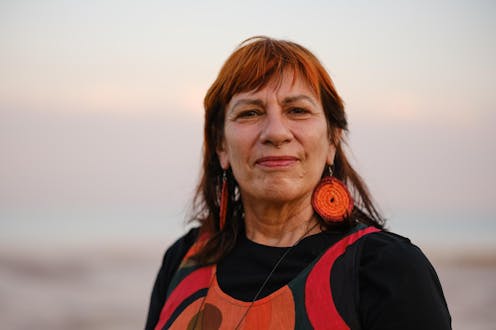
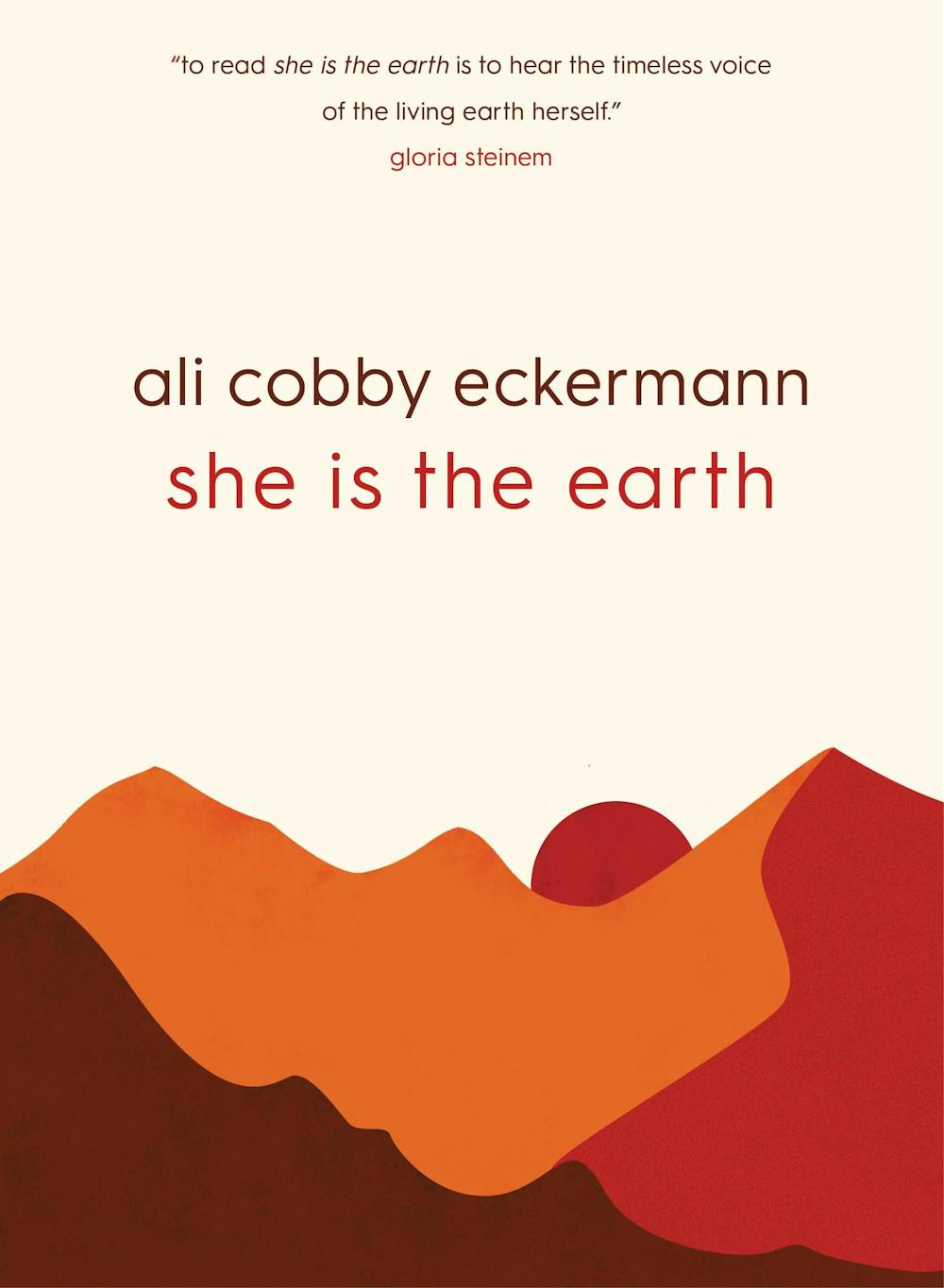
By any objective measure – publications, sales, recognition – the literature of First Nations peoples in Australia is undergoing a resurgence. At the forefront in poetry has been Yankunytjatjara poet, Ali Cobby Eckermann. Magabala Books, the Broome-based independent Aboriginal publisher of Eckermann’s latest book She is the Earth, has also played a large part in this revival.
Review: She is the Earth – Ali Cobby Eckermann (Magabala Books)
In a story that has become literary legend, Eckermann was living in a caravan on unemployment benefits when she heard in 2017 that she had won the international Windham-Campbell Prize. She was only the second Australian to win this prestigious award, following Helen Garner, and the first author from any Indigenous group in the world to receive this honour.
Forcibly removed from her family, as one of the stolen generation, she was raised by adoptive parents on Ngadjuri country in South Australia’s mid north. While her parents were loving, her childhood was filled with trauma. Eckermann endured sexual abuse, schoolyard racism and feelings of alienation. Later, while living in the Australian Outback, she was a victim of domestic violence. She was pressured to give up her child for adoption.
Throughout her life, Eckermann was curious about her Aboriginal heritage. The final chapters of her memoir see her, in her mid-30s, reconnect with her mother and discover her Aboriginal kin. Around this time, she also reunited with her 18-year-old son. These details are helpful in understanding She is the Earth.
Author identity
The New Critics who were ascendant in postwar Anglo-American literary criticism recommended approaching a literary work as a watertight container that would admit no additional information in its interpretation. A reader was to be guided by the text alone; authors, and their intentions, were irrelevant.
The literary theories that gained traction from the 1960s, which gave us concepts such as Roland Barthes’ “death of the author” and Michel Foucault’s “author function”, did not overturn these conventions.
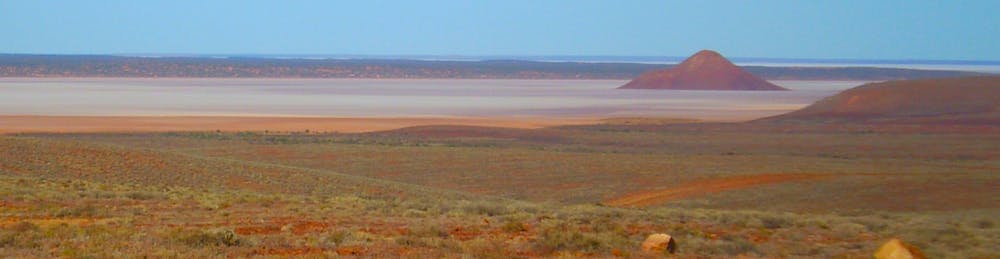 Island Lagoon, South Australia.
John Morton/Wikimedia Commons, CC BY
Read more:
Enraged, tragic and hopeful: Alexis Wright's new novel Praiseworthy explores Aboriginal sovereignty in the shadow of the anthropocene
Minimalism
Eckermann’s oeuvre is characterised by ellipsis and a general brevity. There has always been a pull towards minimalism in her work, but the lyrics in She is the Earth are even sparser than in previous collections.
European minimalism arose after the horrors of Auschwitz. It aimed for a boiled down, unadorned truth-telling, free of the beautiful lies of metaphor and music. While Eckermann’s art is highly metaphorical – and it is often musical – her work has an affinity with this philosophy. In 2016, she spoke of
wanting to write poems using the least amount of words so people can’t play around with or misinterpret what I’m trying to say in the poem. I wanted it to be really concise and clear, because most of my life had been a misinterpretation of the life and the person that I believe I was born to be.
The poems in She is the Earth use even spacing, most commonly the unrhymed couplet, the tercet (as in the example above) or the quatrain, with plenty of white space surrounding the poem. The short lines and stanzas slow the reading down.
Eckermann generally employs a parsing line, so the phrase remains intact and reading is not overly disrupted by line breaks. These features aid the poetry’s meditative purposes and create a sense of interiority.
The poems in She is the Earth burn with the intensity of Judith Wright’s late spare lyrics. They are charged with a searching spirituality that never quite comes to rest:
I walk distortedless sway
I talk distortedless smileless safe
I pray distortedwhat towho with
Eckermann has spoken and written of the salvific power of poetry. This sequence, which is a love song to Country, is also a work of psychological and spiritual healing. Nature is personified from the title and the dedication to the book’s closing pages. It is the natural world (“the earth”) that provides restoration.
The speaker’s transformation is prefigured in multiple images of metamorphosis:
it is a moment of praise
this chorus salvationobserve it
[…]
wood turns serpentin my hand
together we walkrewinding the land
These lyrics are metaphorical terrain, mindscapes and dreamscapes. Despite their metaphysical concerns, the theme of ecological crisis remains present:
a porcupine offers quillsfrom his dying bodyconfronted I accept
gently he reassureswhen death is nearwe must give our beauty
The speaker is neither wholly apart nor at one with her surroundings. Cobby Eckermann’s exquisite control of imagery, which was much praised in her earlier volumes, is displayed again here. Take her description of the Milky Way:
when the moon is asleepthe Milky Way talks
stars raise me upsinging their names
In She is the Earth, Eckermann’s use of rock imagery – so prominent in Inside My Mother – becomes more specific (“shale”, “mica”, “haematite”). Avian imagery again abounds, as in the sticky punning of this lyric:
I am bowerbirdbuilding a nest
magneticmajestic
monogamouspolygynous
I am caughtcourting myself
Most important of these birds is the owl:
from behind the moona shadow form flies
a silhouette of an owlits wings surround me
the ground turns neonas the owl swoops down
my aura is shiftingobserving listening
dark eyes hold meI am mesmerised
the owl is talkingthe owl is teaching
I learn the nightI learn the journey
Claiming an affinity with this bird, the speaker later exclaims:
this is my totemthis is my song
Island Lagoon, South Australia.
John Morton/Wikimedia Commons, CC BY
Read more:
Enraged, tragic and hopeful: Alexis Wright's new novel Praiseworthy explores Aboriginal sovereignty in the shadow of the anthropocene
Minimalism
Eckermann’s oeuvre is characterised by ellipsis and a general brevity. There has always been a pull towards minimalism in her work, but the lyrics in She is the Earth are even sparser than in previous collections.
European minimalism arose after the horrors of Auschwitz. It aimed for a boiled down, unadorned truth-telling, free of the beautiful lies of metaphor and music. While Eckermann’s art is highly metaphorical – and it is often musical – her work has an affinity with this philosophy. In 2016, she spoke of
wanting to write poems using the least amount of words so people can’t play around with or misinterpret what I’m trying to say in the poem. I wanted it to be really concise and clear, because most of my life had been a misinterpretation of the life and the person that I believe I was born to be.
The poems in She is the Earth use even spacing, most commonly the unrhymed couplet, the tercet (as in the example above) or the quatrain, with plenty of white space surrounding the poem. The short lines and stanzas slow the reading down.
Eckermann generally employs a parsing line, so the phrase remains intact and reading is not overly disrupted by line breaks. These features aid the poetry’s meditative purposes and create a sense of interiority.
The poems in She is the Earth burn with the intensity of Judith Wright’s late spare lyrics. They are charged with a searching spirituality that never quite comes to rest:
I walk distortedless sway
I talk distortedless smileless safe
I pray distortedwhat towho with
Eckermann has spoken and written of the salvific power of poetry. This sequence, which is a love song to Country, is also a work of psychological and spiritual healing. Nature is personified from the title and the dedication to the book’s closing pages. It is the natural world (“the earth”) that provides restoration.
The speaker’s transformation is prefigured in multiple images of metamorphosis:
it is a moment of praise
this chorus salvationobserve it
[…]
wood turns serpentin my hand
together we walkrewinding the land
These lyrics are metaphorical terrain, mindscapes and dreamscapes. Despite their metaphysical concerns, the theme of ecological crisis remains present:
a porcupine offers quillsfrom his dying bodyconfronted I accept
gently he reassureswhen death is nearwe must give our beauty
The speaker is neither wholly apart nor at one with her surroundings. Cobby Eckermann’s exquisite control of imagery, which was much praised in her earlier volumes, is displayed again here. Take her description of the Milky Way:
when the moon is asleepthe Milky Way talks
stars raise me upsinging their names
In She is the Earth, Eckermann’s use of rock imagery – so prominent in Inside My Mother – becomes more specific (“shale”, “mica”, “haematite”). Avian imagery again abounds, as in the sticky punning of this lyric:
I am bowerbirdbuilding a nest
magneticmajestic
monogamouspolygynous
I am caughtcourting myself
Most important of these birds is the owl:
from behind the moona shadow form flies
a silhouette of an owlits wings surround me
the ground turns neonas the owl swoops down
my aura is shiftingobserving listening
dark eyes hold meI am mesmerised
the owl is talkingthe owl is teaching
I learn the nightI learn the journey
Claiming an affinity with this bird, the speaker later exclaims:
this is my totemthis is my song
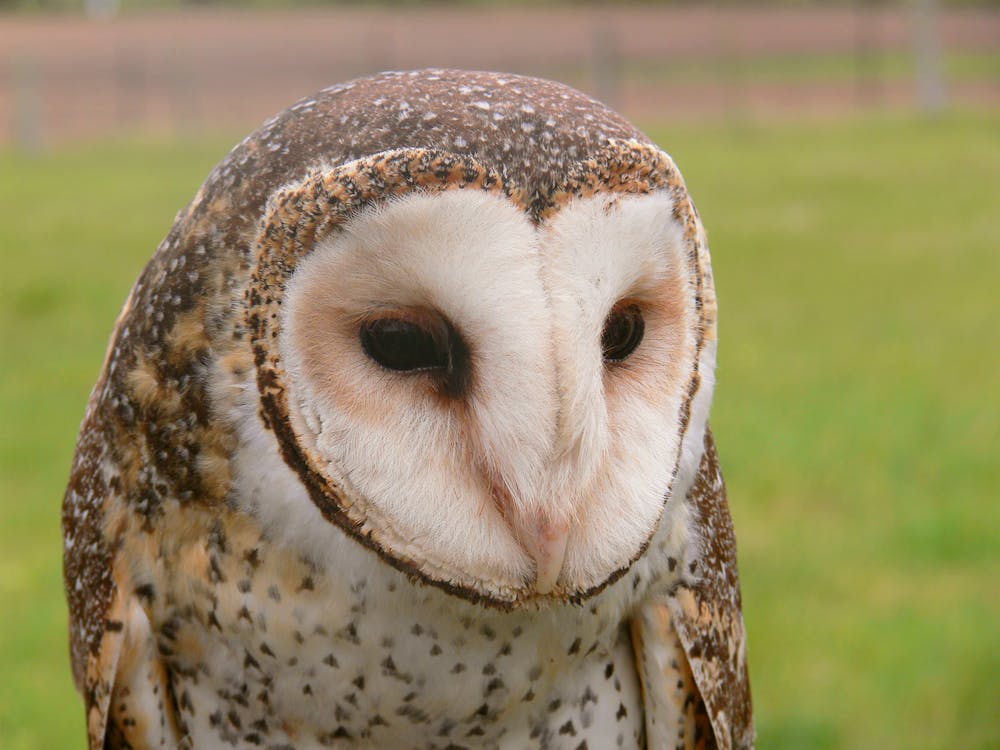 Masked owl (Tyto novaehollandiae)
Benjamint444/Wikimedia Commons, CC BY-SA
Aboriginal stories are interspersed with Christian imagery, and the work finds commonalities with the traditions of Zen Buddhism, Gnosticism, Islamic and Christian mysticism, and other Indigenous traditions. There are the tropes of knowing through unknowing and insight through blindness, leading to embodied truth:
if you peer you will seeif you are deaf you will hear
if you are blind you will feellegends inscribed here
While the poetry in She is the Earth is distinctly local, it is also internationalist. In this way, the work reflects the travel the author has undertaken in the last decade, and the growing consciousness of a global community of Indigenous writers. It acknowledges that the present is complex and entangled, that there is no way back to a precolonial state.
Yet it also longs for the erasure of the past 235 years. There is no mention, for example, of Western technology, and the inclusion of “referendum” in the final poem might be the only hint of any colonising institution.
She is the Earth might be charged with quietism, or criticised for its lack of activism. The accusative “you” from Eckermann’s earlier work is absent. Yet the political is clearly present, even if it is not so overtly expressed. The body is also the body politic; the scars are personal and corporate, but the correspondence between the two is never exact, or allegorical, nor neatly reducible.
The tone of the book is urgent. The final line of the opening and closing lyrics, “not quite genesis”, suggests both continuity and the ongoing nature of the struggle. There is still personal healing to be experienced, and reconciliation is incomplete:
ahead my futurefills with colourmy referendum
my hope crossesfrom the previousto the prophetic
in our creationI am one pagenot yet sanctified
I am one pagein a sanctified storynot quite genesis
Read more:
Minimalist poet Antigone Kefala wins the Patrick White Award for her contribution to Australian literature
A verse novel?
The verse novel has proved as popular a form for poets in Australia as anywhere. Through the 1990s, Dorothy Porter in particular achieved major success with titles such as Akhenaten (1992) and The Monkey’s Mask (1994). Publishers thought that the form could capture more readers than poetry collections, and it often proved the case.
Fewer authors writing for adult audiences have attempted the form in the second decade of the 21st century, but verse novels have been written for the young adult (YA) market. Many appear on school syllabi and are book-listed by schools. Bindi, written by First Nations author Kirli Saunders and published by Magabala Books, is a recent success in this category.
Masked owl (Tyto novaehollandiae)
Benjamint444/Wikimedia Commons, CC BY-SA
Aboriginal stories are interspersed with Christian imagery, and the work finds commonalities with the traditions of Zen Buddhism, Gnosticism, Islamic and Christian mysticism, and other Indigenous traditions. There are the tropes of knowing through unknowing and insight through blindness, leading to embodied truth:
if you peer you will seeif you are deaf you will hear
if you are blind you will feellegends inscribed here
While the poetry in She is the Earth is distinctly local, it is also internationalist. In this way, the work reflects the travel the author has undertaken in the last decade, and the growing consciousness of a global community of Indigenous writers. It acknowledges that the present is complex and entangled, that there is no way back to a precolonial state.
Yet it also longs for the erasure of the past 235 years. There is no mention, for example, of Western technology, and the inclusion of “referendum” in the final poem might be the only hint of any colonising institution.
She is the Earth might be charged with quietism, or criticised for its lack of activism. The accusative “you” from Eckermann’s earlier work is absent. Yet the political is clearly present, even if it is not so overtly expressed. The body is also the body politic; the scars are personal and corporate, but the correspondence between the two is never exact, or allegorical, nor neatly reducible.
The tone of the book is urgent. The final line of the opening and closing lyrics, “not quite genesis”, suggests both continuity and the ongoing nature of the struggle. There is still personal healing to be experienced, and reconciliation is incomplete:
ahead my futurefills with colourmy referendum
my hope crossesfrom the previousto the prophetic
in our creationI am one pagenot yet sanctified
I am one pagein a sanctified storynot quite genesis
Read more:
Minimalist poet Antigone Kefala wins the Patrick White Award for her contribution to Australian literature
A verse novel?
The verse novel has proved as popular a form for poets in Australia as anywhere. Through the 1990s, Dorothy Porter in particular achieved major success with titles such as Akhenaten (1992) and The Monkey’s Mask (1994). Publishers thought that the form could capture more readers than poetry collections, and it often proved the case.
Fewer authors writing for adult audiences have attempted the form in the second decade of the 21st century, but verse novels have been written for the young adult (YA) market. Many appear on school syllabi and are book-listed by schools. Bindi, written by First Nations author Kirli Saunders and published by Magabala Books, is a recent success in this category.
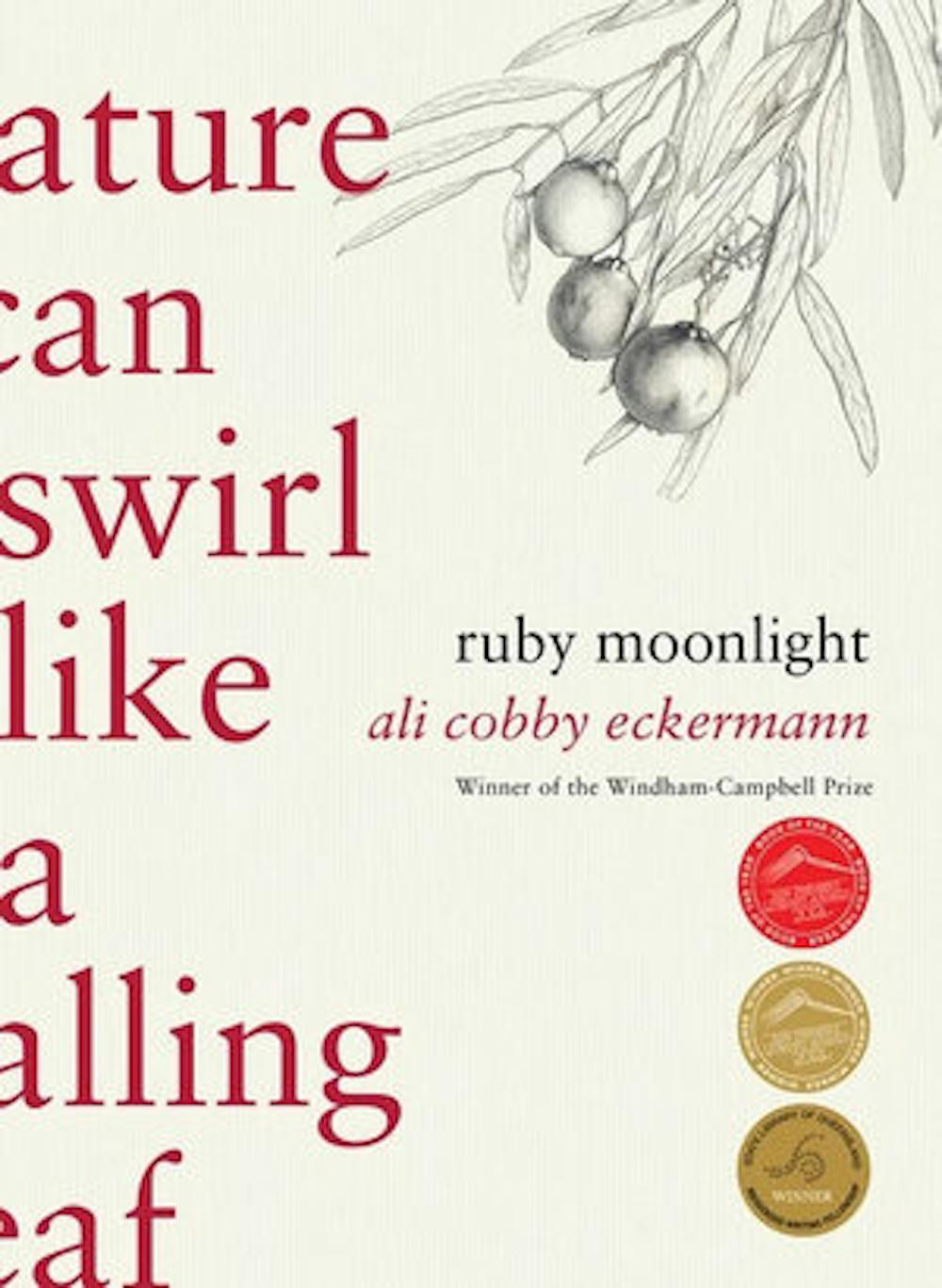 Eckermann herself is well established in this genre. His Father’s Eyes (2011), published by Oxford University Press, was commissioned to explain the Stolen Generations to upper primary and lower secondary students. Ruby Moonlight (2012), a historical verse novel set in South Australia in the late 19th century, collected a number of awards and shortlistings, including the New South Wales Premier’s Book of the Year.
It is unsurprising, then, that Magabala has marketed She Is the Earth as a verse novel, but it seems to stretch the definition too far. Unlike Eckermann’s previous verse novels, the volume is not driven by a plot and, beyond the speaker, has no conventional characters. Readers looking for something similar to Ruby Moonlight are likely to be disappointed.
But She is the Earth is not a collection of short lyrics either. It is a sequence or long poem – and a brilliant one at that.
It was announced in January that Australia will appoint a Poet Laureate, prompting discussions about who it might be and what the role might entail. Ali Cobby Eckermann’s name will surely be raised in these discussions, and more so for the achievement of these lyrics.
She is the Earth is unlike any other book in Australian literature. Of the works Eckermann has written to date, it could well prove her most enduring.
Authors: Aidan Coleman, Senior Lecturer, English and Creative Writing, Southern Cross University
Eckermann herself is well established in this genre. His Father’s Eyes (2011), published by Oxford University Press, was commissioned to explain the Stolen Generations to upper primary and lower secondary students. Ruby Moonlight (2012), a historical verse novel set in South Australia in the late 19th century, collected a number of awards and shortlistings, including the New South Wales Premier’s Book of the Year.
It is unsurprising, then, that Magabala has marketed She Is the Earth as a verse novel, but it seems to stretch the definition too far. Unlike Eckermann’s previous verse novels, the volume is not driven by a plot and, beyond the speaker, has no conventional characters. Readers looking for something similar to Ruby Moonlight are likely to be disappointed.
But She is the Earth is not a collection of short lyrics either. It is a sequence or long poem – and a brilliant one at that.
It was announced in January that Australia will appoint a Poet Laureate, prompting discussions about who it might be and what the role might entail. Ali Cobby Eckermann’s name will surely be raised in these discussions, and more so for the achievement of these lyrics.
She is the Earth is unlike any other book in Australian literature. Of the works Eckermann has written to date, it could well prove her most enduring.
Authors: Aidan Coleman, Senior Lecturer, English and Creative Writing, Southern Cross University 
















