

Climate change can drive social tipping points – for better or for worse
- Written by Sonia Graham, DECRA Fellow, University of Wollongong
It’s impossible to turn on the TV, listen to the radio or scroll social media without hearing about real-world climate impacts. July is the hottest month on record. The United Nations has declared an era of global boiling. Europe and North America are experiencing record-breaking heat waves while Antarctic sea ice levels have fallen to record lows.
Scientists are concerned changes such as these are rapid and irreversible. If heating continues, the climate could reach tipping points and enter new, dangerous states.
Such upheaval can also lead to marked changes in society. As our new research shows, climate change is causing social tipping points: fast, fundamental changes in human values, behaviours, relationships, technologies and institutions that are hard to undo.
We need to use this knowledge to overcome our long dependency on fossil fuels before climate change causes irreversible social upheavals.
Social science shows we’re more likely to be concerned about an issue when we have experienced it, such as being directly affected by fires or floods. But until then, we’re often unlikely to support policies which may radically change everyday life. We can see this in planning for sea-level rise. Coastal communities that have experienced significant coastal erosion are much more supportive of coastal protection policies than those that haven’t.
Understanding social tipping points
Studying social tipping points is hard and messy. Humans and our societies are much less predictable than nature. The status quo is very well entrenched and shifts away from it rarely happen without significant pushback.
But it can happen – especially in times of crisis, as the COVID pandemic demonstrated. Three years ago, many of us shifted to working from home – and the change happened remarkably quickly. Changing back to working in the office every day is turning out to be much harder than first thought.
Read more: Australia's Black Summer of fire was not normal – and we can prove it
Social science tells us natural disasters can provide opportunities for social tipping points. That’s because natural disasters can change how we allocate resources and our expectations of what governments should do.
For instance, the devastating earthquakes in Christchurch in 2010 and 2011 drove a new approach to disaster response. The New Zealand government created a recovery agency tasked not only with building back better, but also making sure community wellbeing was taken into account.
How can natural disasters cause social tipping points?
Our research brought two dozen researchers from diverse disciplines together to debate what social tipping points are and how we can respond to them.
To understand the issue, we examined a devastating flood in Germany in 2021. Intense rainfall turned the small Ahr River into a torrent with flows rivalling the Rhine. The flooding killed 134 people and destroyed the livelihoods of thousands.
The disaster was made up to nine times more likely by climate change, because hotter air can hold more moisture to fall as rain.
We found the chaos and damage had led to social tipping points. Local communities called for the right to rebuild houses on higher ground, which led to proposed changes to national construction laws.
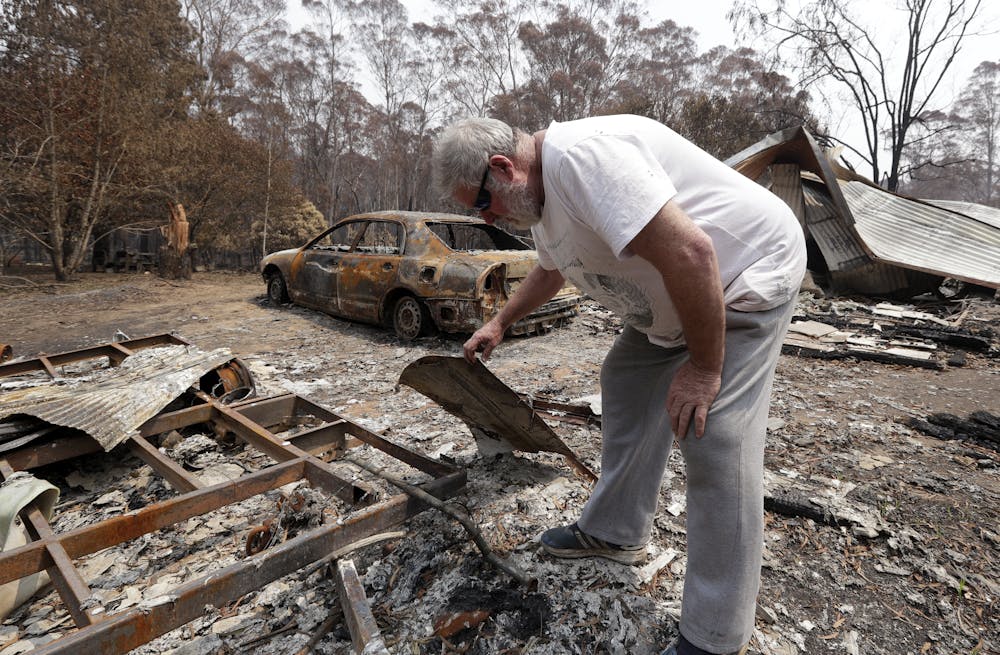
Australia’s Black Summer bushfires also demonstrate the link between climate-related disasters and social attitudes.
Over the 2019–2020 summer, more than 24 million hectares were burnt, 33 people died, over 3,000 homes were destroyed and an estimated three billion animals were killed.
It triggered shifts in Australian society, both large and small. For the first time, First Nations cultural burning practices gained real traction as a way to reduce damage from megafires.
Surveys showed the impact of the fires on public opinion. People were less satisfied with the direction of the country and had less confidence in the federal government. They were more likely to rate climate change as a potential threat, and were less likely to support new coal mines.
More broadly, we can see the response to the ozone hole as an example of a positive social tipping point. In the 1970s and 80s, concern about the growing impacts of the ozone hole on human health and the environment resulted in deliberate intergovernmental action. Thanks to these efforts, we have seen the size of the ozone hole stabilise and begin to close.
 Social tipping points can trigger real change. The ozone hole will close in around four decades, according to the UN.
NASA/AP
Social tipping points can trigger real change. The ozone hole will close in around four decades, according to the UN.
NASA/AP
But social tipping points don’t have to be positive. They can be intensely negative. The Syrian civil war which began in 2011 was triggered, in part, from social tensions emerging from intense and prolonged droughts made more likely by climate change. These tensions – and their climate drivers – haven’t gone away.
What should we take from this?
While it’s vitally important to understand climate tipping points, it can be common to focus on them passively – as if it’s something that will simply happen without any human agency. But this isn’t how it will play out.
Our societies and organisations will be forced into change by climate disruption, whether for good or ill. We need to understand whether social tipping points triggered by climate change are desirable or not. If they pose major risks, we need to understand what we can do to avoid them.
We can see this playing out in the Northern Hemisphere. Media coverage tends to focus on the heatwaves and the stark images of tourists trying to fight fires. But climate upheaval will bring much larger changes to our societies.
It could be more extreme weather, intensified natural disasters and melting sea ice force us to act ever more quickly to avert the worst outcomes. But we could also see dangerous social tipping points – think flows of climate refugees leading to anti-immigration sentiment and skepticism of global cooperation. The future isn’t set.
Authors: Sonia Graham, DECRA Fellow, University of Wollongong

















