

Like 'the tolling of a distant temple bell', Ibuse Masuji's Black Rain remembers the horrors of Hiroshima and warns of the inhumanity of war
- Written by: Jindan Ni, Lecturer, Global and Language Studies, RMIT University
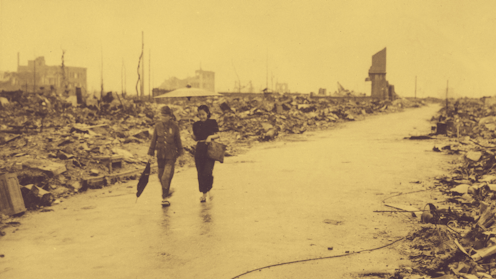
In May 2023, almost 80 years after its devastation by an atomic bomb, Hiroshima again became the focus of world attention as the host city for the 49th G7 Summit.
On the summit’s official website, Hiroshima is presented as the exemplar of Japan’s postwar success. It is described as an “international city of peace and culture” and “resolute postwar advancement”. There are photos of its serene landscapes, its local delicacies and sake, and its modern sports and street culture.
The bombing of Hiroshima at the conclusion of World War II is mentioned just once. The Hiroshima Peace Memorial, according to the site, “speaks to the horrors of nuclear weapons”.
Hiroshima has more than this to tell us. But its stories, its “several pasts”, have been constantly abridged – or “refashioned”, as Michel Foucault would say. They have been adapted to serve political agendas.
On August 6, 1945, after the atomic bomb was dropped on Hiroshima, President Harry Truman released a statement that praised the scientific achievement:
Sixteen hours ago an American airplane dropped one bomb on Hiroshima, an important Japanese Army base […]
It is an atomic bomb. It is a harnessing of the basic power of the universe. The force from which the sun draws its power has been loosed against those who brought war to the Far East […]
What has been done is the greatest achievement of organized science in history. It was done under high pressure and without failure.
The atomic bomb was something altogether different for Japan. After the bombs fell on Hiroshima and Nagasaki, the Japanese emperor Hirohito broadcast his “jewel voice” to make the announcement of Japan’s surrender to his subjects. He spoke in an opaque, classical language almost incomprehensible to ordinary Japanese:
The enemy has for the first time used cruel bombs to kill and maim extremely large numbers of the innocent and the heavy casualties are beyond measure; if the war were continued, it would lead not only to the downfall of our nation but also to the destruction of all human civilization.
In these statements, we can see Truman and Hirohito attempting to justify their actions. We can see interpretations of the attacks on Hiroshima and Nagasaki taking different tracks. Such modified national memories install a kind of forgetting. They are ways of marginalising or erasing individual experiences of the war.
During the postwar occupation of Japan, from 1945-1952, the Allied occupiers sought to remould the Japanese minds. The “horrors of nuclear weapons” could not be mentioned. Pictures and narratives about the atomic bombs were subject to strict censorship.
Only after the easing of censorship could Japanese writers begin to reveal the details of the horrendous suffering that occurred in Hiroshima and Nagasaki. These works became collectively known as genbaku bungaku, or “atomic bomb literature”. The explorations of the destructive power of war and institutionalised violence have left their mark on contemporary Japanese literature.
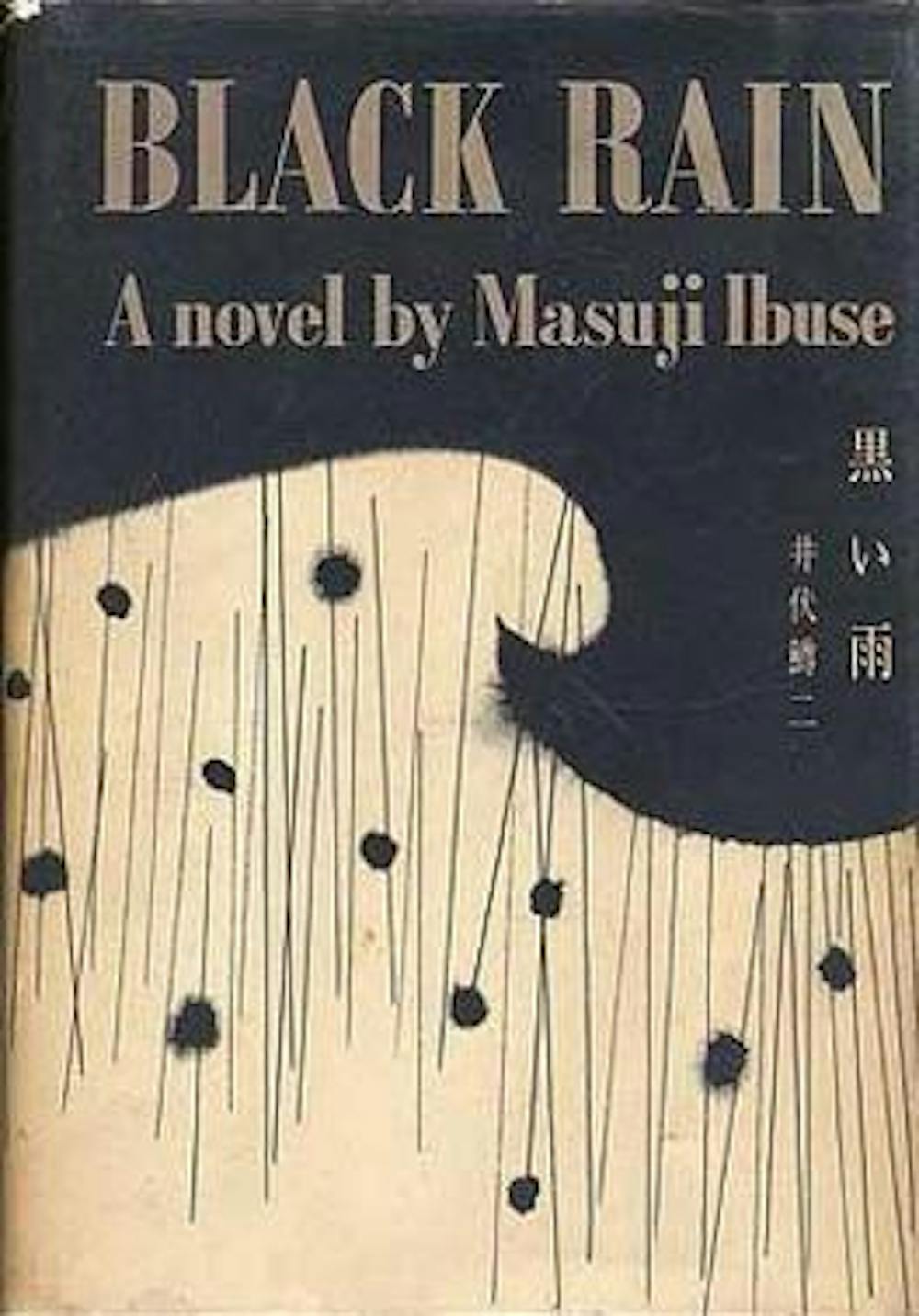
Ibuse Masuji’s Black Rain, which won the prestigious Noma Literary Prize after its publication in 1965, epitomises atomic bomb literature. It is now considered a classic of modern Japanese literature.
Black Rain records the scorching memories of the hibakusha – atomic bomb survivors – of the bombing and its aftermath. More significantly, it critiques the brutality of war, the militarised state, and the purposeful forgetting of history. Ibuse based his novel on journals and interviews with the bomb survivors, writing against amnesia using what he called the “crudest kind of realism”.
Read more: 'Atomic plague': how the UK press reported Hiroshima
Forgetting and stigmatisation
Black Rain begins four years and nine months after the war. Shizuma Shigematsu and his family live a seemingly quiet and normal life in the village of Kobatake, about 100 kilometres from Hiroshima city. But the fact that they once lived and worked close to Hiroshima is still a weight upon their lives.
Shigematsu is vexed about his niece Yasuko’s poor marriage prospects. There are rumours circulating in the village that Yasuko was near the epicentre of the explosion and now has radiation sickness. As her guardian, Shigematsu is agonised with guilt, as it was at his instigation that Yasuko came to Hiroshima city, so as to avoid the army’s conscription of young women to work in the factories that produced military supplies.
During the war, “irresponsible talk” was strictly forbidden by the army. But after the war, Shigematsu laments, rumours stigmatising people like Yasuko are by no means under control. To prove that Yasuko was not exposed to radiation, Shigematsu decides to copy Yasuko’s wartime diary entries and show them to the village matchmaker.
For the survivors of Hiroshima, memories of the bombing return unbidden. The misery of past has to be revisited to ease their present predicament.
Initially, no one knew what happened when the bomb fell. It was beyond everyone’s comprehension. And it is this horror of not knowing that Black Rain agonisingly depicts. Because of this, people who were not at the epicentre went towards it. They went in search of their families and were thus unnecessarily exposed to radiation.
Yasuko was one of these victims. She was 10 kilometres from the epicentre, but became caught in the radioactive “black rain” on the way to find her uncle and aunt. The rain leaves ominous strange black stains on Yasuko. Her dread is heartwrenching:
I felt horrified, and then awfully sad. However many times I went to the ornamental spring to wash myself, the stains from the black rain wouldn’t come off.
Despite Shigematsu’s efforts to prove that Yasuko is free from radiation sickness, she develops symptoms eventually, almost five years after the bomb. There is no cure for this condition and the doctor asks Shigematsu to report Yasuko’s case to the Atomic Bomb Casualty Commission (ABCC), which was established by the Allied occupation in 1947 with “the highest ideals” in order to collect data of the victims.
The commission only documented cases like Yasuko’s; it provided no treatment for the victims.
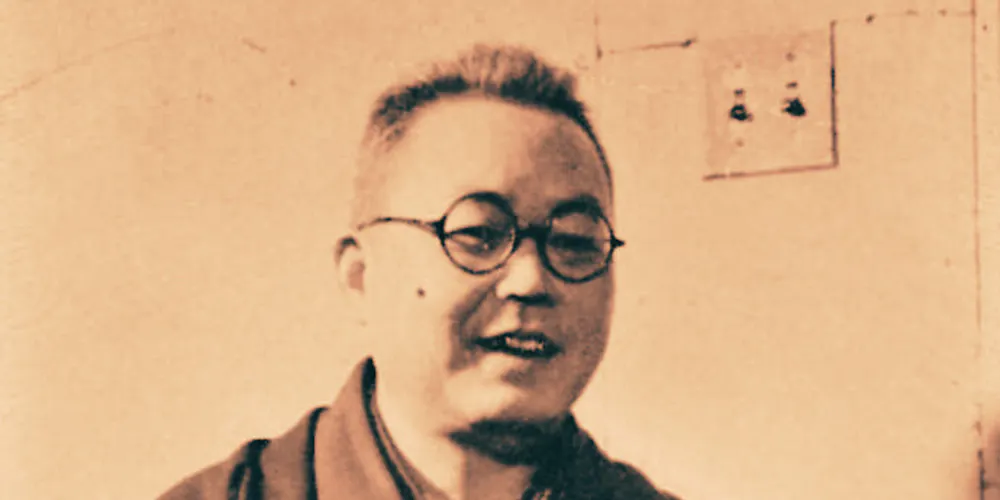 Ibuse Masuji.
Wikimedia Commons
Read more: 'They died with stones in their mouths': Hiroshima's last survivors tell their stories
Tradition versus modernity
In Black Rain, Ibuse boldly challenges the modernisation which Japan has been determined to achieve since the Meiji Restoration, which began in 1868.
His critique of modernity is highly nuanced, with a tinge of humour. For example, when Shigematsu decides to copy Yasuko’s diaries, his wife Shigeko asks him to use Chinese brush ink instead of ordinary pen ink which does not last. To convince him, she shows him a letter which was sent to his great-grandfather from Tokyo in 1870.
The letter sender proudly concludes his letter by emphasising “this letter, in accordance with my promise to you at the time, is written in the ‘ink’ commonly in use in the West.” But the ink has “faded to a pathetic light brown colour”.
Shigematsu agrees to his wife that they should use the traditional brush ink so that their diaries and memories can be well preserved.
In the introduction to his English translation of Black Rain, John Bester writes that Ibuse shows “infinite nostalgia” towards “the beauty of the Japanese countryside and the ancient customs of its people”. For Ibuse, it is only through traditional food and medicine that the damages brought by science and modernity, exemplified by the atomic bomb, can be eased and soothed.
 Genbaku Dome, Hiroshima Peace Memorial.
Simonoroi/Shutterstock
Appeal to nature, humanity and peace
Black Rain dwells on the atrocity of war as it affects people, but it also documents damage that war inflicts on nature. Shigematsu recalls the massive gingko tree he liked to play under, which stood outside his friend Kōtarō’s place. It was cut down for the “national interest” during the war.
Similarly, the novel records that villagers were ordered to dig pine-tree roots to extract oil for “the engines of the planes whose job it was to shoot down B-29s”.
Animals also suffered as a result of the atomic bomb, just as people did. The fish in the lake died. Like the bomb survivors who lost teeth and hair, they lost their scales and could not swim normally.
In Black Rain, the collective forgetting of the direct experiences of the victims leads to systematic stigmatisation and bias against them, which exacerbates their struggle. Shōkichi – Shigematsu’s friend who also survived the bomb – stridently announces:
Everybody’s forgotten! Forgotten the hellfires we went through that day – forgotten them and everything else, with their damned anti-bomb rallies. It makes me sick, all the prancing and shouting they do about it.
Shōkichi’s visceral repulsion to the anti-bomb rallies speaks of a collective forgetting, in which the enduring sufferings of the “precious victims” have been deployed as convenient narratives to serve the “national interest”. As the historian John Dower succinctly puts it, the rallies and memorial activities conformed to the state’s need of “nuclear victimization”, which aimed to shape “new forms of nationalism in postwar Japan”.
One of the maimed survivors in Black Rain writes in his journal that he now has permanent ringing in his ears: “it persists in my ear day and night, like the tolling of a distant temple bell, warning man of the folly of the bomb”.
Black Rain calls for a proper remembering of the war. In Ibuse’s documentary novel, Hiroshima is allowed to speak more and remember more. Through Shigematsu’s voice, Ibuse expresses the anger and despair of the people forced to endure the war:
I hated war. Who cared, after all, which side won? The only important thing was to end it all soon as possible: rather an unjust peace, than a “just” war!
Authors: Jindan Ni, Lecturer, Global and Language Studies, RMIT University


















