

In the future, we could snuff out cyclones. But weather control comes with new risks
- Written by Aaron Tang, PhD Scholar in Climate Governance, Australian National University
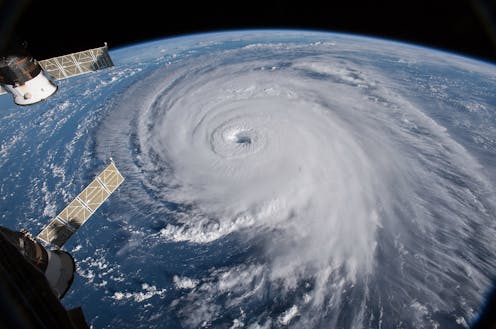
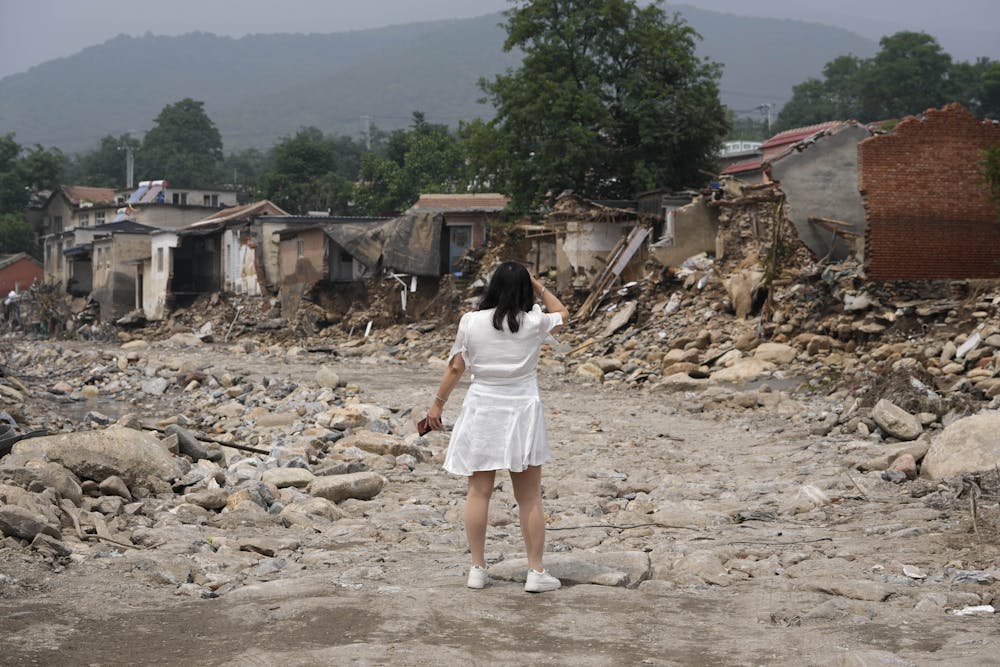
Right now, people in coastal China are fleeing successive typhoons. Parts of the Philippines are awash.
Typhoons are intense circular storms, which Australians know as tropical cyclones and Americans call hurricanes. Damage from cyclones has increased sevenfold since the 1980s, even as death tolls fell dramatically. In the 2010s, tropical cyclones did A$872 billion worth of damage globally.
Why? Our world has more heat in the oceans and atmosphere, which can supercharge cyclones. A cyclone is a heat engine, transferring heat from warm ocean water up into colder layers of the atmosphere. More heat in the system means more intense heat engines.
No wonder there’s been renewed interest in Cold War era experiments in weather control. While early efforts had little success, our new research evaluates other methods of weakening these storms by pumping up cold water from the depths or spreading particles in the lower atmosphere to reduce incoming heat and encourage early rainfall. But these techniques could have unexpected – or even dangerous – side effects.
Why are researchers even looking into this?
Tropical cyclones are lethal. In 1970, an enormous cyclone struck Bangladesh (then East Pakistan). Meteorologists knew it was coming, but they had no way to communicate to people in its path. The storm killed up to 500,000 people.
Since then, we’ve invested in far better early warning systems. Deaths have fallen substantially now that people have time to evacuate.
But in developing countries in particular, deaths still happen. And then there’s the damage to farms, houses, roads and livestock. You may well survive the storm only to be forced into poverty.
Scientists are exploring ways of preventing natural disasters, from bushfires to floods to hailstorms. So why not cyclones?
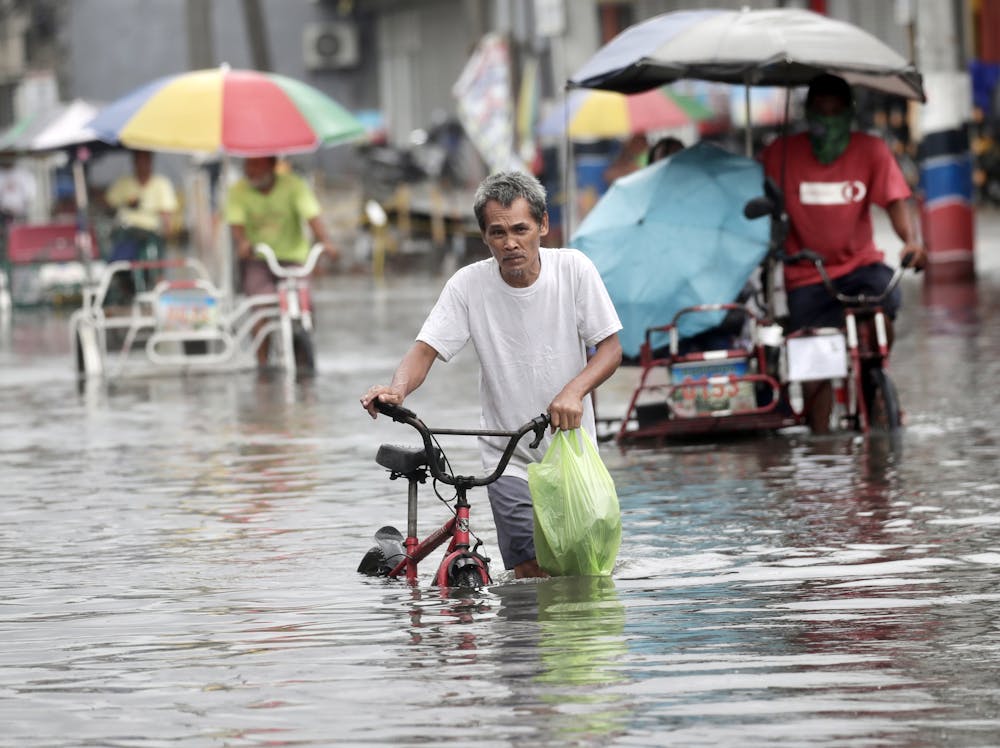 Typhoons hit the Philippines regularly, causing a hit to the economy and livelihoods each time. This image shows the impact of last week’s typhoon in Manila.
Francis Malasig/EPA
Typhoons hit the Philippines regularly, causing a hit to the economy and livelihoods each time. This image shows the impact of last week’s typhoon in Manila.
Francis Malasig/EPA
Can we really turn a cyclone into a normal storm?
It is certainly possible. But it’s not easy.
In the 1960s, the United States explored the use of cloud seeding to stop hurricanes from forming. During Project STORMFURY, planes flew high above cyclones out at sea and sprayed them with silver iodide, a chemical which could encourage water droplets to clump together and fall as rain. This, the theory ran, would disrupt the hurricane from forming. While some seedings seemed to correlate with weaker hurricanes, the link was never adequately found and the project was eventually abandoned.
Instead, researchers are exploring two new options.
Cyclones need hot sea surfaces to form. If we could cool the surface – such as by piping chilled water from depths below 200 metres – we could prevent the cyclone from ever forming.
The problem is it’s expensive. Norwegian cyclone-busting startup OceanTherm estimates it would cost about A$750 million to develop the technology, and another $105 million every year to keep it going.
And worse, cooling one area of the sea does nothing to stop cyclones from forming elsewhere. Models suggest ocean cooling will, at best, have only a limited dampening effect on cyclones.
There’s a more likely option – aerosol injection. Scientists already know that dust blown from the Sahara into the Atlantic reduces cyclone formation. We could use planes or drones to inject hygroscopic (water-attracting) particles into the lower atmosphere, where they would reflect and scatter sunlight and trigger rainfall and energy release.
This method has a stronger scientific pedigree, given it already occurs naturally. But we don’t know what side-effects it would have and we still aren’t sure what happens to energy redistributed by the intervention.
Other research has found aerosols could reduce cyclone intensity while boosting rainfall on the rotating outer edges of cyclones. More intense rain could still cause substantial damage.
As you’d expect, it’s easier and more effective to intervene early in a cyclone’s life, before too much energy builds up. Making the call to try to stop a cyclone means taking decisions early. That’s a challenge, because cyclones can become stronger faster in a hotter world.
Difficult politics, difficult policy
Cyclone control missions might conjure up the image of Hollywood action heroes off to save the world.
Unfortunately, it’s more complicated than that.
Let’s say the Philippine government spots a extremely dangerous cyclone forming and decides to disrupt it. But the heat doesn’t magically go away. It just moves. Suddenly, another storm reappears, heading straight for China, a country you have a testy relationship with, and who may blame you for weather manipulation.
Far-fetched? Not at all. When Cuban dictator Fidel Castro heard of Project STORMFURY, he feared it was an attempt to turn the weather into a weapon.
 Project STORMFURY researchers seeded tropical storm Dorothy over the eastern Caribbean in 1970 and believed they had succeeded. But future efforts did not succeed and the project was abandoned.
Wikimedia, CC BY
Project STORMFURY researchers seeded tropical storm Dorothy over the eastern Caribbean in 1970 and believed they had succeeded. But future efforts did not succeed and the project was abandoned.
Wikimedia, CC BY
Only three years ago, China’s neighbours sounded the alarm about the Middle Kingdom’s plans to reroute an atmospheric “sky river” to dry northern regions. This, according to nations like India, could take water away from their rivers.
So who would decide how or when to snuff out a cyclone? How would they decide? Should private companies be allowed to run their own field tests or should these large-scale interventions be government-only? Who would be responsible for any side-effects?
There are more thorny questions. If cyclone control is perfected, what would stop a country trying to redirect cyclones towards a rival? Could cyclone technologies be misused, following similar fears with large-scale geoengineering? Most importantly, are these technological risks worth the potentially reduced risks of cyclones?
What’s next?
We’ll need to find answers for questions like these. As cyclones get stronger, we will urgently need new institutions to help tackle scientific uncertainties, develop monitoring capabilities and find ways of making collaborative decisions at speed. That won’t be easy – most international agreements move slowly, and most don’t meet their intended goals.
Technologies like particle injection are promising, but not ready for deployment. As the technology matures, so should our institutions. It’s why we’re researching the science and policy of these interventions. We must hash out how and when to use technologies like these – before we need to respond urgently.
Read more: Trying to cool the Earth by dimming sunlight could be worse than global warming
Authors: Aaron Tang, PhD Scholar in Climate Governance, Australian National University


















.jpg)