

Meeting the long-term climate threat takes more than private investment – 10 ways NZ can be smart and strategic
- Written by Kevin Trenberth, Distinguished Scholar, NCAR; Affiliate Faculty, University of Auckland
The announcement of a partnership between the government and the world’s biggest investment manager BlackRock in a NZ$2 billion climate infrastructure fund suggests the company is expecting renewable energy in New Zealand to increase its own profitability.
The new fund is the first country-specific renewable investment BlackRock has made, following its 2022 acquisition of New Zealand company SolarZero, which produces solar battery storage and other energy services.
The initiative also underpins the government’s aspirational goal of having 100% of electricity generated by renewable sources by 2035. The purpose of this fund is to accelerate investment from Crown companies and agencies to speed up decarbonisation. But will it cut costs to consumers?
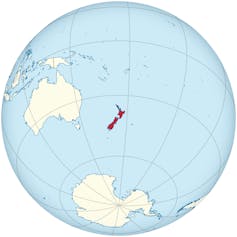
Given New Zealand’s isolation and reliance on exports and tourism, the country remains vulnerable to climate change impacts and carbon pricing designed to help cut emissions. Aside from storm and drought damage from climate change that disrupts food production, both imports and exports are likely to increase in price, and carbon-based tariffs may adversely affect New Zealand’s economy.
To address climate change threats in New Zealand will require more than mobilising private investment with a focus on renewable energy. It will need a comprehensive and collaborative approach that acknowledges dependencies on shipping and air travel, which continue to depend on fossil fuels.
Here are ten broad areas that must be considered when tackling the specific and sometimes unique challenges New Zealand faces in the years ahead.
1. Maximising renewable energy
Most of New Zealand’s electricity comes from hydro power as well as wind and solar power. It is already over 80% renewable, but the grid is topped up by coal.
Promoting renewable electricity is essential but likely not enough. Energy for industrial processes (heating, drying, steel production) still relies on fossil fuels, and we need to make more use of abundant solar and wind resources.
Because these resources are intermittent, they must be integrated with hydro power to serve as a “battery” by storing water behind a dam. This requires a national, publicly owned entity whose goal is to maximise renewable energy production (not profits in private companies).
2. Rethinking travel
New Zealand has a growing fleet of electric vehicles, but the transport system still largely runs on fossil fuels. It is one of the country’s largest sources of greenhouse gas emissions, responsible for 17% of gross emissions.
Apart from improving public transport and promoting cycling and walking, simply avoiding unnecessary travel becomes essential. The COVID pandemic has shown the way with teleconferencing and virtual meetings.
3. Reduce shipping emissions
If shipping were a country, it would be sixth in total emissions. Last month, the International Maritime Organization (IMO), a UN agency that regulates global shipping, agreed to a new climate strategy to reach net-zero greenhouse gas emissions “close to 2050”.
Already, penalties are being implemented to prevent use of high-sulphur oil. A carbon tax or levy is likely, starting in the European Union in 2024. Biofuels, methanol and perhaps even wind power may help shipping.
4. Trains versus planes
For international air travel, development of sustainable aviation fuels is progressing. Further optimising air traffic and flight routes and promoting the use of fuel-efficient aircraft and technologies is essential.
It seems likely carbon offsets may be required, and these could be expensive. For domestic travel, trains may become more viable.
5. Prepare for tourism declines
Ecotourism is likely to grow, and operators will have to abide by sustainability certifications and limits to fragile ecosystems areas. Off-peak and new, dispersed destinations seem likely.
Offsetting carbon may become mandatory and the cost is likely to go up, with adverse effects on New Zealand’s economy.
6. Better carbon offsets
The need for quality offsets for fossil fuel use is likely to increase. The main potential is wood in trees, since plants take up carbon dioxide from the atmosphere.
However, trees have a finite lifetime and this can only be a temporary fix. Indigenous trees grow more slowly and can lock up carbon for more than a century. But considerable care is needed to avoid forest fires and disease, or the offset value diminishes rapidly.
7. Strategic forestry
Protecting and restoring existing native forests helps conserve biodiversity. It also helps limit runoff and erosion. Large-scale afforestation and reforestation efforts to expand forest cover should continue, as strategic planting of native trees will enhance carbon sequestration and restore ecosystem balance.
Implementation of sustainable forest management practices, emphasising selective logging and reforestation after harvesting, will ensure a continuous carbon sink, preserve biodiversity and protect sensitive ecosystems.
8. Greener cities and towns
Urban forestry can counteract urban heat island effects and enhance air quality. Planting trees in public spaces and along streets in residential areas can reduce energy consumption for cooling and improve people’s wellbeing.
9. Biofuel development
As well as using wood to temporarily sequester carbon, it can be used as a biofuel. Torrefaction is a thermal process that involves heating biomass in the absence of oxygen to produce a more energy-dense and stable material.
This process can be applied to various types of biomass, including wood chips, slash, agricultural residues and other organic materials. The resulting torrefied biomass has several advantages, including improved grindability, increased energy density and reduced moisture content.
It is currently used at the Huntly power station in place of coal but the torrefied wood chips are imported. Instead, this could be an important fuel and an export, given the shortages in Europe arising from the Ukraine war.
10. Incentives for better land use
Regenerative farming, agroforestry and silvopasture techniques integrate trees with agricultural practices. This enhances carbon sequestration, improves soil health and provides additional income streams for farmers.
New Zealand should implement financial incentives and regulations to encourage private landowners to participate in tree planting and sustainable forest management. Tax incentives, carbon offset programmes and grants can drive private investment in climate-friendly practices.
A more self-sufficient future
Addressing climate change threats in New Zealand requires acknowledgement of the dependencies on shipping, air travel and tourism. Planning for the consequences of climate change and building resilience are both essential.
New Zealand needs to become a lot more self-sufficient and reduce volumes of exports by increasing domestic processing and manufacture. These changes may be hastened by international tariffs on trade based on carbon content.
By transitioning to green shipping, transforming air travel and fostering sustainable tourism, New Zealand can mitigate its carbon footprint, protect natural ecosystems and ensure long-term socioeconomic prosperity. Public-private partnerships and robust policy implementation are crucial.
Authors: Kevin Trenberth, Distinguished Scholar, NCAR; Affiliate Faculty, University of Auckland

















