

Google AI


Modern Australian

Creating ‘sponge cities’ to cope with more rainfall needn't cost billions – but NZ has to start now

  • Written by: Timothy Welch, Senior Lecturer in Urban Planning, University of Auckland
Creating ‘sponge cities’ to cope with more rainfall needn't cost billions – but NZ has to start now

Tune into news from about any part of the planet, and there will likely be a headline about extreme weather. While these stories will be specific to the location, they all tend to include the amplifying effects of climate change.

This includes the wildfire devastation on the island of Maui in Hawaii, where rising temperatures have dried vegetation and made the risk that much greater. In Italy, summer temperatures hit an all-time high one week, followed by massive hail storms and flooding the next.

Flooding in Slovenia recently left three people dead and caused an estimated €500 million in damage. At the same time, rainfall in Beijing has exceeded a 140-year record, causing wide-scale flooding and leaving 21 dead.

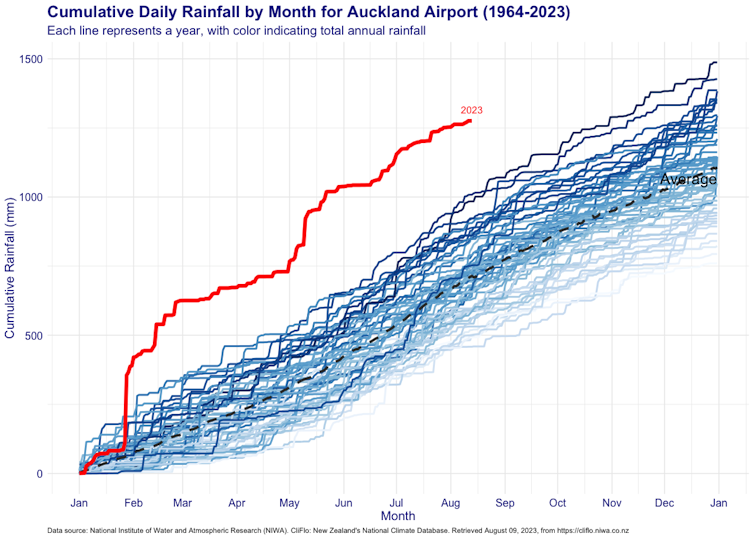
These northern hemisphere summer events mirror what happened last summer in Auckland, classified as a one-in-200-year event, and elsewhere in the North Island. So far this year, rainfall at Auckland Airport has surpassed all records dating back to 1964.

Given more rainfall is one of the likeliest symptoms of a changing climate, the new report from the Helen Clark Foundation and WSP – Sponge Cities: Can they help us survive more intense rainfall? – is a timely (and sobering) reminder of the urgency of the challenge.

NIWA, CC BY-NC-ND Pipe dreams The “sponge city” concept is gaining traction as a way to mitigate extreme weather, save lives and even make cities more pleasant places to live. This is particularly important when existing urban stormwater infrastructure is often already ageing and inadequate. Auckland has even been cutting spending on critical stormwater repairs for at least the past two years. Read more: Auckland floods: even stormwater reform won’t be enough – we need a ‘sponge city’ to avoid future disasters Politically at least, this isn’t surprising. Stormwater infrastructure, as it is currently built and planned, is costly to develop and maintain. As the Helen Clark Foundation report makes clear, New Zealand’s pipes simply “were not designed for the huge volumes they will have to manage with rising seas and increasing extreme rainfall events”. The country’s current combined stormwater infrastructure involves a 17,000 kilometre pipe network – enough to span the length of the country ten times. The cost of upgrading the entire water system, which encompasses stormwater, could reach NZ$180 billion. This contrasts starkly with the $1.5 billion councils now spend annually on water pipes. The report makes clear that implementing sponge city principles won’t wholly solve flooding, but it can significantly reduce flood risks. Trees and green spaces The real bonus, though, lies in the potential for sponge city design to reduce dependence on expensive and high-maintenance infrastructure. There are already examples in Auckland’s Hobsonville Point and Northcote. Both communities have incorporated green infrastructure, such as floodable parks and planted wetlands, which kept nearby homes from flooding. But the report’s recommendations are at odds with some of the current political rhetoric around land use policy – in particular “greenfields” development that encourages urban sprawl. Read more: National’s housing u-turn promotes urban sprawl – cities and ratepayers will pick up the bill The report urges that cities be built upwards rather than outwards, and pushes back on residential infill development encouraged by the Medium Density Residential Standards. Citing a recent report on green space from the Parliamentary Commissioner for the Environment, the Helen Clark Foundation report argues for the preservation of urban green spaces – like backyards – as part of the flood mitigation approach. Preserving tree cover is another urgent priority. Trees help absorb rainfall, reduce erosion and provide essential shade and cooling in urban areas – counteracting the dangerous urban “heat island” effect. Citing data from Global Forest Watch, the report states: Auckland has lost as much as 19% of its tree cover in the past 20 years, Dunedin a staggering 24%, Greater Wellington around 11% and Christchurch 13%. Read more: Planting more trees could reduce premature heat-related deaths in European cities by a third – new research Incentives for homeowners Making Aotearoa New Zealand more resilient to extreme weather, the report says, need not break the bank. It recommends raising the national minimum standards governing the percentage of the total area of new developments that must be left unsealed. This would ensure the implementation of sponge city concepts, and see buildings clustered to maximise preserved green space. The government should also require local councils to plan for and provide public green spaces, and to develop long-term sponge city plans – just as they do for other types of critical infrastructure. Read more: We’re building harder, hotter cities: it’s vital we protect and grow urban green spaces – new report Neighbourhoods could be retrofitted to include green roofs, permeable pavements and unsealed car parks. Land use and zoning could also encourage more vertical development, rather than sprawl or infill housing. The government could also provide incentives and education for homeowners to encourage minimising sealed surfaces, unblocking stormwater flow paths, and replacing lawns with native plants and rain gardens. More extreme weather and intense rainfall is a matter of when, not if. As the Helen Clark Foundation report makes clear, spending future billions is less of a priority than acting urgently now.

Authors: Timothy Welch, Senior Lecturer in Urban Planning, University of Auckland

Read more https://theconversation.com/creating-sponge-cities-to-cope-with-more-rainfall-neednt-cost-billions-but-nz-has-to-start-now-211181

Pool and Deck Design: How to Plan the Perfect Outdoor Living Space for Your Sydney Home

For many Australians, the backyard is where life happens. Summer barbecues, weekend swims and long evenings outdoors are all part of the lifestyle, ...

Is Solar Pool Heating Worth It? What Sydney Homeowners Should Know

There's nothing quite like a backyard pool on a hot Sydney day. But once autumn rolls in, many pools sit unused for months because the water is simp...

Planning a Luxury House Move: A Week-by-Week Timeline for Prestige Sydney Homes

Selling or buying a prestige home is a major milestone. Whether it's a waterfront residence in Birchgrove, a grand Federation home in Haberfield or ...

Downsizing or Upgrading Your Caravan? Here's How to Sell It Without the Hassle

Selling a caravan can feel like a major task, especially when you are unsure about its value, paperwork, or how to find a buyer. Whether you are dow...

The Best Overseas Adventure Holidays for Australians Who Love the Outdoors

Australia offers no shortage of incredible outdoor experiences, but sometimes the best way to satisfy your sense of adventure is to head overseas. A...

Cape Town Wine Shuttle: Winelands Tasting & Tours

Embark on an unforgettable journey through the picturesque Cape Winelands, where world-class wines and breathtaking scenery await. Our Cape Town Win...

Why Giant Rats Tail Grass Keeps Coming Back After Spraying

Giant Rats Tail Grass (GRT) is one of the most frustrating pasture weeds for farmers and lifestyle property owners. You spray an infested area, see th...

When Custom Cardboard Boxes Make Sense for Your Business

Custom cardboard boxes can be useful when a standard carton does not fit a product, packing method or presentation requirement particularly well. A ...

Virtual Livestock Fencing and GPS Tracking: Improving Visibility Across Cattle Properties

What Virtual Livestock Fencing Means for Modern Cattle Management Managing cattle across extensive properties requires more than knowing where anim...

Sydney Pawnbrokers Explained: How Hocking Your Car Actually Works

Sometimes you need cash, and you need it soon. If you own a car, you may already have a way to get it. That's what people mean when they say they've...

Moving Interstate from the Gold Coast to Brisbane (or Back)? What Removalists Wish You Knew First

Have you talked to anyone who’s done the move? They say the same thing: the drive up the M1 is the easy part. It's everything around it that catches...

Why the Spring School Holidays Are a Great Time to Visit Coffs Harbour

The spring school holidays are a good time to spend a few days on the Coffs Coast. The weather is starting to warm up, there is plenty to do outdoor...

What to Do When an Older Car Is No Longer Worth Keeping in Melbourne

Ever looked at another repair quote and wondered whether your old car is still worth the trouble? It is a common turning point for Melbourne motoris...

Your Baby's First Year: A Local Guide to Feeding, Sleep, and When to Get Extra Support

Ask ten parents in a Brisbane mothers' group how their baby is feeding or sleeping, and expect ten different answers.  Someone's baby sleeps throug...

Kitchen and Laundry Makeover Ideas That Don't Require a Full Renovation

Full kitchen renos are expensive — and most people don't actually need one.  They need the kitchen to stop looking like it's stuck in 2009, or they...

How Technology Is Reshaping the Modern Australian Commercial Kitchen

The commercial kitchen has always been shaped by technology. Refrigeration changed how ingredients could be stored, modern ventilation transformed k...

The Number on a Roller Blind Fabric That Nobody Explains

Somewhere in the fabric book, next to the colour name, there is a percentage. Three per cent. Five per cent. Ten per cent. Nobody explains it, most c...

What’s Trending in Men’s Jewellery This Father’s Day!

Finding a Father’s Day gift that feels personal, stylish and genuinely wearable is not always easy. While socks and novelty mugs have traditionally ...
















