

Google AI


Modern Australian

Two new Australian mammal species just dropped – and they are very small

  • Written by: Linette Umbrello, Postdoctoral research associate, Queensland University of Technology
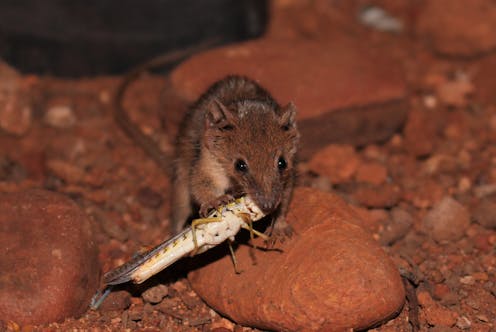
Two new Australian mammal species just dropped – and they are very small

You probably know about the Tasmanian devil. You might even know about its smaller, less-famous relative, the spotted-tailed quoll.

But these are far from the only meat-eating marsupials. Australia is home to a suite of other carnivorous and insectivorous pouched mammals as well, some of them the size of a mouse or smaller.

Tiniest of all are the planigales, some of which weigh less than a teaspoonful of water. Despite their size, these fierce predators often take on prey as big as themselves.

To date, there are four known species of planigale found across Australia. We have recently discovered another two species, both inhabitants of the Pilbara region of northwest Western Australia: the orange-headed Pilbara planigale (Planigale kendricki) and the cracking-clay Pilbara planigale (P. tealei).
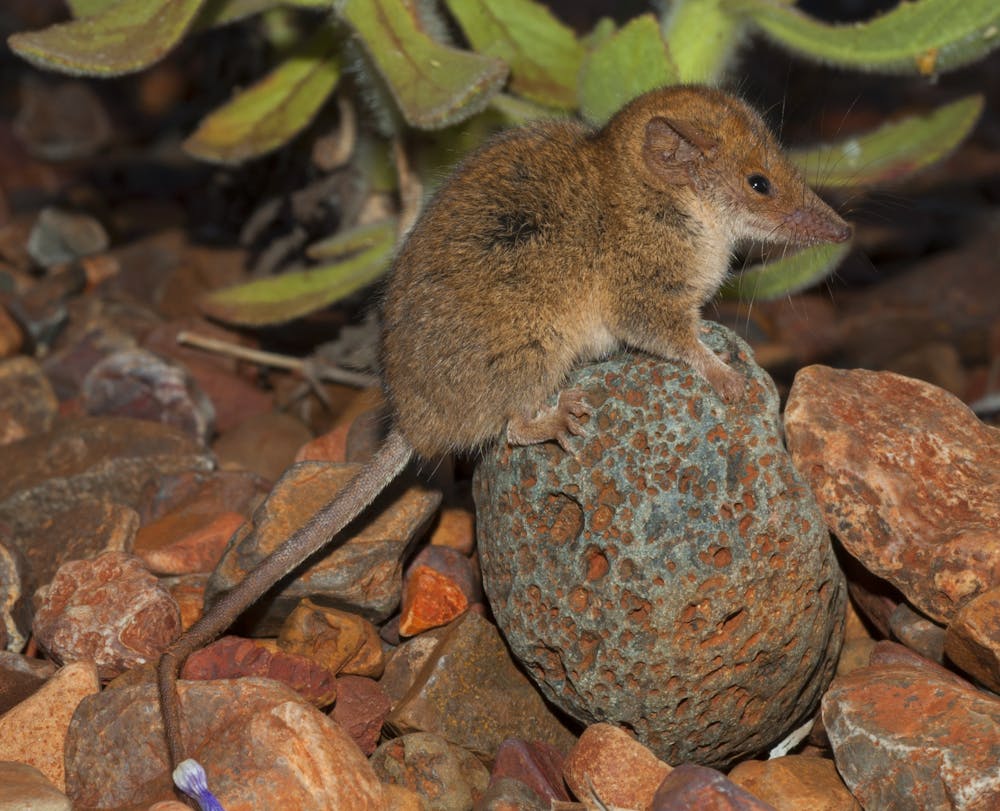
A small mouse-like mammal sitting on a small rock with a plant in the background
The orange-headed Pilbara planigale (Planigale kendricki). Roy Teale, Author provided (no reuse)

How many kinds of planigale are there?

The name planigale translates to “flat weasel”, an allusion to their extremely flat heads, which allow them to shelter in small cracks in rocks and clay soils. Planigales are among Australia’s smallest mammals, with some weighing an average of 4–6 grams (and measuring around 11cm in length), and other species a bit larger at 8–17 grams (and 13cm long).

Scientific studies from the late 1970s onward using body-shape and DNA data have suggested there are many more planigale species than we think.

We put these theories to the test, and found that planigales in the Pilbara display unique body shapes and are genetically unrelated to any of the four known planigale species.

Why have these species only been described now?

The process of describing these two new species was actually started more than 20 years ago, by scientists who were working at the Western Australian Museum at the time.

Their work began after ecologists conducting surveys for developing mines in the Pilbara were capturing planigales that didn’t really fit the descriptions of the known species. For want of a better option, they were still usually identified as either the common planigale (P. maculata) or the long-tailed planigale (P. ingrami).

Read more: Australia has hundreds of mammal species. We want to find them all – before they're gone

Scientists led by taxonomist Ken Aplin began examining specimens held in the WA Museum and sequencing their DNA. These studies helped to confirm the discovery of two new species.

Sadly, Ken fell ill and passed away in 2019. This is where we stepped in.

Through support from the Australian Biological Resources Study and the Queensland University of Technology we were able to finish off Ken’s species descriptions and submit the research for publication. This is a crucial step in taxonomy – the species description has to be published before the new name can be considered official.

What do we know about the new species?

Both new species occur in the Pilbara and surrounding areas. The orange-headed Pilbara planigale is the larger of the two, weighing an average of 7g (up to 12g for large males) with a longer, pointier snout and bright orange colouring on the head.
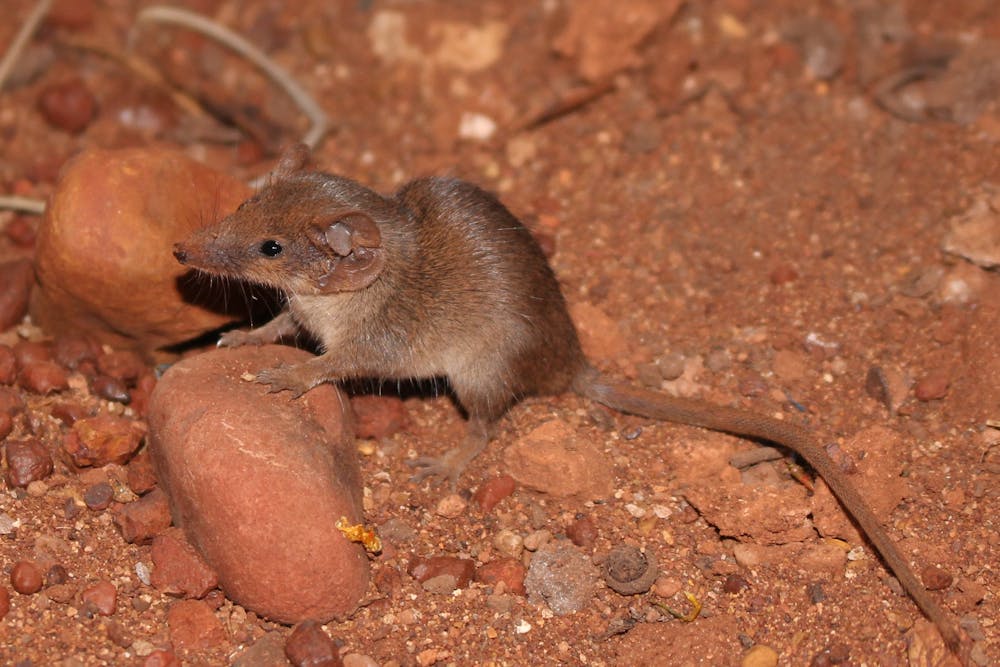
A small brown mouse-like marsupial sitting among reddish soil. The cracking-clay Pilbara planigale (P. tealei) has only been found on cracking-clay soils. Linette Umbrello, CC BY-SA

The cracking-clay Pilbara planigale is much smaller, averaging just 4g with darker colouration and a shorter face. It has only been found on cracking clay soils, hence its name.

The orange-headed Pilbara planigale has been found on rocky and sandy soils as well, but both species require a dense cover of native grasses to persist. Both species actively forage during the night, while taking shelter during the day.

Read more: A 140-year-old Tassie tiger brain sample survived two world wars and made it to our lab. Here's what we found

This means the two widespread species, the common planigale and the long-tailed planigale, do not occur in the Pilbara or on neighbouring Barrow Island, as was previously thought.

There is still a lot more work for us to do as there remain two “species complexes” of planigales. These are groups where genetic data suggests a species is comprised of multiple different forms.

We’ll be following up on this with more analysis to define more of Australia’s tiniest mammals.

Authors: Linette Umbrello, Postdoctoral research associate, Queensland University of Technology

Read more https://theconversation.com/two-new-australian-mammal-species-just-dropped-and-they-are-very-small-210386

Better Business Photos Without Misleading Customers: An Australian Guide

A timber dining set looks inviting against a sunny deck, with cushions, lanterns and enough chairs for the whole family. But imagine the retailer sell...

Understanding a dental implant Melbourne Treatment Plan

A dental implant Melbourne patients may consider is one option for replacing a missing tooth, but suitability depends on oral health, bone support a...

How 3PL Logistics Australia Supports Faster and More Efficient Supply Chains

Why Has 3PL Logistics Become Important for Growing Businesses?  Gone are the days when supply chains were simpler and in minimal quantity. Now, the...

Common Skin Concerns and Treatment Options Available in Melbourne

Skin concerns can develop gradually or become noticeable following changes in age, lifestyle, sun exposure or hormonal factors. Pigmentation, rednes...

Why a Code-Compliant Home Can Still Feel Uncomfortable

When people build or renovate a home, they usually expect that meeting current building requirements will also produce a comfortable place to live. ...

Breach of Contract in Business: What Are Your Options?

Contracts are essential to business relationships. They establish expectations, allocate responsibilities and provide a framework for delivering goods...

How Pest Control Companies Can Rank for the Problems Customers Search First

Introduction SEO for Pest Control needs to start with the customer’s problem. Most people do not search for pest services in a neat or technical wa...

What Are the Benefits of Renovating an Older Home in Sydney?

Sydney has plenty of character homes, from Federation cottages to mid-century brick homes. Renovating rather than rebuilding can preserve what makes t...

Pool and Deck Design: How to Plan the Perfect Outdoor Living Space for Your Sydney Home

For many Australians, the backyard is where life happens. Summer barbecues, weekend swims and long evenings outdoors are all part of the lifestyle, ...

Is Solar Pool Heating Worth It? What Sydney Homeowners Should Know

There's nothing quite like a backyard pool on a hot Sydney day. But once autumn rolls in, many pools sit unused for months because the water is simp...

Planning a Luxury House Move: A Week-by-Week Timeline for Prestige Sydney Homes

Selling or buying a prestige home is a major milestone. Whether it's a waterfront residence in Birchgrove, a grand Federation home in Haberfield or ...

Downsizing or Upgrading Your Caravan? Here's How to Sell It Without the Hassle

Selling a caravan can feel like a major task, especially when you are unsure about its value, paperwork, or how to find a buyer. Whether you are dow...

The Best Overseas Adventure Holidays for Australians Who Love the Outdoors

Australia offers no shortage of incredible outdoor experiences, but sometimes the best way to satisfy your sense of adventure is to head overseas. A...

Cape Town Wine Shuttle: Winelands Tasting & Tours

Embark on an unforgettable journey through the picturesque Cape Winelands, where world-class wines and breathtaking scenery await. Our Cape Town Win...

Metal Fabrication: Choosing Metal Fabrication Melbourne Services for Custom Projects

What Modern Metal Fabrication Involves From individual components to complete structures, metal fabrication brings together processes such as desig...

Why Giant Rats Tail Grass Keeps Coming Back After Spraying

Giant Rats Tail Grass (GRT) is one of the most frustrating pasture weeds for farmers and lifestyle property owners. You spray an infested area, see th...

When Custom Cardboard Boxes Make Sense for Your Business

Custom cardboard boxes can be useful when a standard carton does not fit a product, packing method or presentation requirement particularly well. A ...

Full-Height vs. Pop-Top Caravan: Which Is Better for Family Travel across WA?

A pop-top caravan is an excellent choice for travellers who want the comfort of a caravan without committing to a larger, bulkier setup. With a lowe...

















